
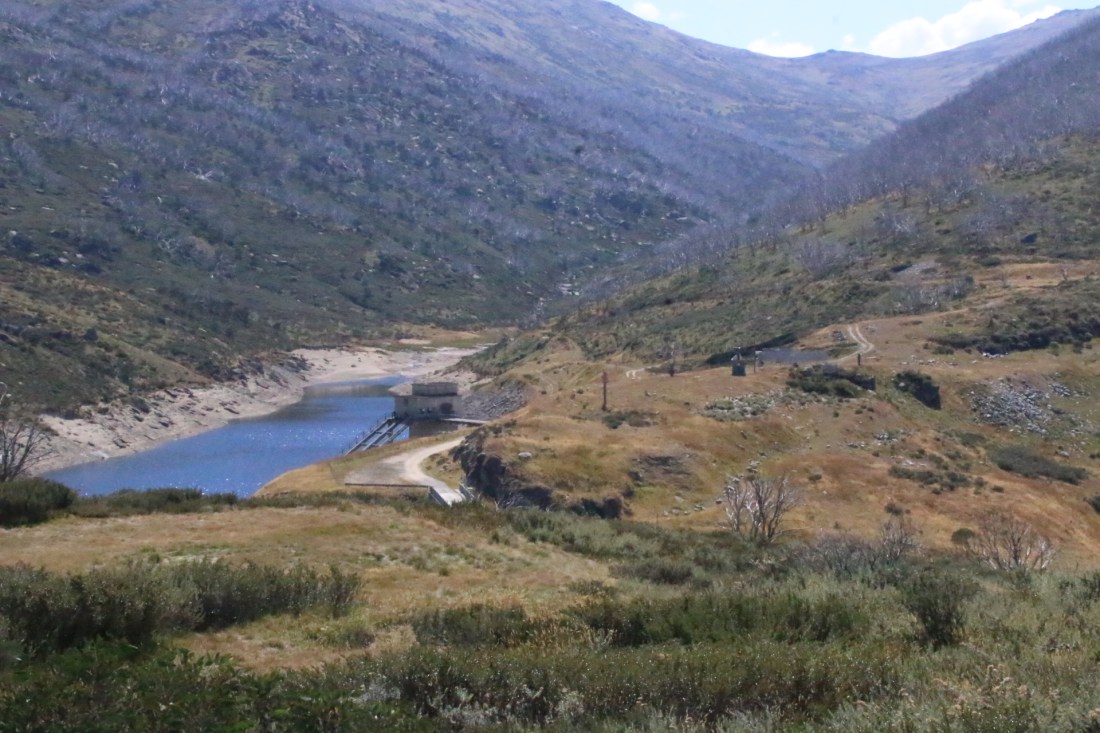
Dad came here in 1953 for his work. Also to Talbingo. Would have been some expedition then.


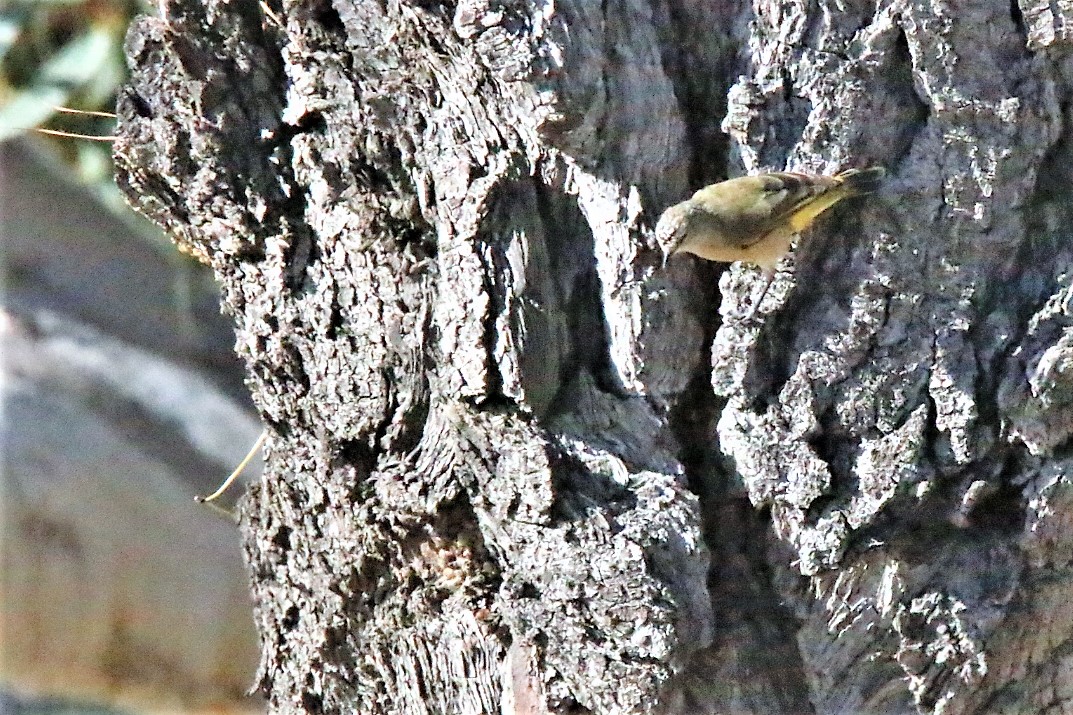 The birds are a Singing Honey-eater (I think), and a Yellow-rumped Thornbill.
Michael Monaghan
Dad came here in 1953 for his work. Also to Talbingo. Would have been some expedition then.
The birds are a Singing Honey-eater (I think), and a Yellow-rumped Thornbill.
Michael Monaghan

Found 10 km from Dalgety on the Dalgety-Jindabyne Road is the Boloco Anglican Church, built in 1871, presumably so travellers could escape the bitter winds.


Six kilometers up Boboyan Road is this nice spot on the Murrumbidgee. It is unmarked, so you have to note the short track off the road. Unusually for the Murrumbidgee, there is a lot of exotic tree, reed and water lily growth. It is totally clear water.


The much photographed range from Hospital Hill lookout is still worth a look each trip. And so far I can’t determine why it is called Hospital Hill, except that there is a Hospital Creek below; which doesn’t help because I also can’t find why it is called Hospital Creek.


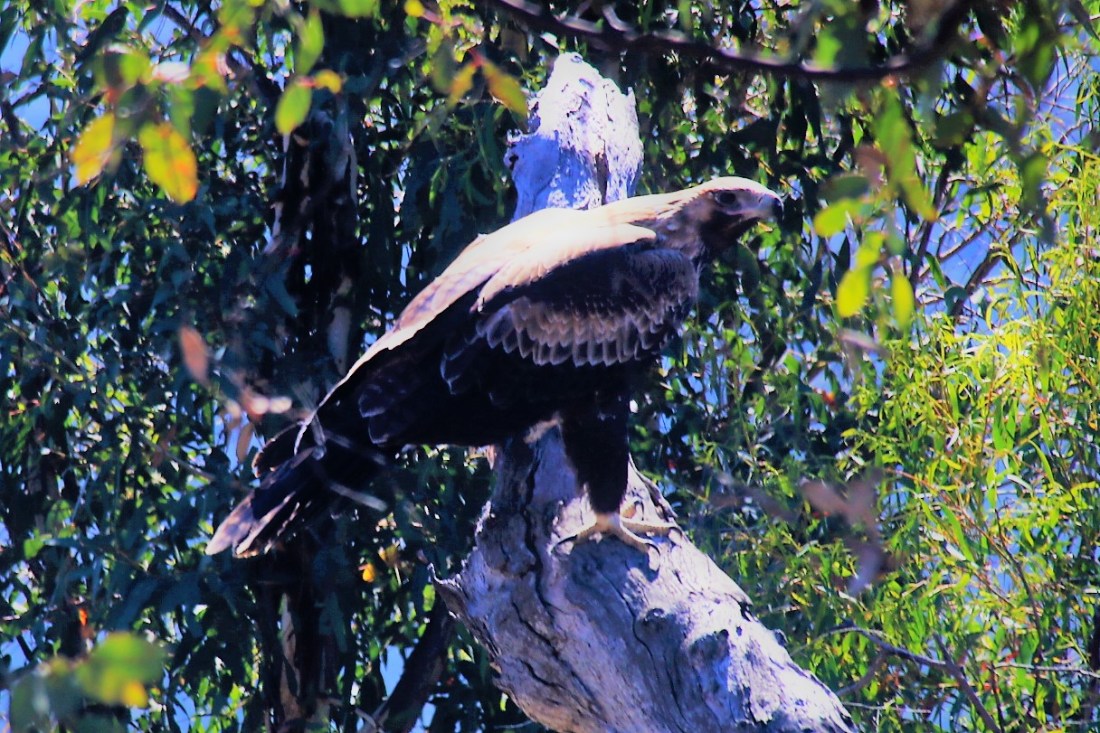
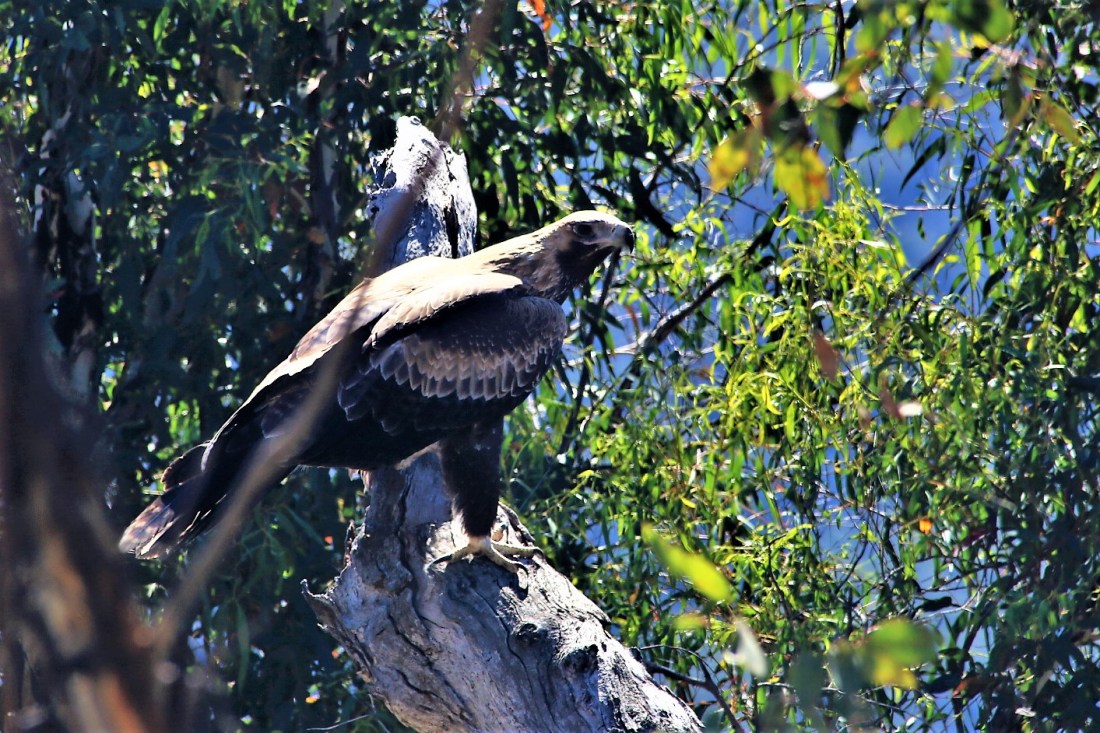
The highlight was coming across a huge Wedge-tailed Eagle about 2 km north of Hospital Hill lookout:
Michael Monaghan
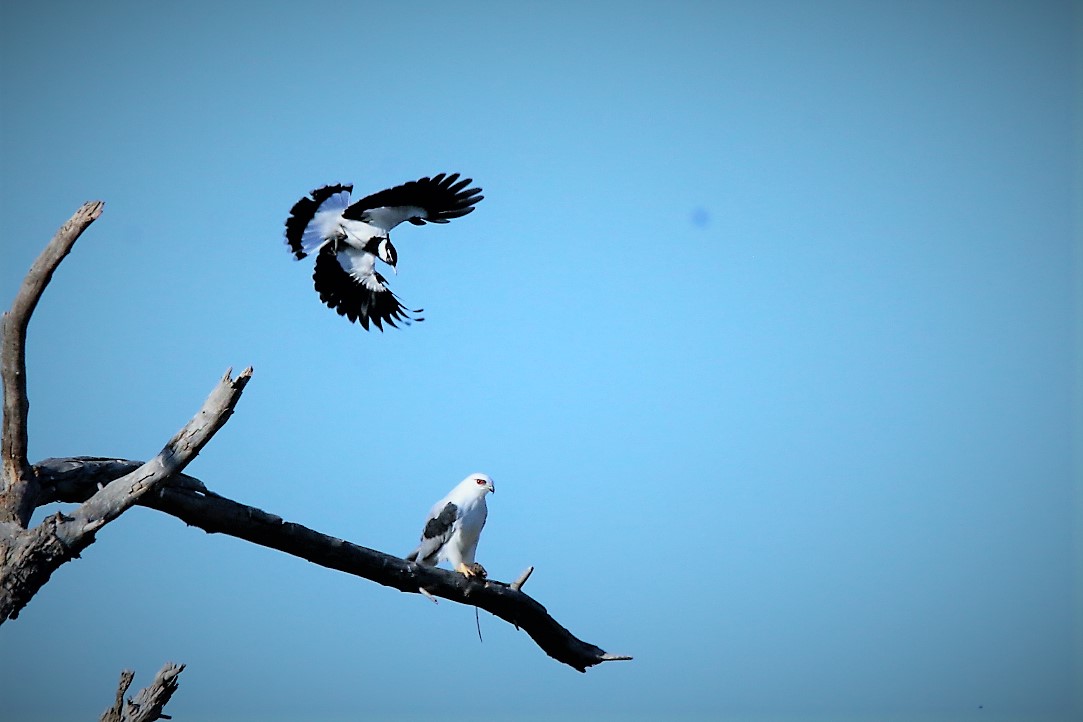 This large dead tree above the south billabong was a popular spot.


There were about a dozen Black-fronted Dotterells, many more than I had seen here before. It was interesting to watch one stir up the mud with its leg, then eat the dislodged something.


There were also about a dozen Australian Ibis, coming and going.
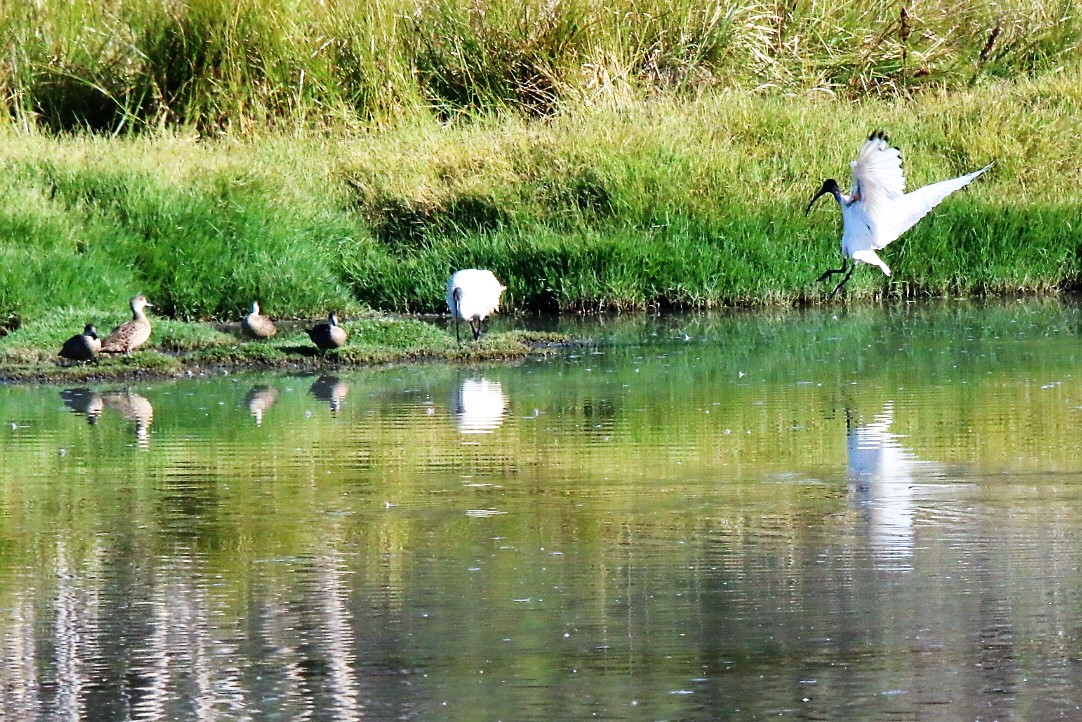
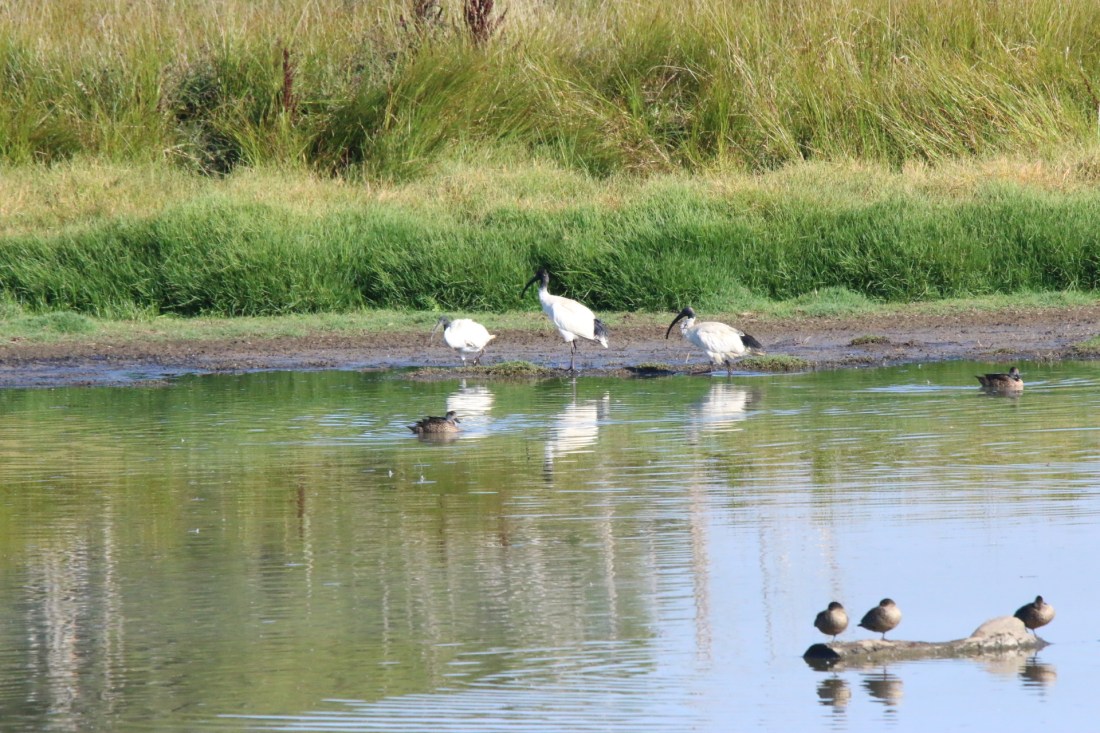

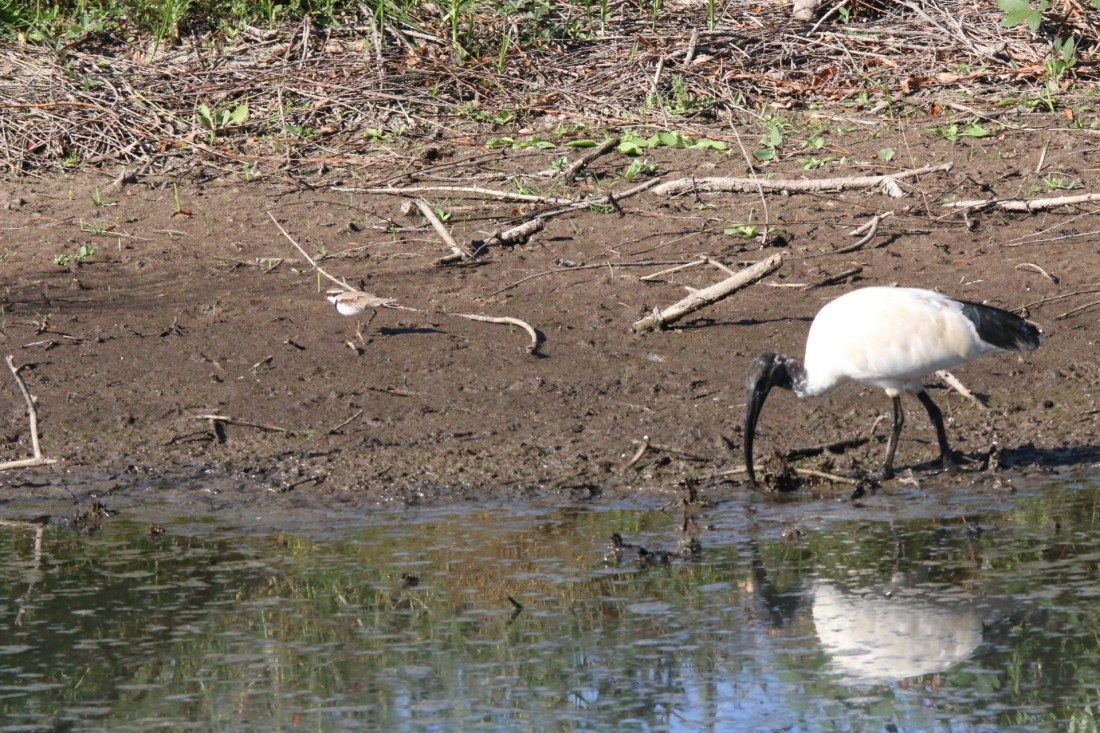 Not seen here by me before was a pair of White-plumed Honeyeaters, and plenty of Superb Fairy Wrens and Red Browed Finches.
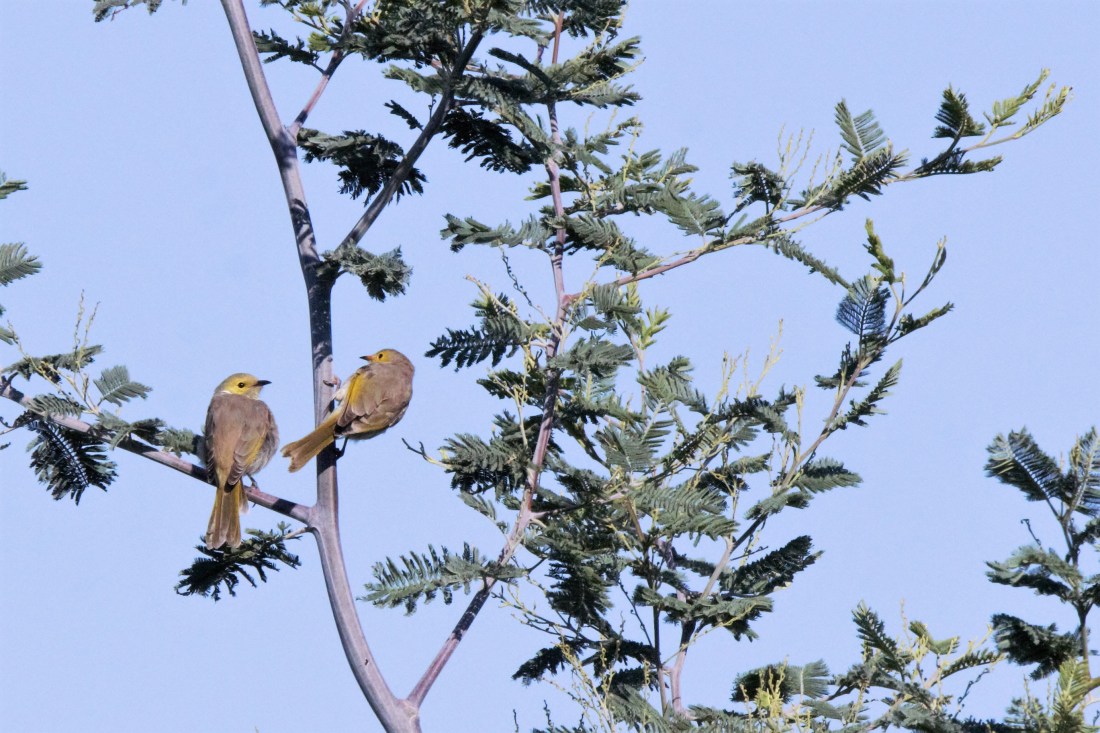
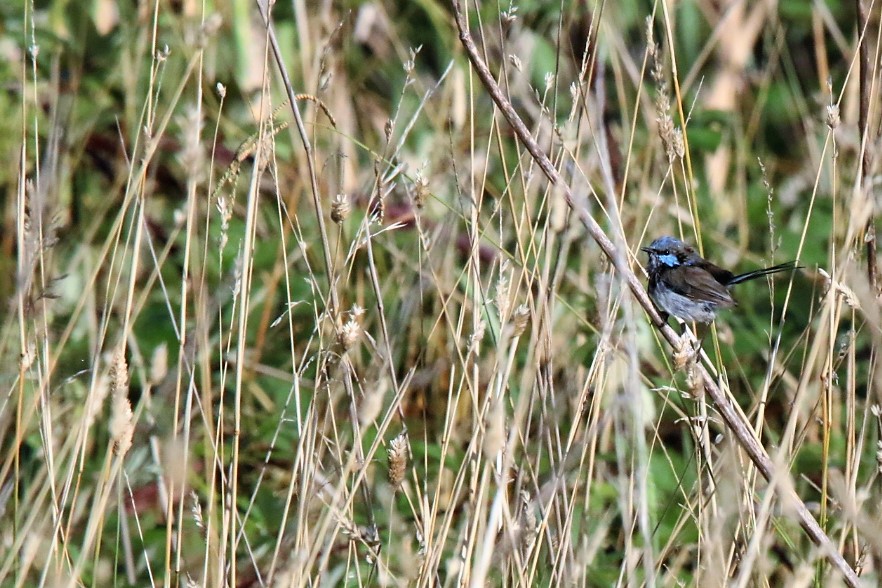
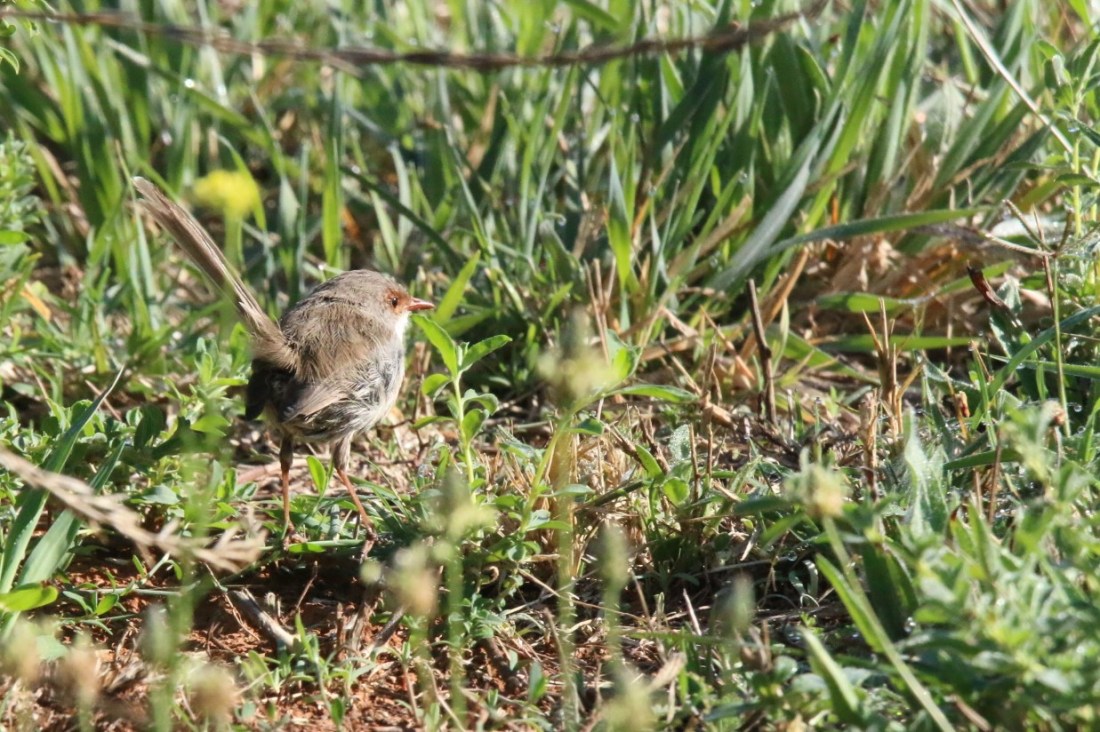
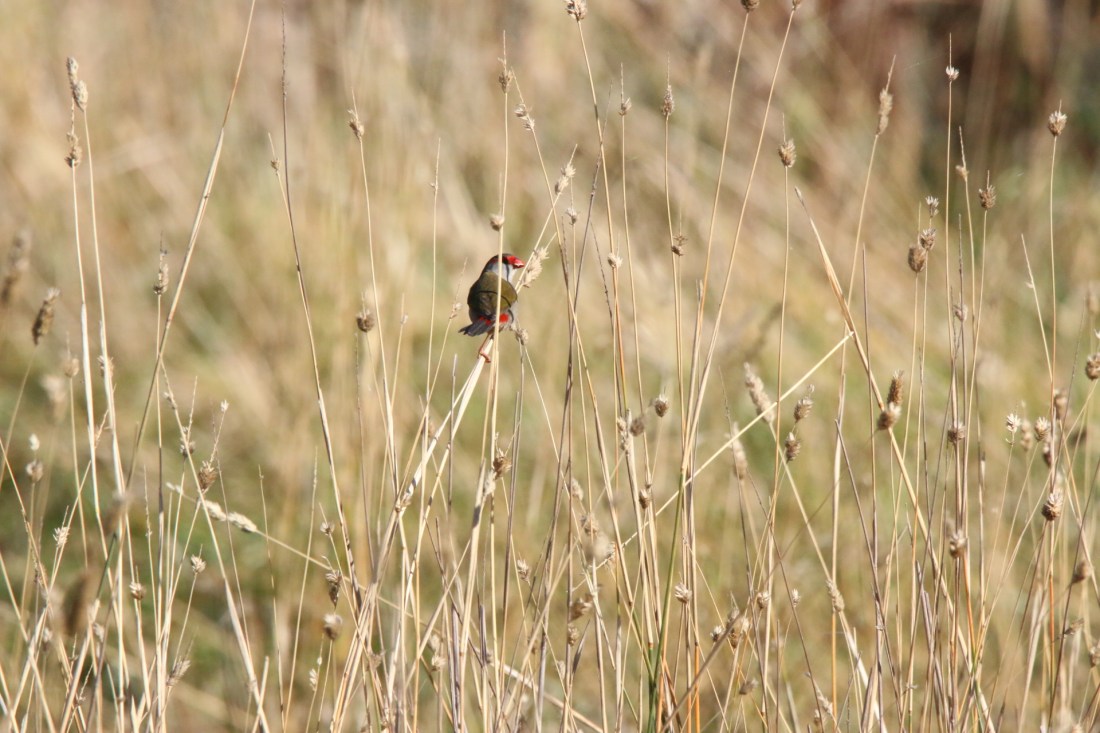 Always lots to see if you are patient.
Michael Monaghan
Today’s surprises were three Black Fronted Dotterels, and a family of Eastern Yellow Robins frolicking in the grass.


The still water made for good reflections of the Royal Spoonbill, who looked a bit disconcerted by his own shadow):
 Standing room only for the Pacific Black Ducks:


A Purple Swamphen:


And a Little Black Cormorant:
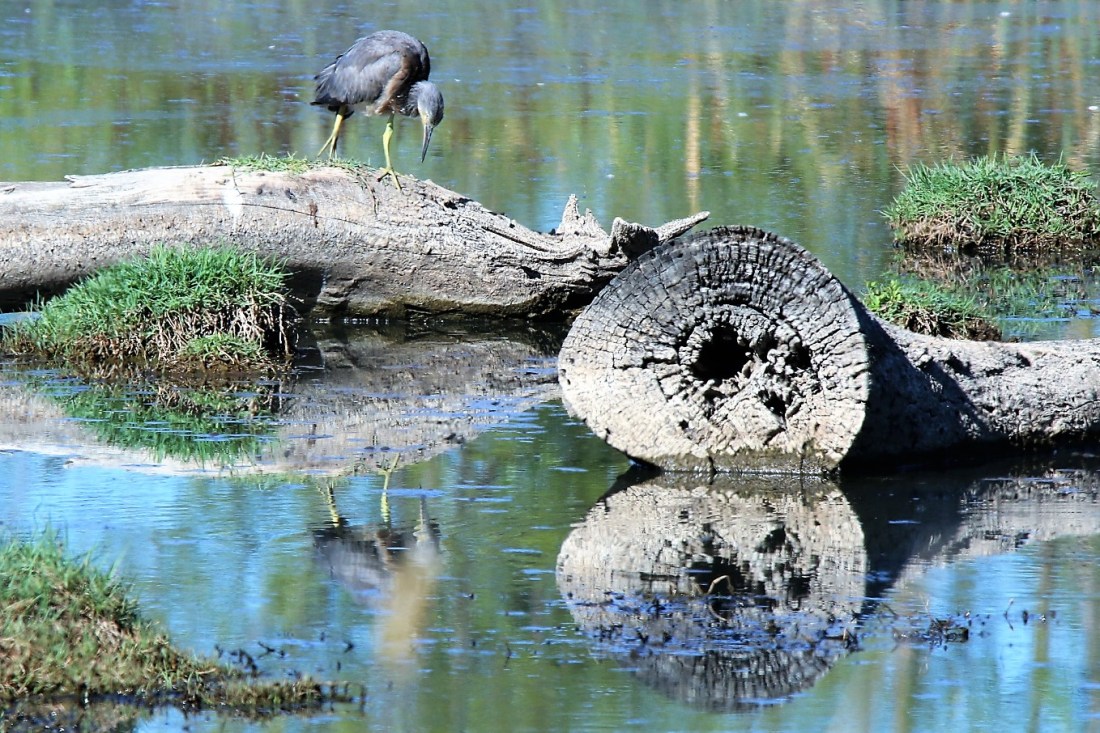
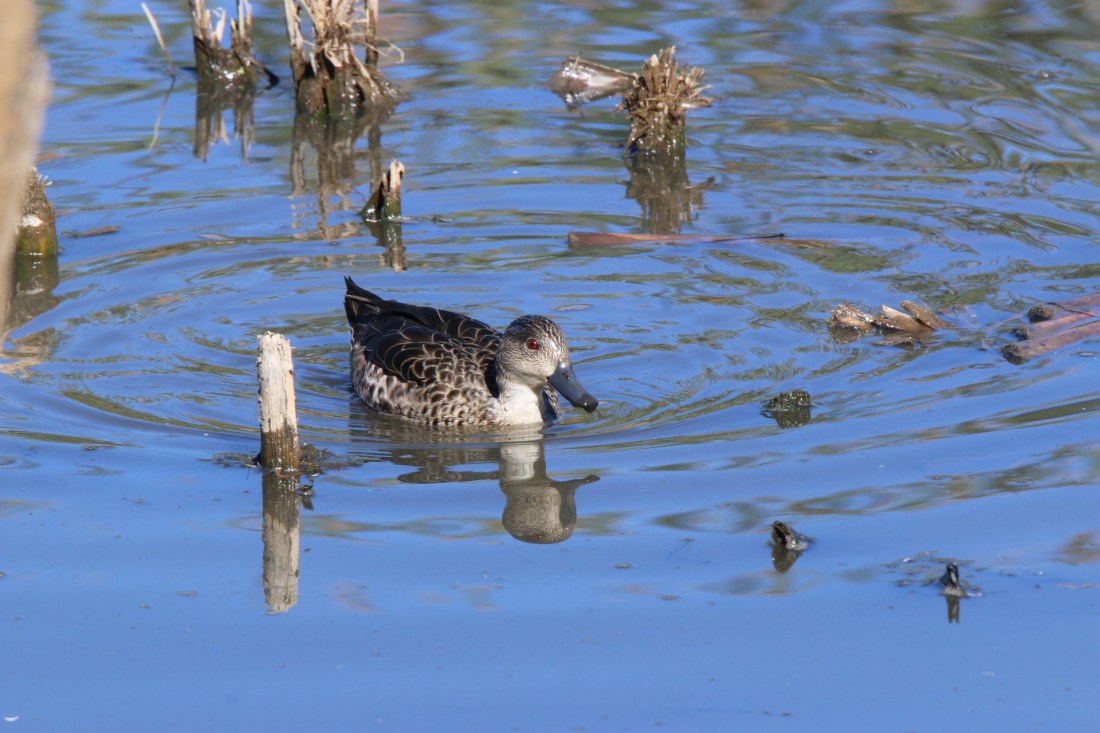
The Grey Teal stood out with his bright red iris:
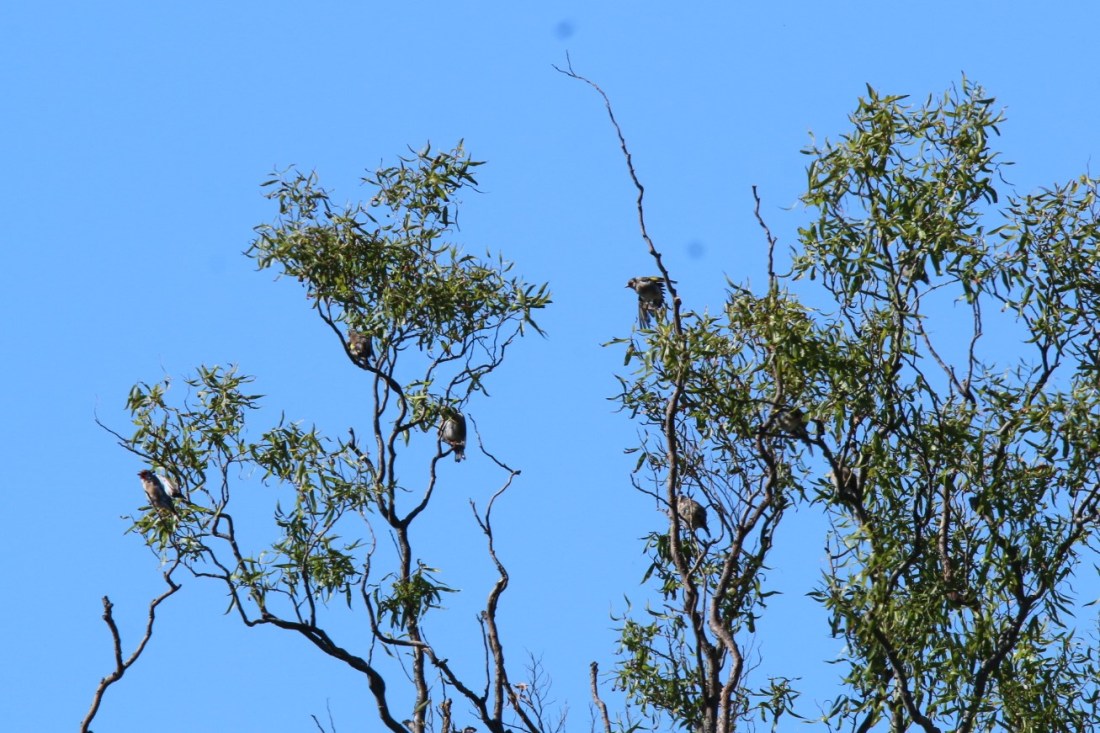
This tree looked, at first glance, empty, but it turned out to be chockers with European Goldfinch.
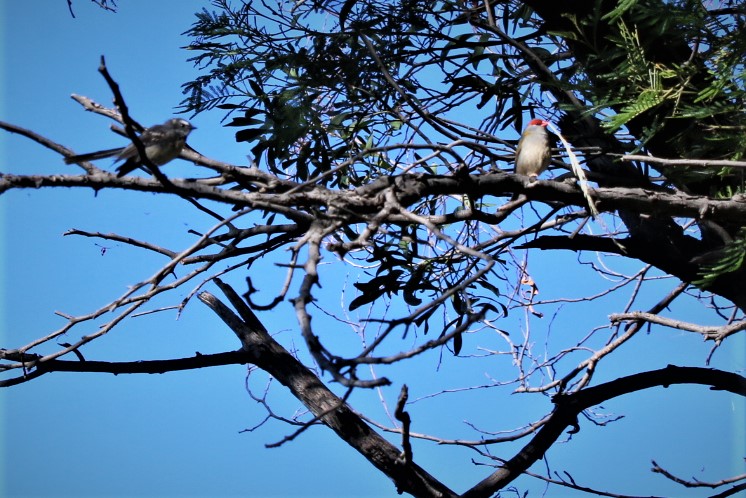
And lastly, this White Browed Scrubwren seemed very keen to relieve the Red Browed Finch of a huge feather it had gathered.
Another interesting hour at the Wetlands.
Michael Monaghan
All these photos were taken with a fixed 50mm lens with settings of 1/1250; f16; auto iso.
It seems if you want to have a relaxing picnic, you have 2 hours to do it.


Michael Monaghan
Lots happening as always in the Botanic Gardens.
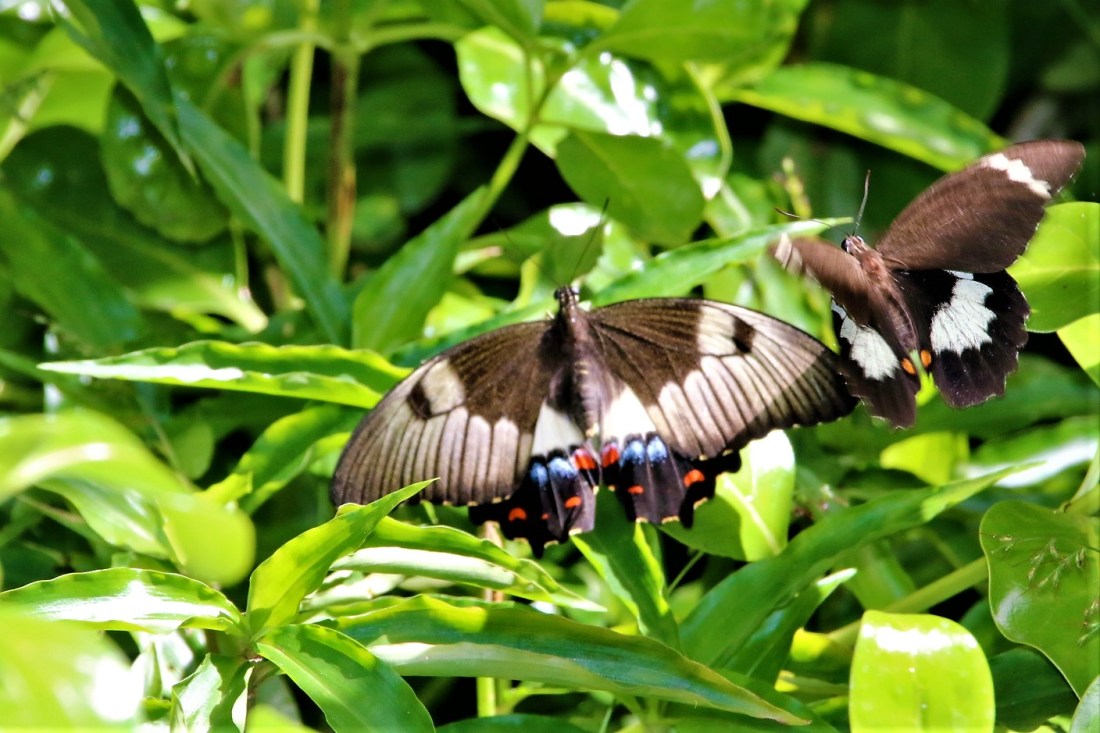
These Dainty Swallowtails do appear rather intent on something:


The laughing kookaburra is keeping a very close eye on the photographer, even though some distance away, as he finishes lunch.

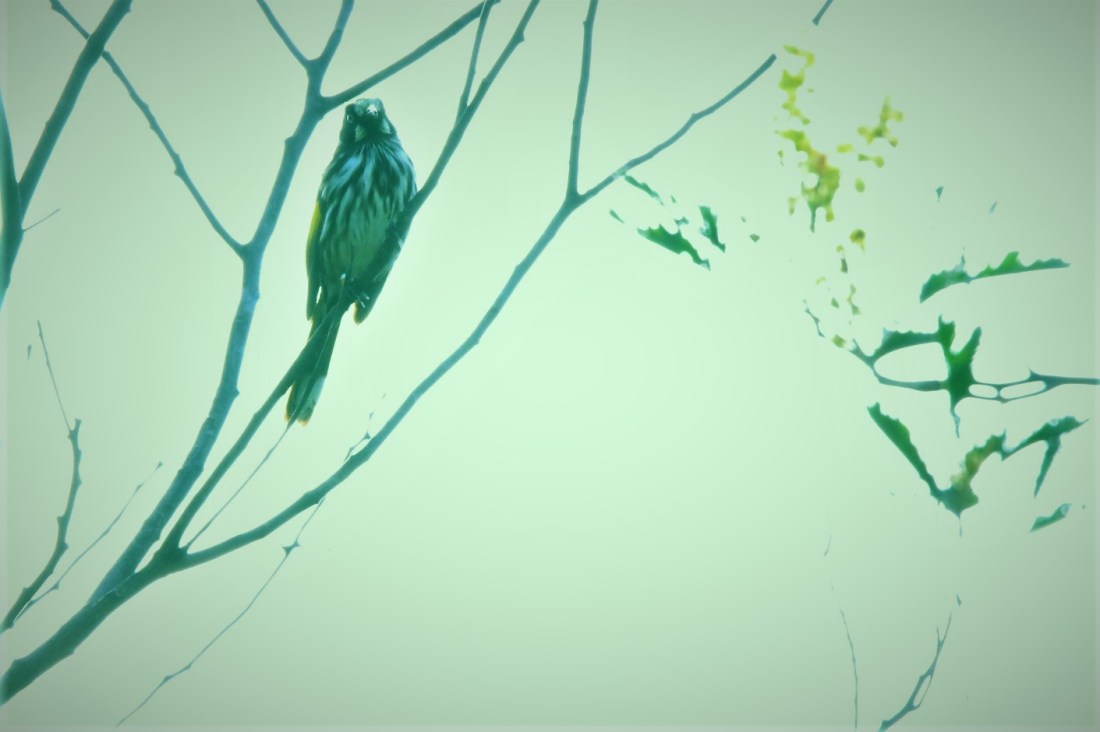
Very similar to a New Holland Honeyeater, this is a White-cheeked Honeyeater:
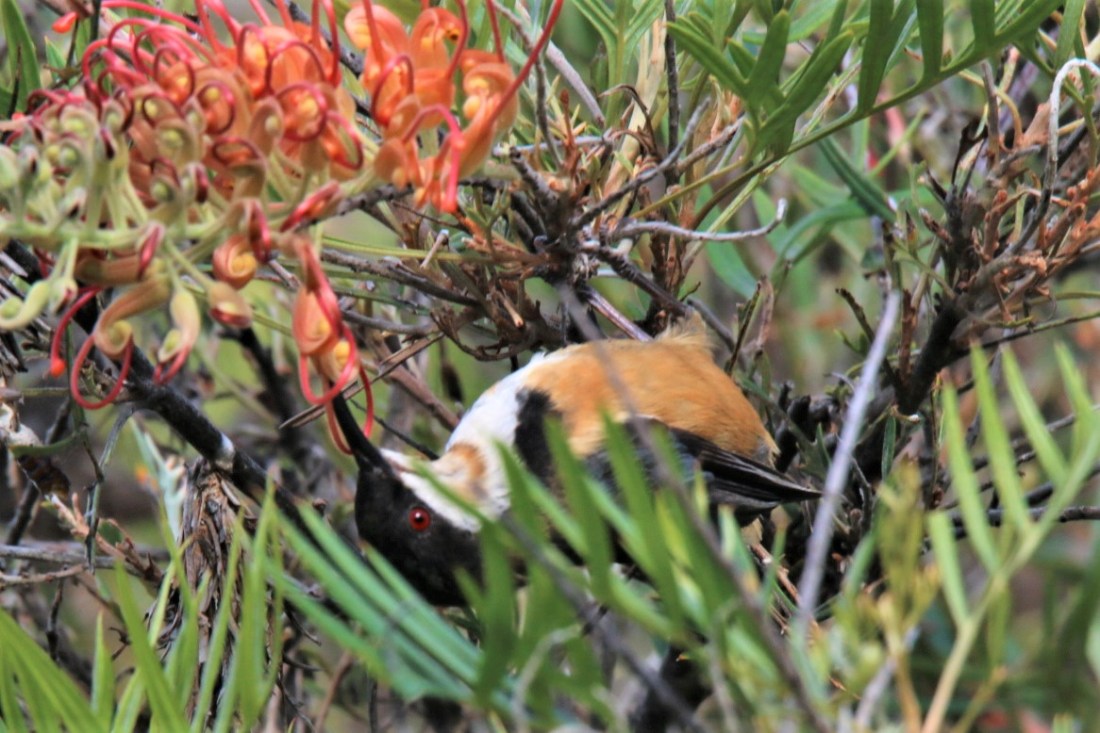
 Taking a great (massive) deal of extra care not to disturb the large eastern brown snake seen here a few minutes ago, I watched these Eastern Spinebills, which are often in this bush:
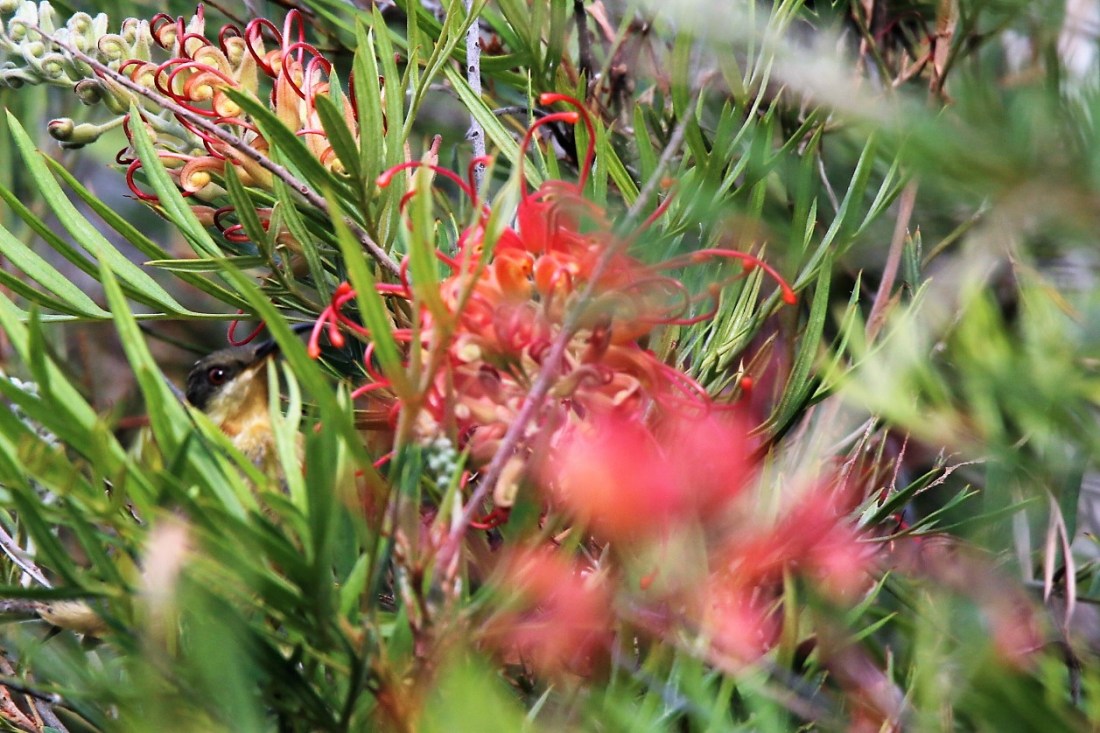
There are always lots of flowers whatever the time of year:


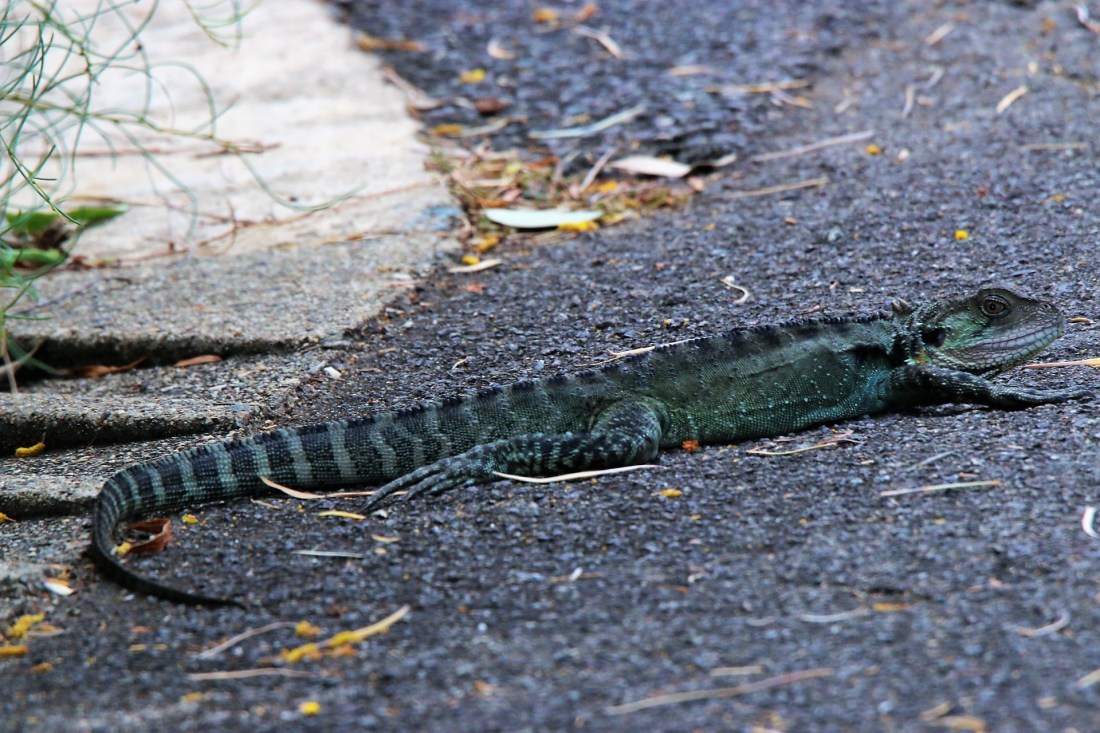
There are lots of Eastern Water Dragons:
Michael Monaghan
Our pepper tree only ever has unripe peppercorns. Stealing attention though from the figs, it gives us a better chance to savour those, infinitely more enjoyable than unripe peppercorns. The tree is half shredded and attracts a wide range of birds at dawn and dusk.
A gang-gang couple (male is red faced, so one can only surmise he has embarrassed himself ):


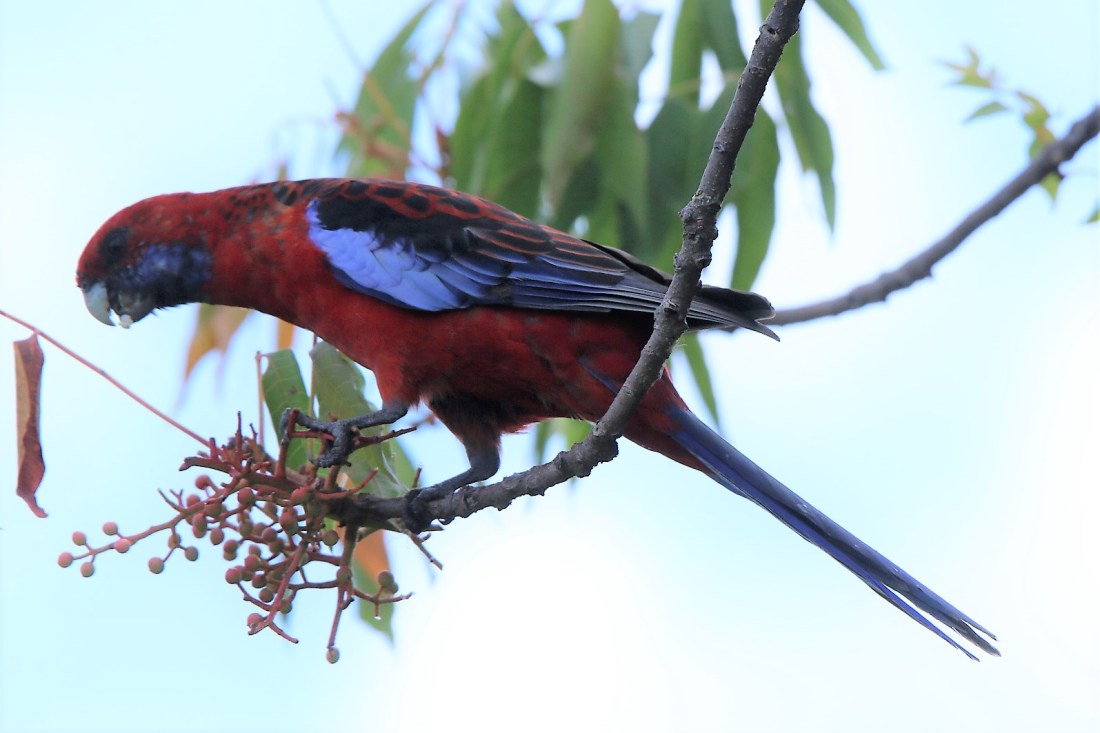
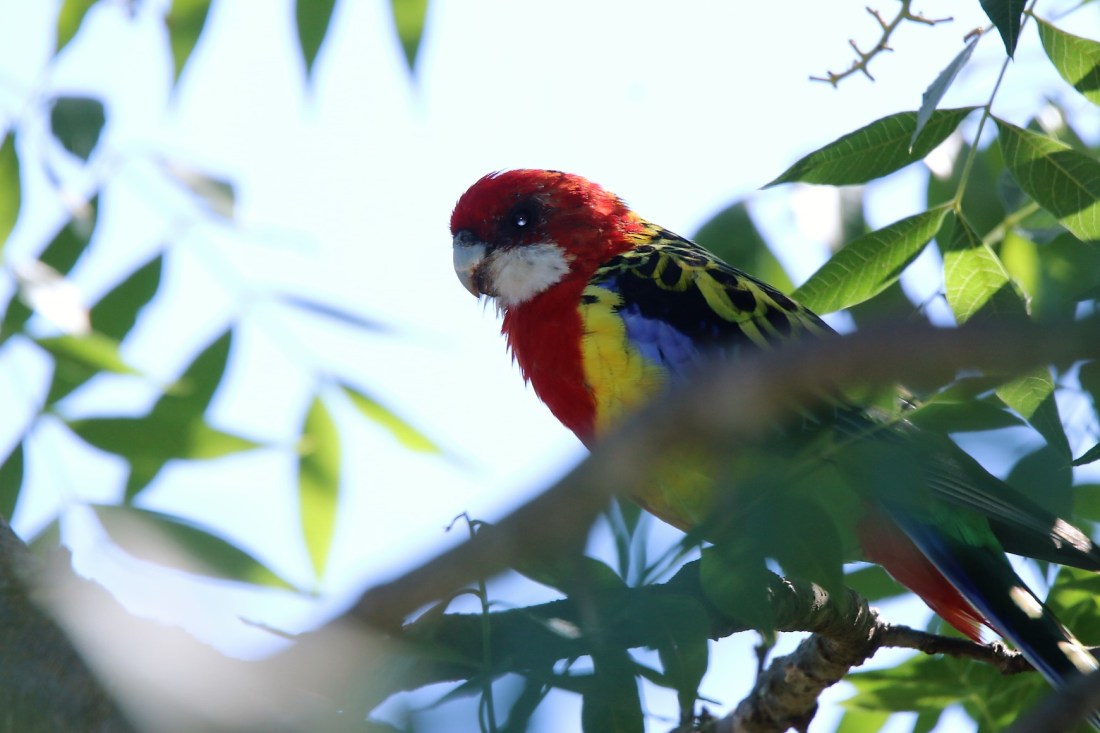
Eastern Rosellas and Crimson Rosellas:
The Sulphur-crested white cockatoo:


And even the silver-eyes:

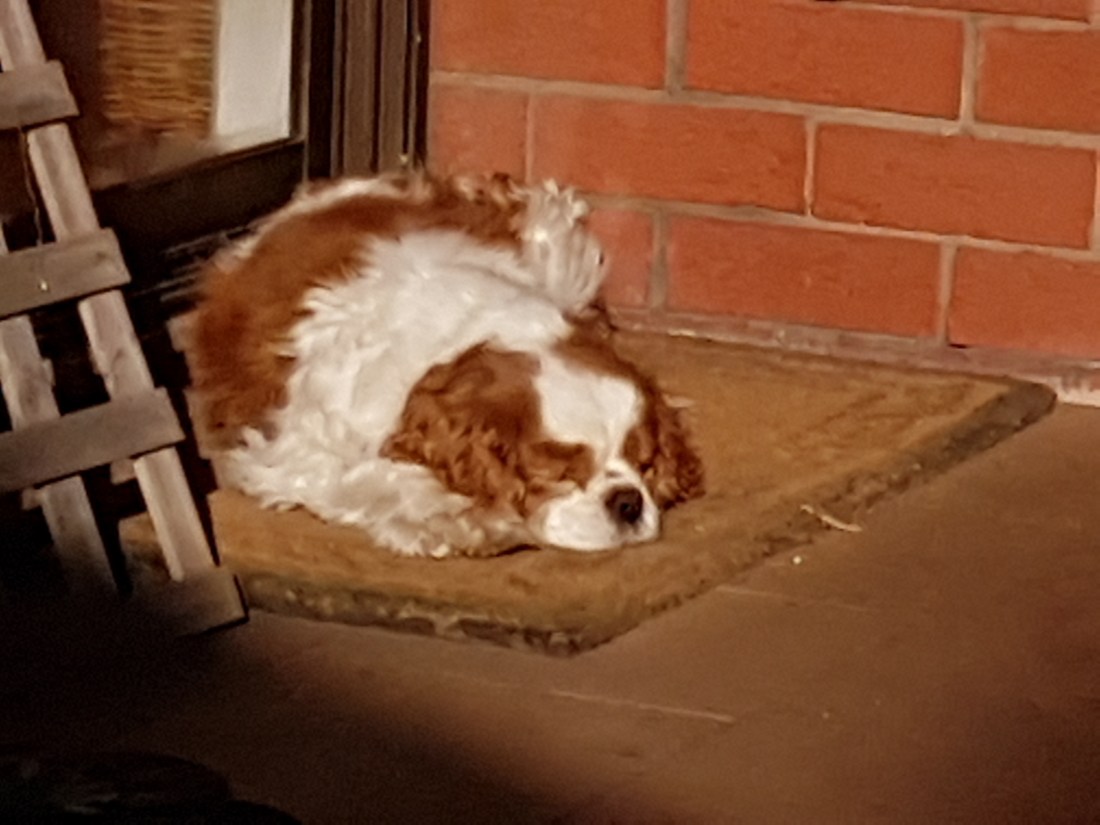
And as always, the ever alert guard dog, Neo.
Michael Monaghan
Had planned a full day out featuring the many high waterfalls around Moss Vale. Ended up disappointing due partly to the lack of rain and partly to Carrington Falls road being closed.
Started early with a walk along the Berrima River Walk, being along the Wingecarribee River. Not much life but the river is quite picturesque.

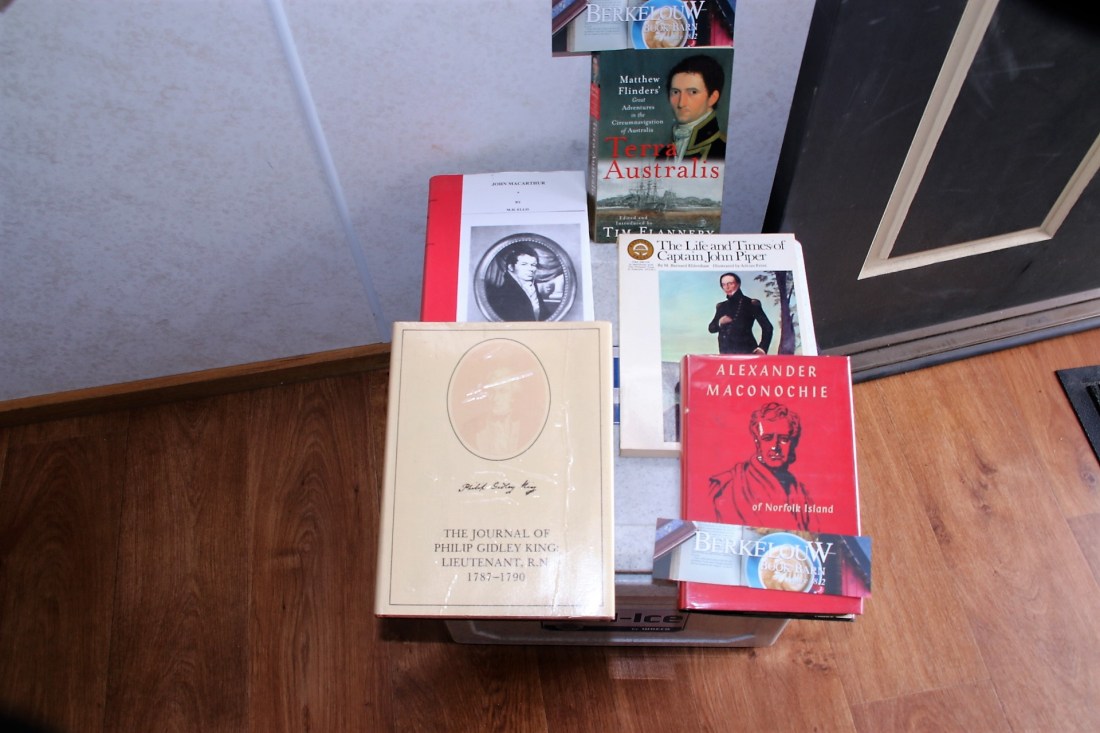
Then whipped up, before the Sydney folk arrived, to Berkelouw Books, now in the Bendooley Estate vineyard cafe about 5 km north of Berrima. Still lotsa books including a few new ones. Selected some more early Australian history: John Macarthur by M H Ellis; Phillip Gidley King journal; Matthew Flinders by Tim Flannery; Alexander Maconochie of Norfolk Island and VDL; and the Life and Times of Captain John Piper (Norfolk Island commandant when my ancestors were forced to leave).
Then drove out north of Robertson on the Mount Murray road and down into the Jamberoo Mountain Road to Carrington Falls. The highly acclaimed Nelly’s Glen, supposedly a rock surrounded swimming hole fed by a 2 metre high water fall was rather subdued due to the lack of the waterfall – subdued to the extent of green algae riddled indeed.
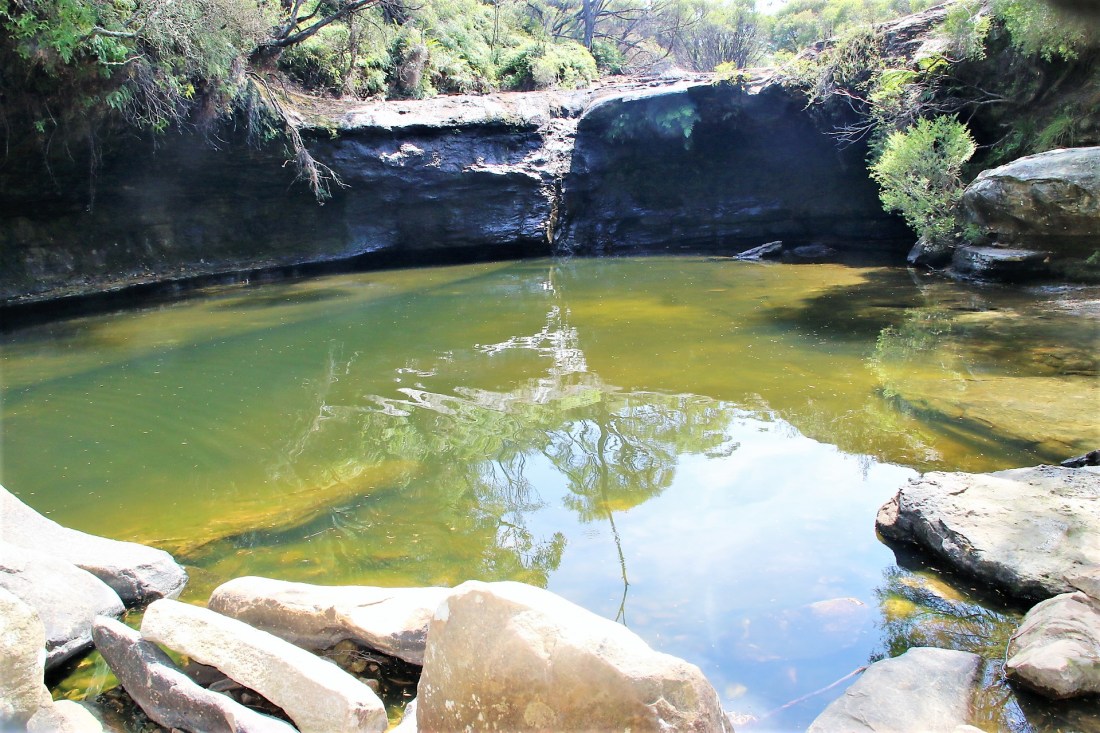 Clearly, there is a hell of a lot of water flowing through here at times:
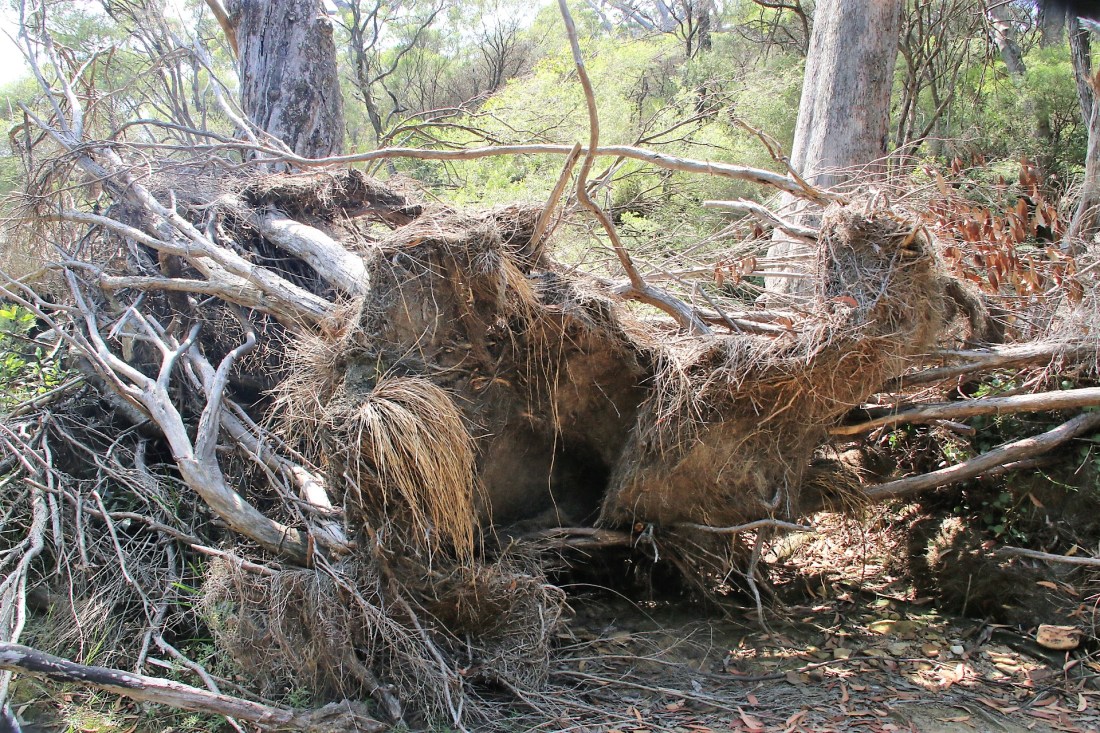 Then I got to the Carrington Falls road to find it shut for re-building.
So back into Robertson to Belmore Falls. The highlight, if you could call it that, were these kiddies playing with death. I do hope they got home, and I do hope they never go here again. No risk I guess because it is only 100m to the first ledge. I particularly like the laissez faire approach of standing in the water just before the fall, albeit I guess concentrating hard – but not on their surroundings, on their phones! They seemed to be daring each other to sit on the edge.


Despite the lack of water, these falls, along with Carrington and Fitzroy, and Fairy Bower Falls in behind Bundanoon, are all high drop magnificent falls.
To add to the disappointments, the Robertson Nature Reserve is now an overgrown jungle, and essentially impenetrable. Last stop was the Cecil Hoskins Reserve on the north of the Wingecarribee, just over the bridge out of Moss Vale. It had a walk looking down over the river and the wetlands created by the slow bend. Despite my plans, I was there early afternoon, so not much to see bird wise. Worth going back though one morning I think.
I have seen about 10 Yellow-Tailed Black Cockatoos flying over at various times, but didn’t find any sitting around.
Michael Monaghan
Avon and Nepean Dams are part of the same storage system on the Nepean River.
Avon is mainly a free rock sloping wall dam:


Nepean is a more formal dam with major pumping facilities:


Michael Monaghan
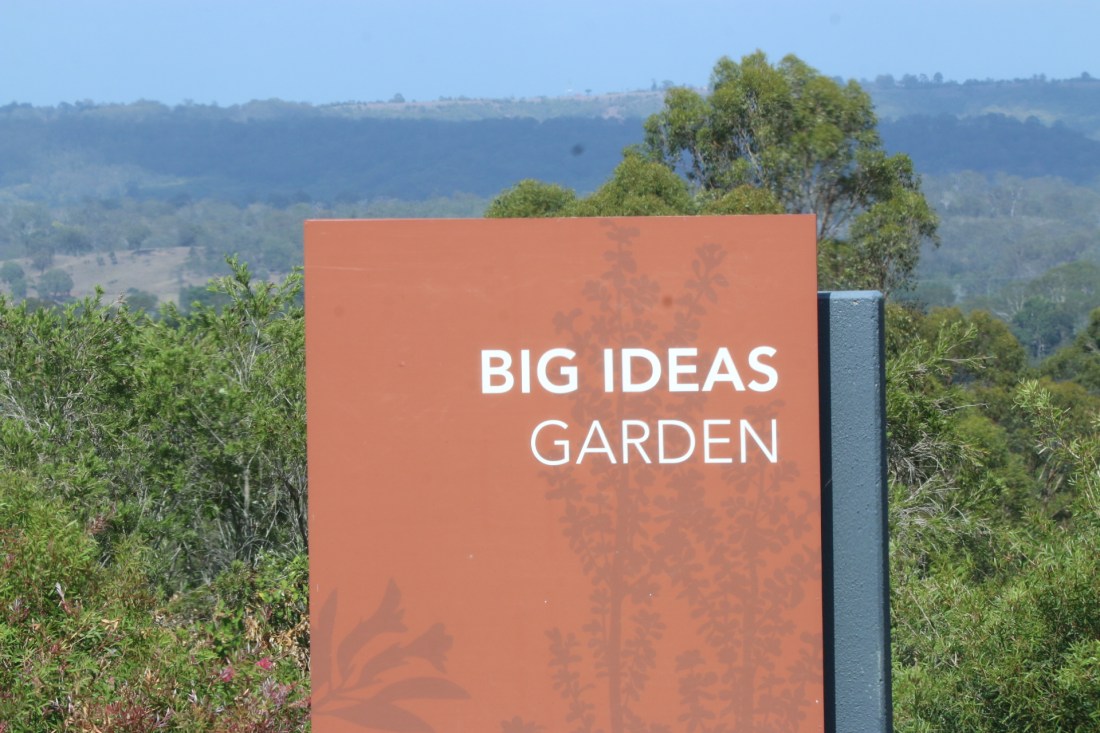 Mount Annan is another great attempt at establishing an iconic Australian garden. It is off Narellan Road just on the other side of the Hume from Campbelltown.
Mostly it is dry newish forest although the forest on the mount itself is dense and mature.
Today the action was around the two small lakes, with little to be seen in the forests. There were a lot of noisy miners, and noisy minors, which may have sent the birds further afield.
Royal Spoonbills were fishing vigorously:


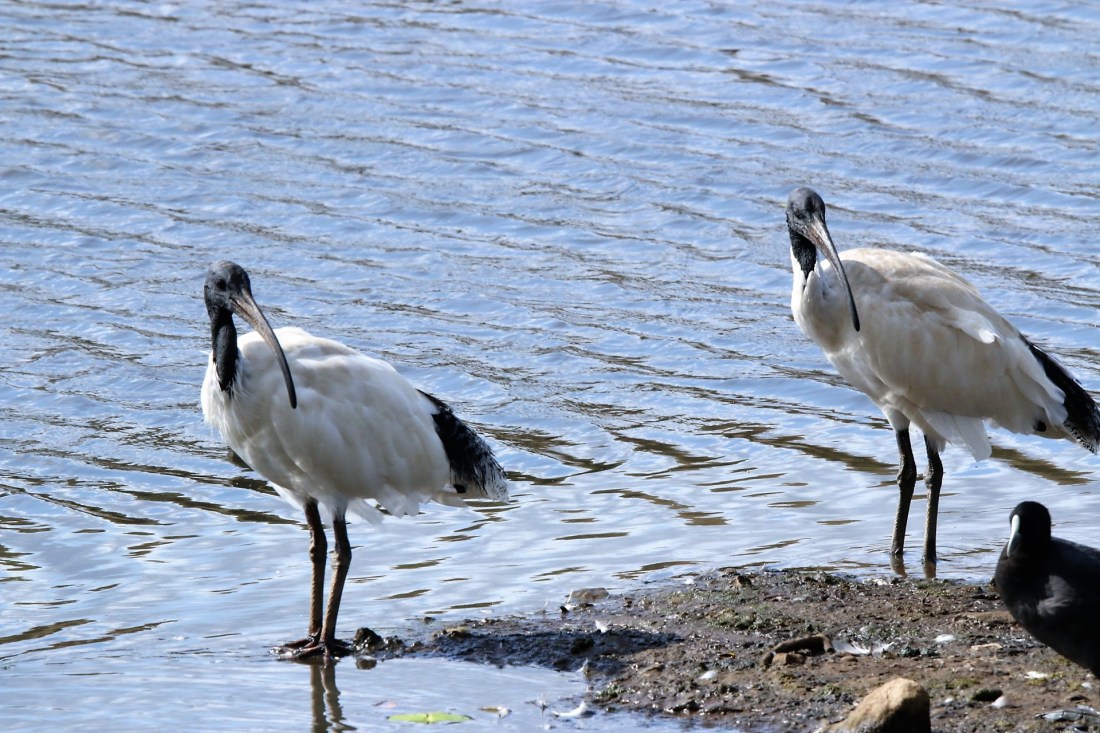
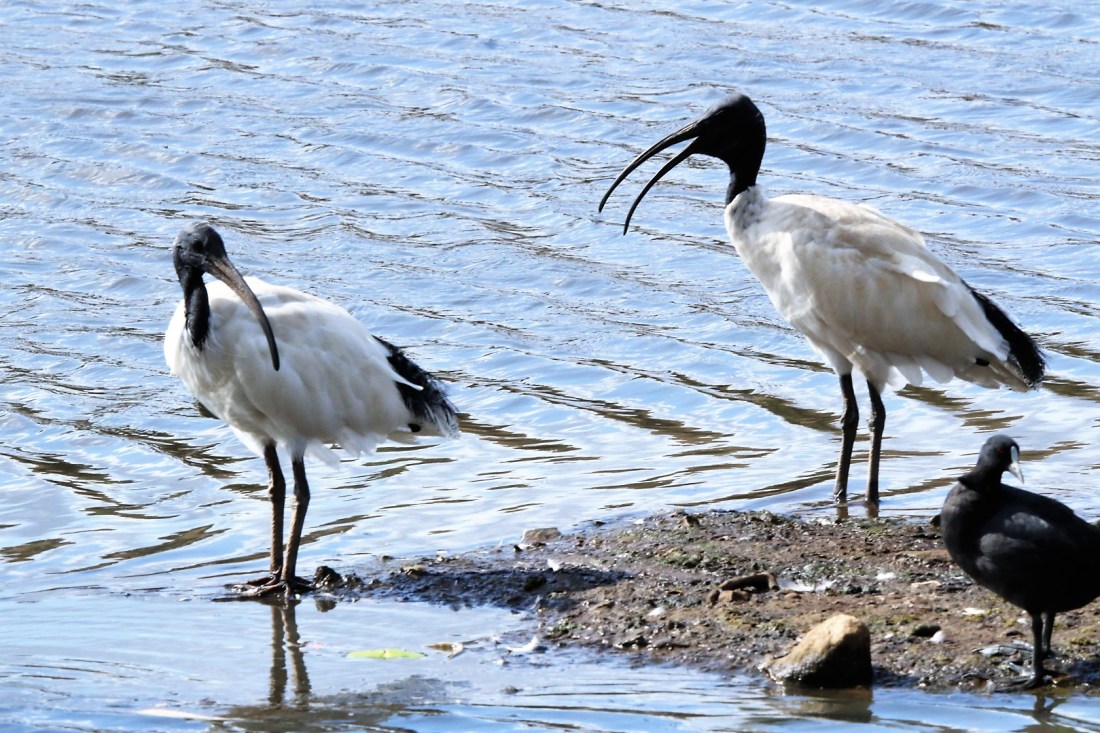
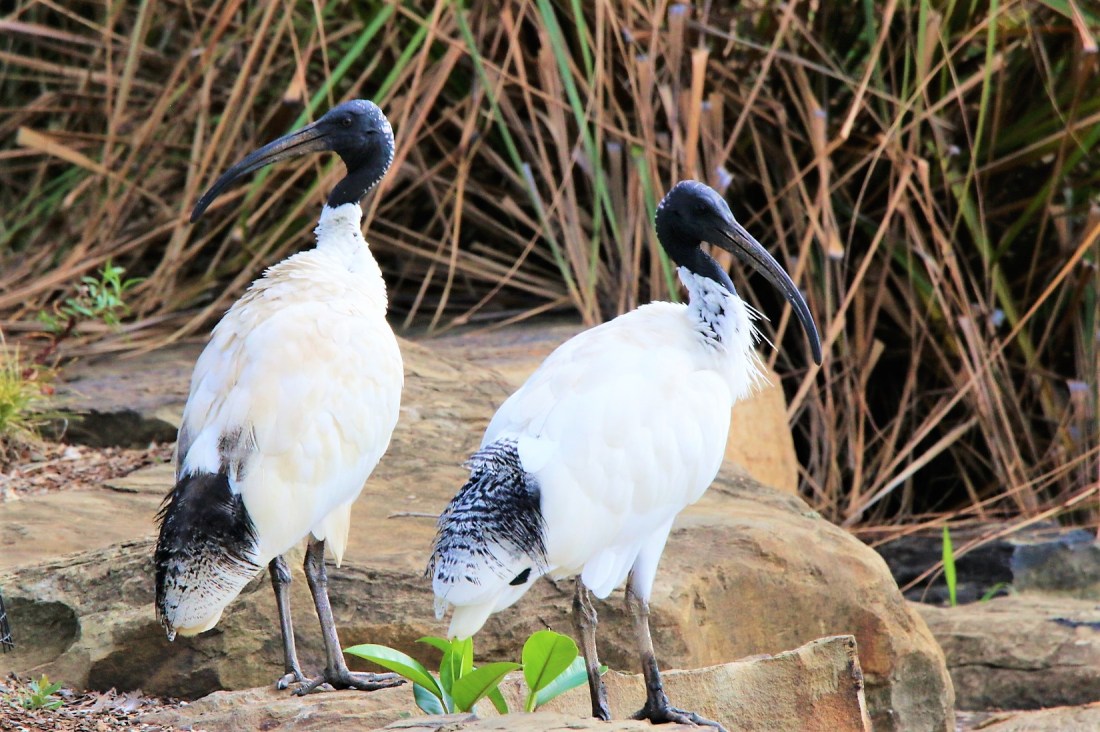
There were plenty of White Australian Ibis:

The ubiquitous White Faced Heron was quietly fishing in the background:


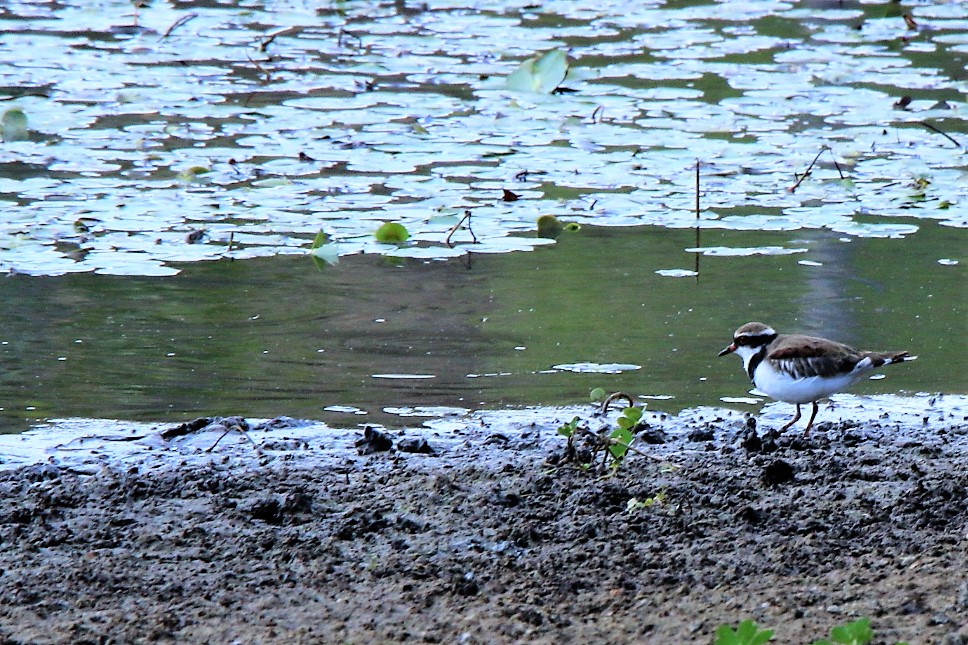
Just out of the corner of my eye I spotted well camouflaged movement, and it was an adult (with the full black necktie) and juvenile Black Fronted Dotterels:

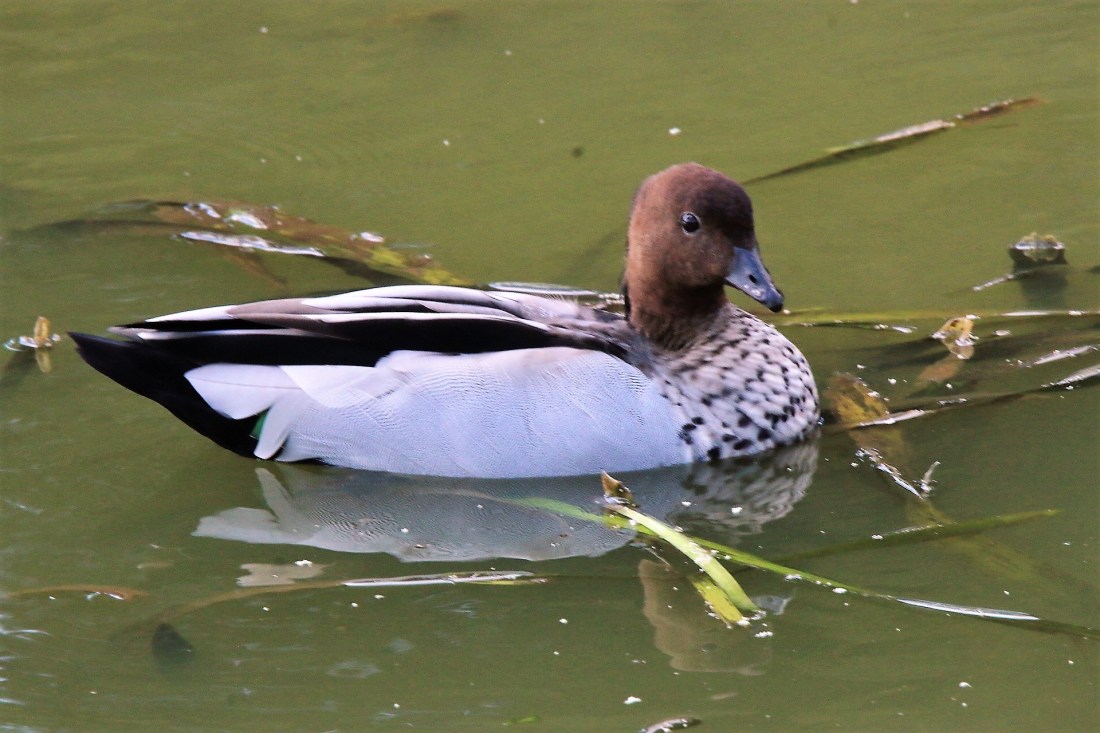
 Ducks ain’t oils, as they say, and it is worth looking closely to distinguish them. This is a breeding male Australian Wood Duck.
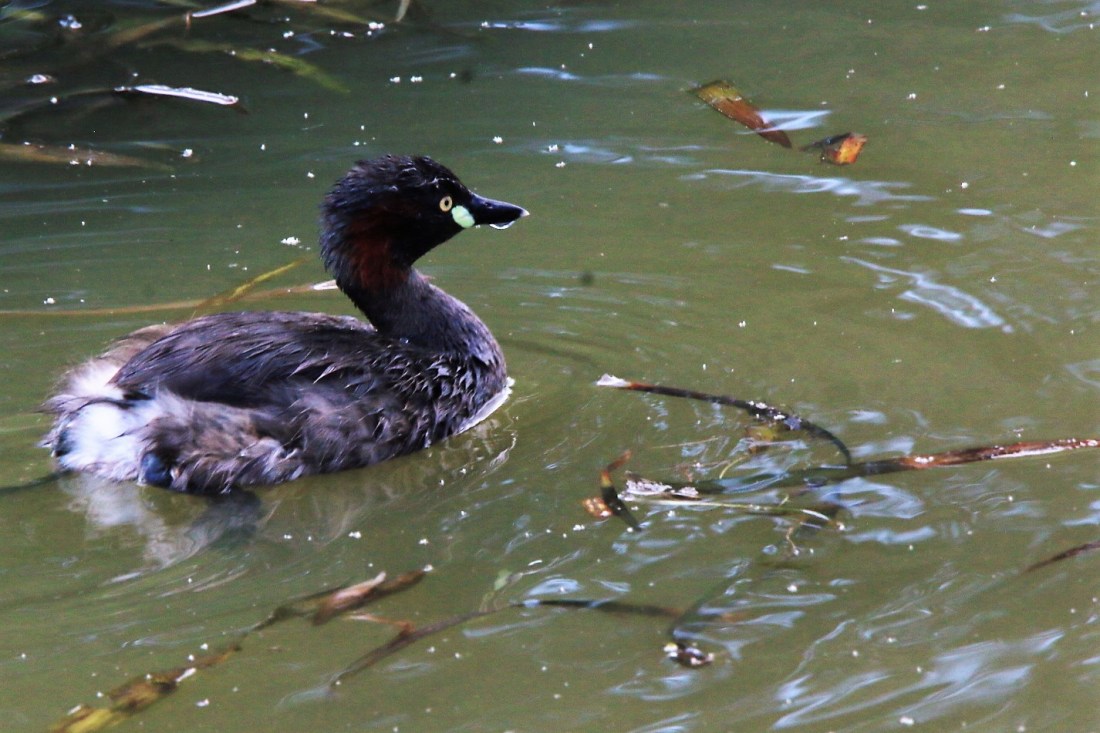
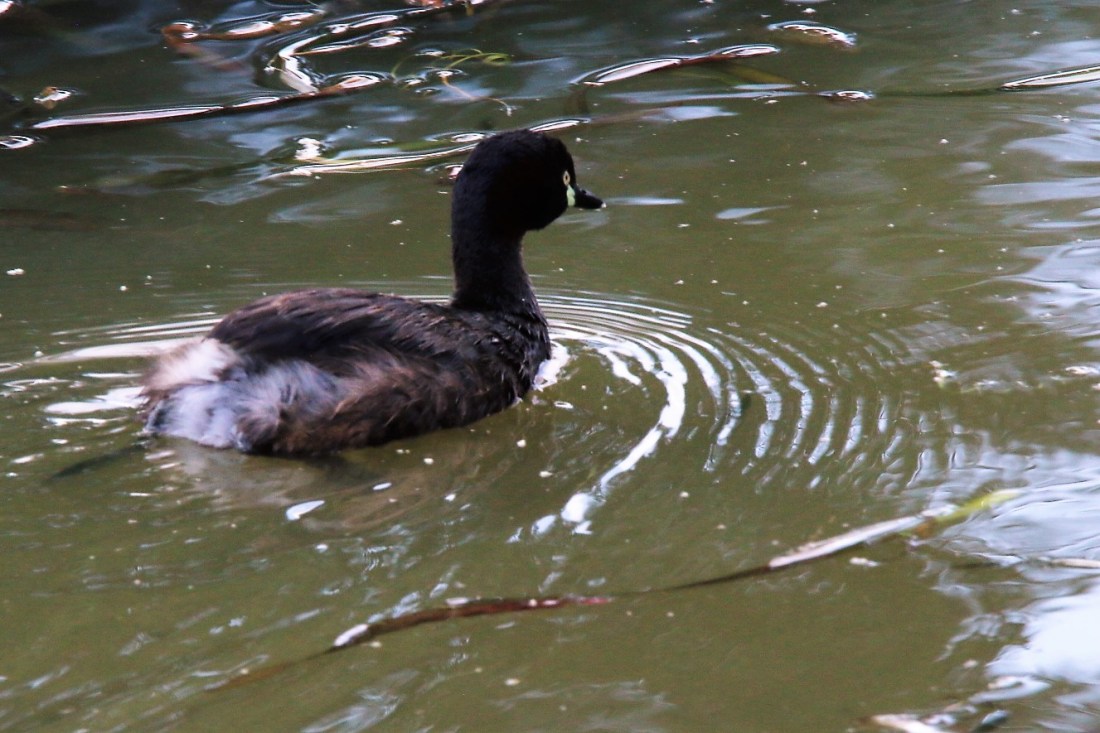
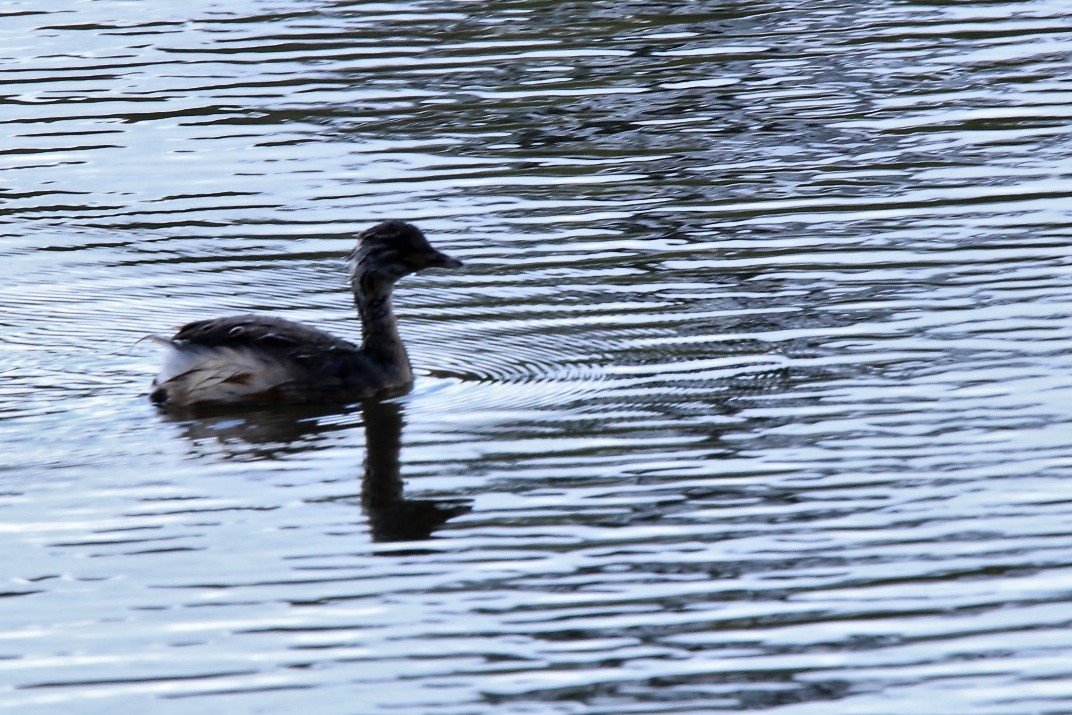
 There were also a number of breeding Australasian Grebes and some non-breeding – in the last photo the yellow patch behind the beak is absent.
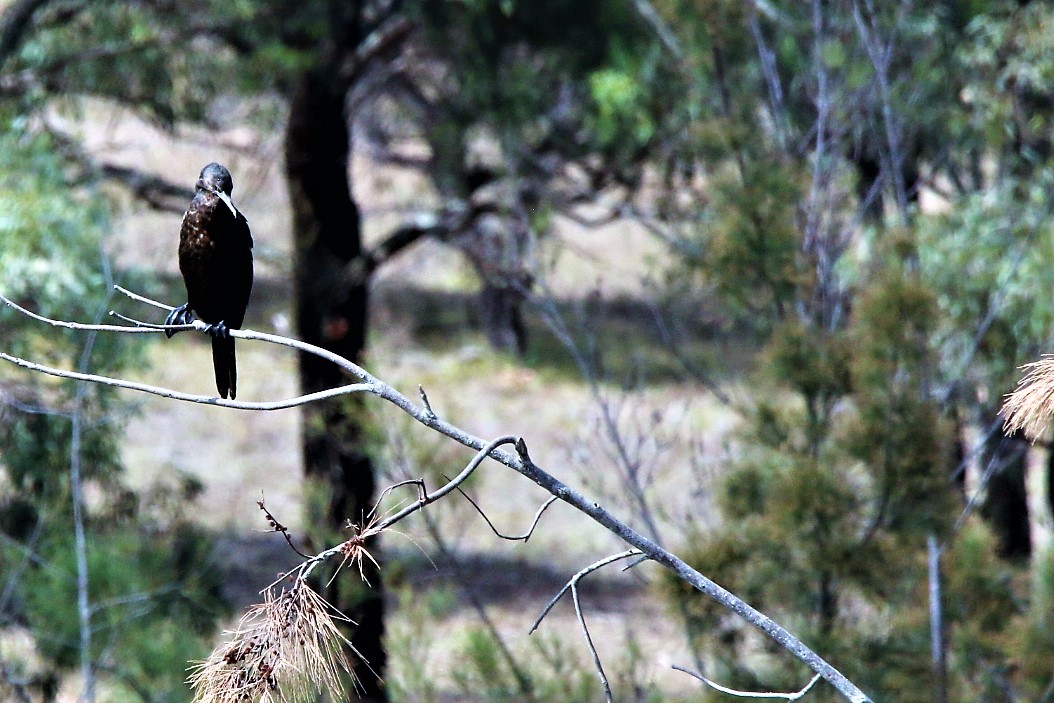
 A Little Black Commorant was one of the birds drying its wings:
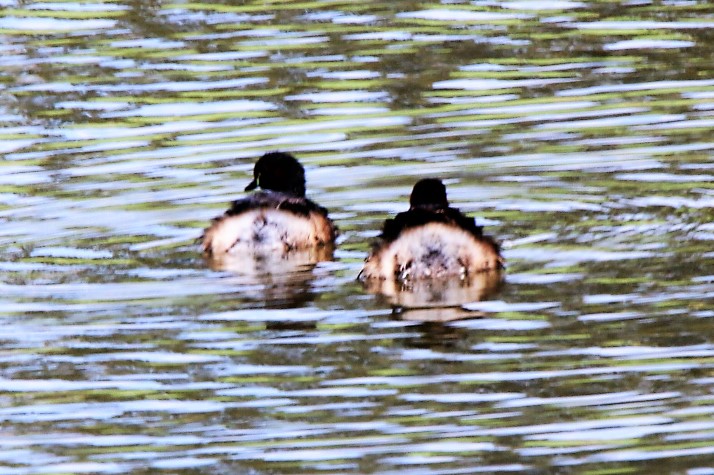
 And lastly, the classic Australasian Grebe send-off:
Michael Monaghan
 Michael Monaghan Photography