William Collins journeyed to Van Diemen’s Land with his unrelated namesake, David Collins, on the Calcutta (for an unsuccessful settlement at Sorrento, Port Phillip), and then on the Ocean to the Derwent, and the first major settlement there.
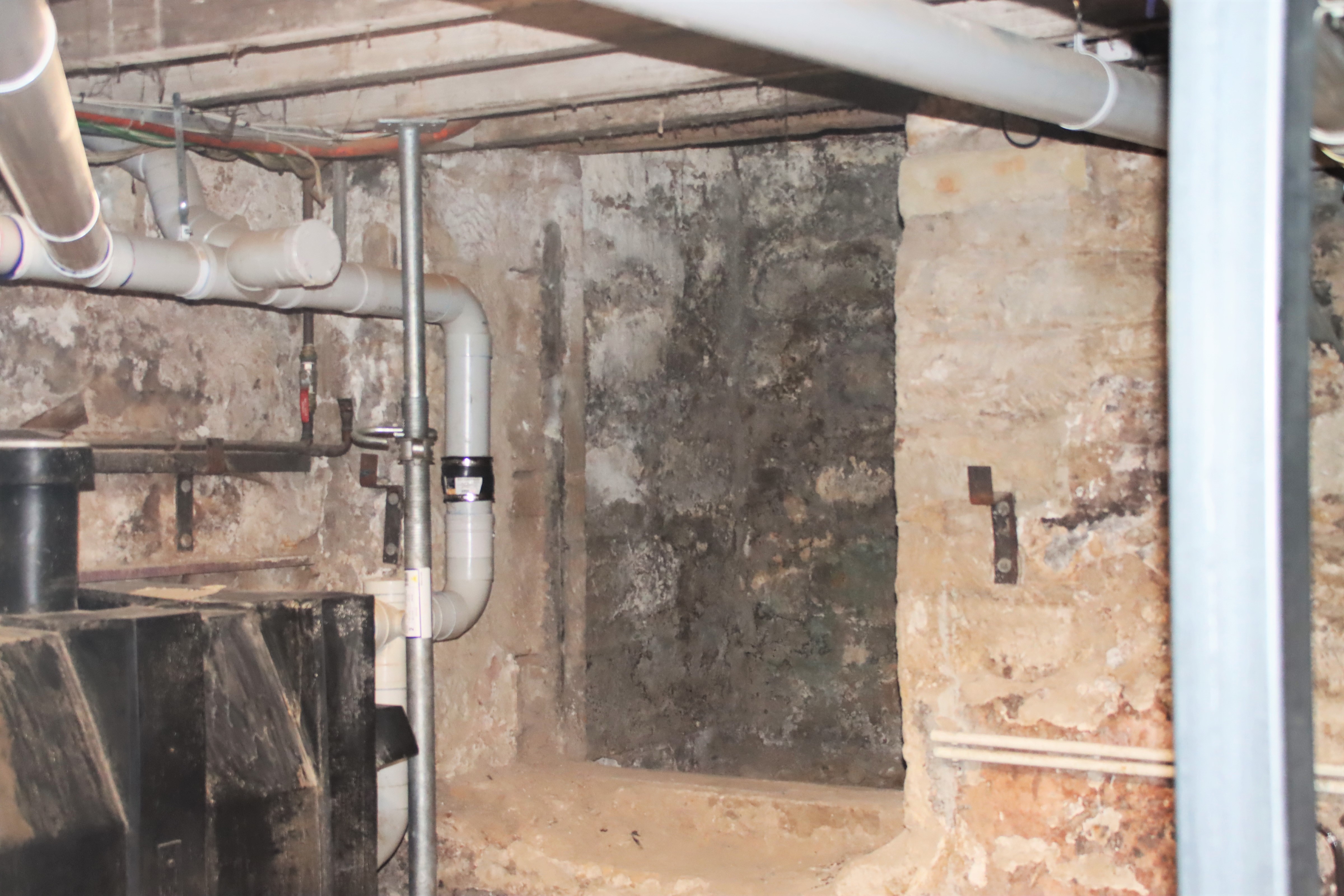
He was my great great great great great uncle (maternal), and he built a shop – in the loose sense of “he built”. In August 1805, Rev Knopwood noted in his diary that he attended the opening of this, the first shop in the Derwent settlement. And the walls and flooring are still there, underneath the Bank Arcade, 68 Liverpool Street, Hobart. It is one of the very oldest standing European buildings in Australia.
Thanks to the generosity of the arcade’s owner, John Short, I was shown around it, now 3 metres below street level. He has written a fantastic book on the history of the arcade and the shop, called ” A different view of Hobart”; a major incredibly well researched tome.
Collins played a major role as the earliest Derwent harbourmaster, but also as a whaler, explorer, advisor and trader. His whaling station was at Droughty Point, very close to the land grant to my first fleet ancestor, Andrew Goodwin, who was on the western side of the Clarence Plains Rivulet.
It was Collins who rowed, again using that term in the loose sense, from Port Phillip up to Port Jackson to advise Governor King that David Collins wanted to abandon the attempted settlement at Sorrento. No doubt to their astonishment, they got picked up by the Ocean, which happened upon them about 90 km south of Port Jackson. Some naughty types have suggested that was just as well because Collins had run out of the copious supplies of grog he had taken with him – presumably just for ballast, which he managed more efficiently by swallowing it.
Collins was in league with traders John Ingle and Edward Lord/Maria Reisby. Short has identified various attempts to “pretty up” the shop, confirming the general belief that Collins was doing very well thank you.
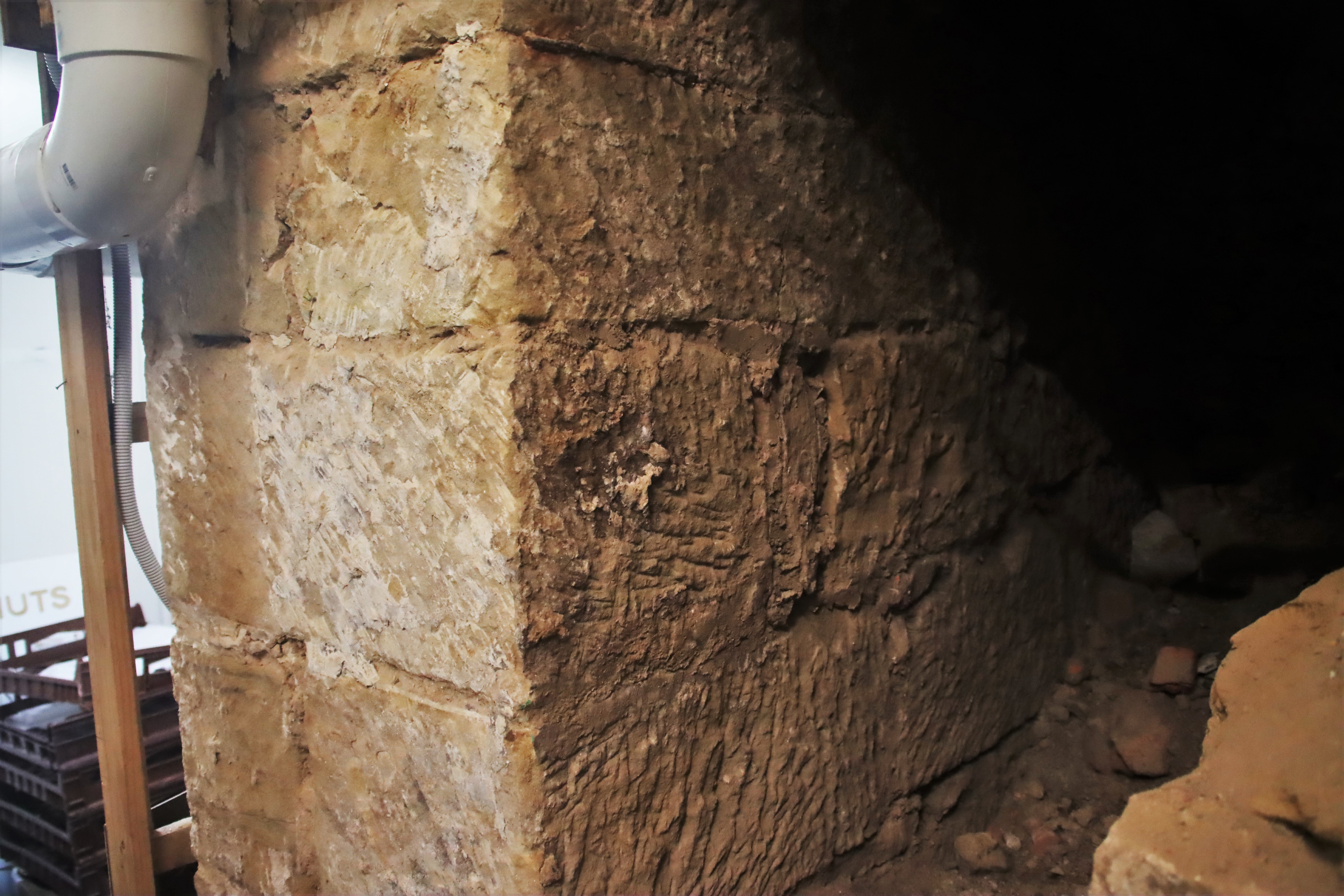
I have to leave some of John Short’s latest discoveries, which are seminal to Hobart’s earliest European building history, to him to reveal, but again they are the result of painstaking and rigorous research and physical examination. He has, in his book, captured significant social history of Hobart, through the eyes of this building. Carefully undoing two centuries of re-building, destruction, rubbish dumping, plumbing and extensions, and building collapses, he has uncovered the earliest walls, doorways, window cavities, timber flooring and evidence of earlier less formal building attempts.
Above is one of the original window frames, revealed by the bevelled corners, which faced out of the Hobart Rivulet. Below is the frame to the door.
Short has even painstakingly measured the distances between the nails, comparing them to the original floor joists, and confirming that the flooring used to be down there rather than where it was found. He as also confirmed with our leading nail expert that the nails were made in England.
At Bridport Aerodrome, the plane all set for take-off. We (ie the pilot) wisely decided to wait for an hour or so till the rain was a tad less torrential. You wouldn’t want all that water coming in through the hole where the door is meant to be.
Flight headed out over Barnbougle golf course although vision was somewhat impaired by the rain.
Turned out not to be rough, even heading through a low very grey looking cloud mass.
Whitemark has a mid-sized tarmac runway, but we landed on a grass strip in the southern “town” of Lady Barron. The rental car was waiting, with the bullocks nearby.
My accommodation, a comfortable studio on an acre or so, with the main 3 bedroom house nearby. Had lots of light, a good wall mounted airconditioner, a sizeable vegetable garden, and everything one could want. No tv, but with the marvels of modern technology I could access the net over my phone’s hotspot (telstra access only), and the footy over my Foxtel account.
Whitemark, the biggest “town”, has about 20 houses, a supermarket, one pub, a baker, a household goods/newsagent, and a butcher closed for a family event. Later in the week I found a very nice modern spacious cafe on the waterfront, open Wed -Sun. The other township, Lady Barron, is about 25 km south. It has a small shop and a tavern. Fuel is available in Whitemark via a very smart 24/7 card operated pump. There is also a pump at the Lady Barron shop. There are half a dozen other small groupings of houses, but none other with any shops. A very good museum is about half way up on the east, at Emita, which is on the way to Wybalenna.
Whitemark from Walkers Lookout.
There are a couple of stretches of sealed road, but mostly the through roads are good quality gravel.
Shops shut on Saturday at noon and are closed Sunday. The only bottle shop is a small one in the Whitemark pub. Apparently locals import beer and wine from Tasmania in bulk orders. Wednesday is an exciting day as the ship comes in.
Day one saw me heading out to Wybalenna, the chapel built for the tasmanian aboriginals rounded up for life saving conversion to christianity by George Augustus Robinson. Then up to the top of the Island, Parana, and winding back down. There are lots of holiday shacks but also some magnificent houses making the most of the strait views.
Killiekrankie is similar, and famous of course for the Killikrankie diamonds, being Topaz. There were families on the beach straining sludge through sieves in hope, I imagine, of becoming rich.
Once back, I continued down to Trousers Point, to the west of the Strezlecki Ranges. A very scenic bay and forest featured.
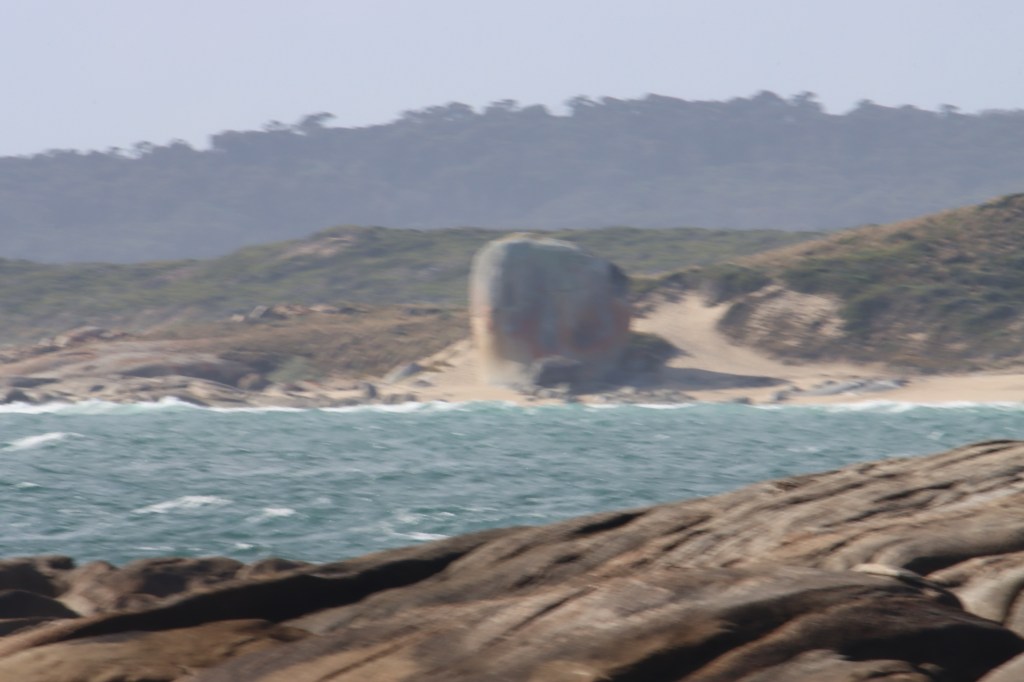
The next day I went to various west coast beach spots, with short spells out in the gale and rain. All had interesting features, including at Allport a classic mutton bird (short tailed shearwater) nesting ground. Also visible to the north was the famous Castle Rock. The water is universally crystal clear.
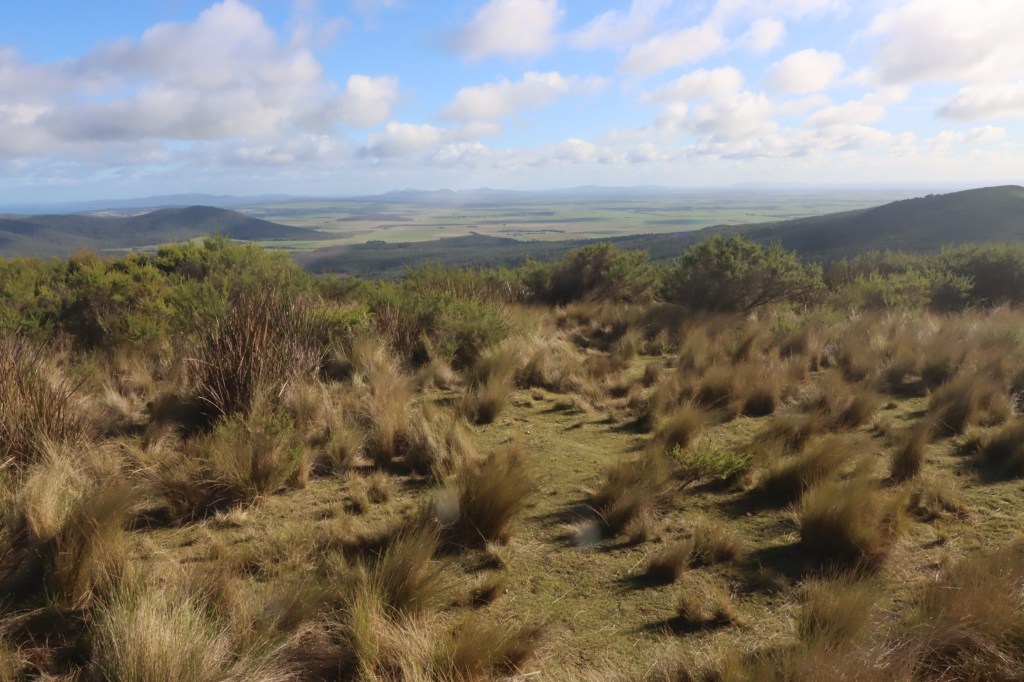
Next day was mild with a low wind. I headed out to the east side via Walker’s Lookout, from which there are expansive views in all directions.
Essentially the Island is farming country. Homes are many kilometres apart and isolated. The farming land is largely flat and verdant. Mostly it is along the east coast, but I found very flat expansive farmlands in the north east too.
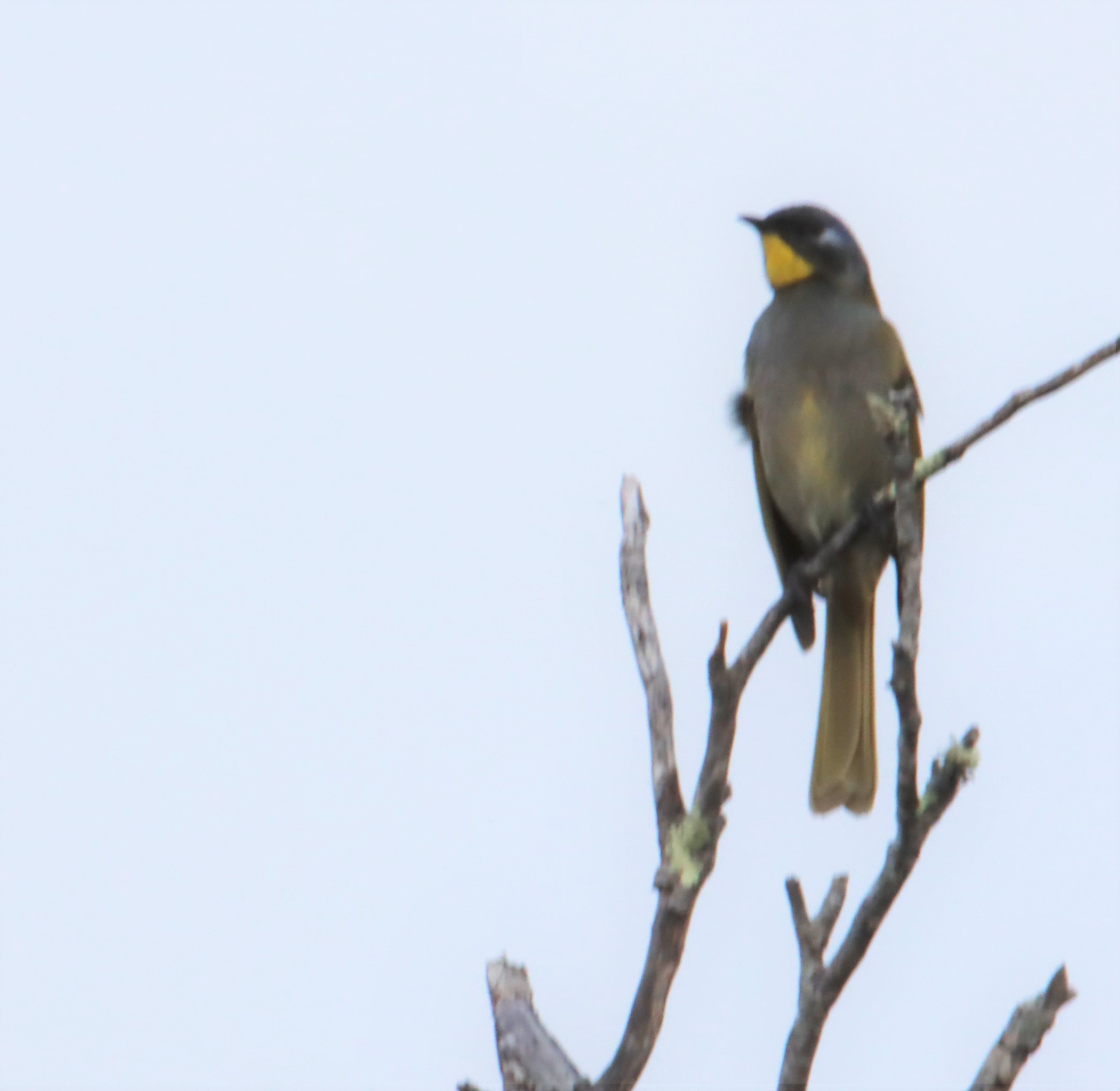
All the roads out to the lagoons were ok till the last vital stretch, where they were all adversely affected by the rain and, I guess, 4WDs. Saw a few birds, but only two I hadn’t seen before – a yellow throated honeyeater, and a lost looking Short-tailed Shearwater (mutton bird).
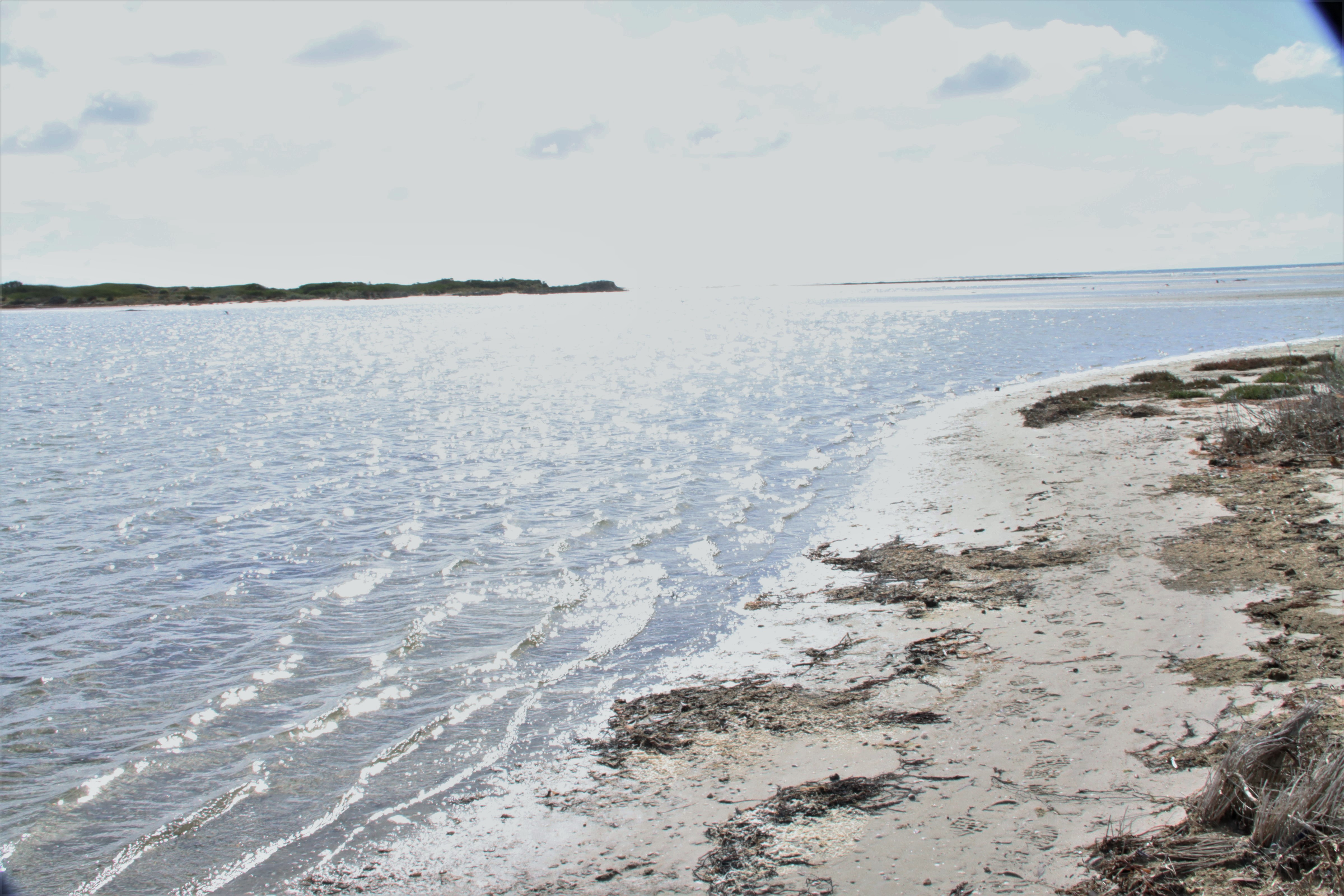
This is Patriarch Lagoon.
West of Lady Barron, on the so-called coast road is interesting volcanic remnants, pumice and basalt flows. The bird hide there is well placed, but the water was so far out both times I went there, so were any birds. What is notable here is that it looks like a major breeding area for White-Faced Heron (there were about 100), Sooty and Pied Oyster catchers, and Chestnut Teal.
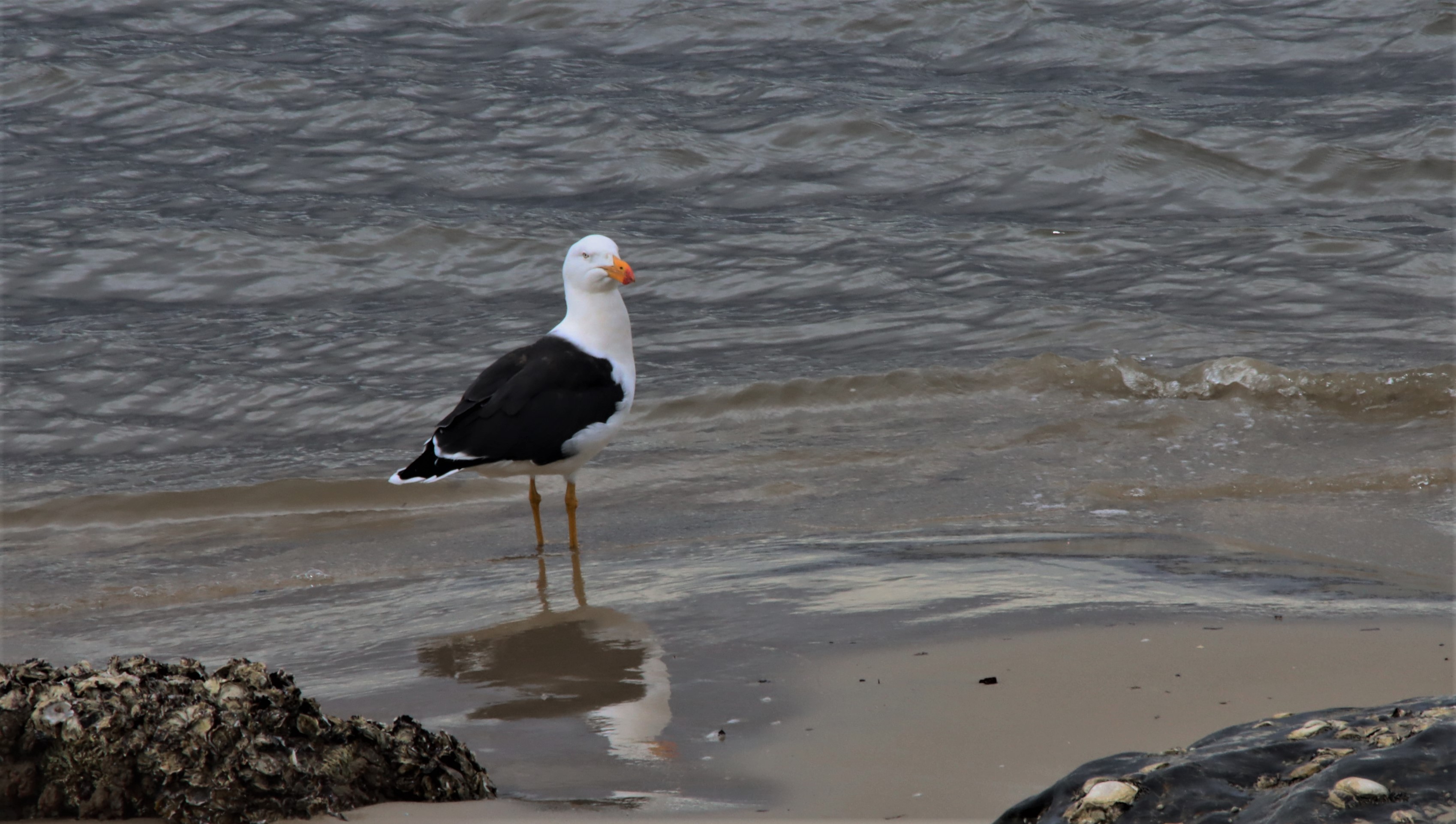
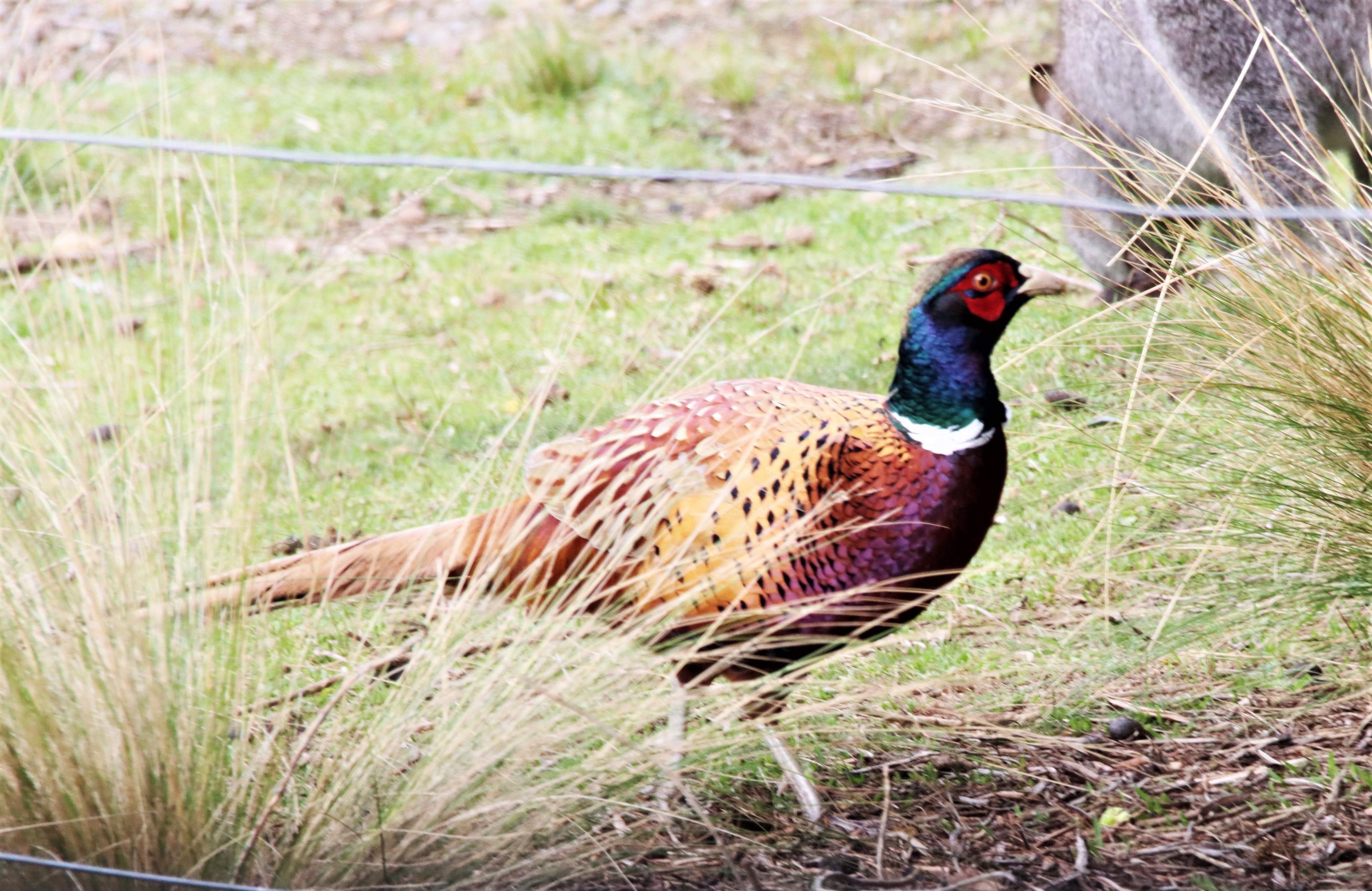
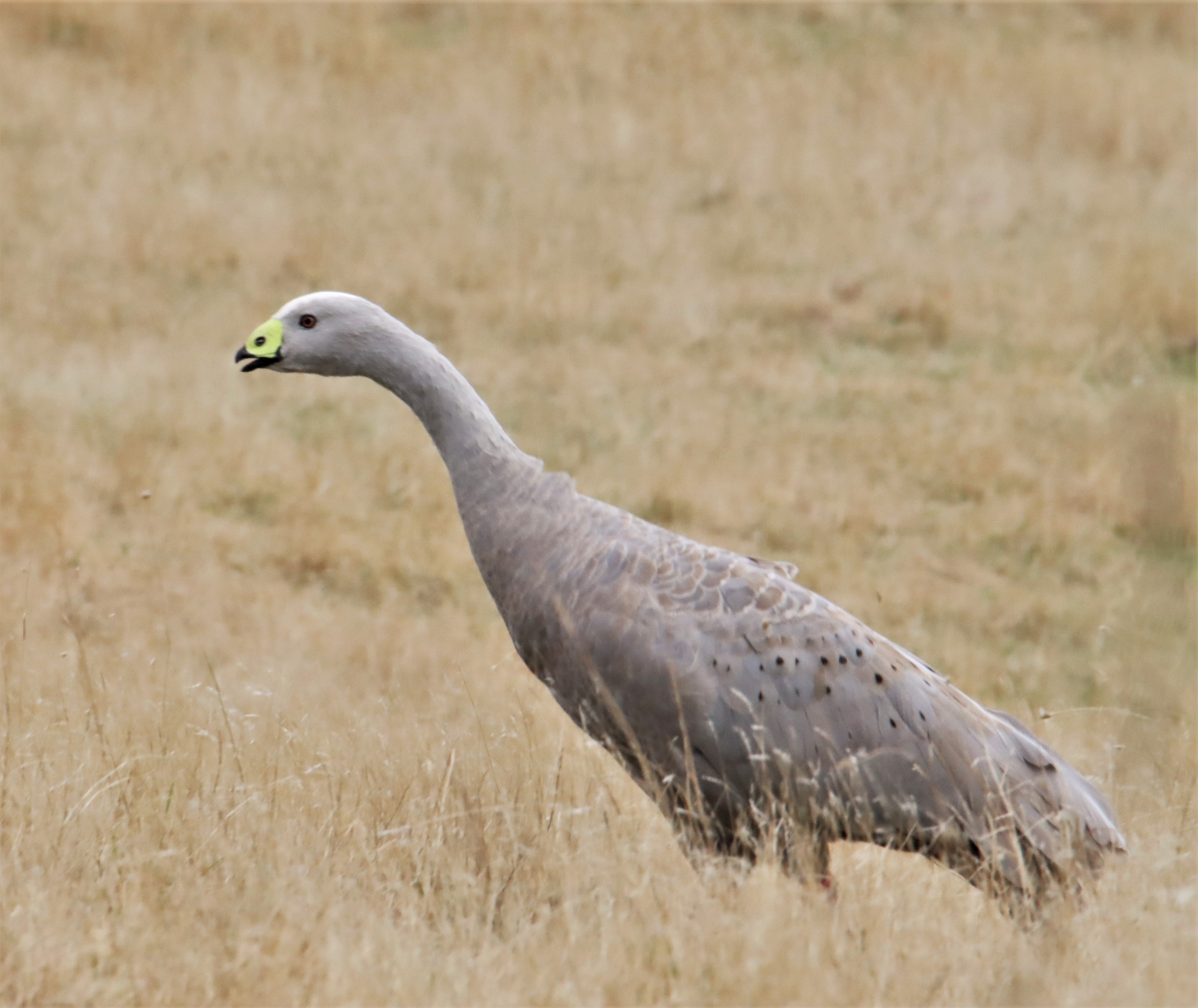
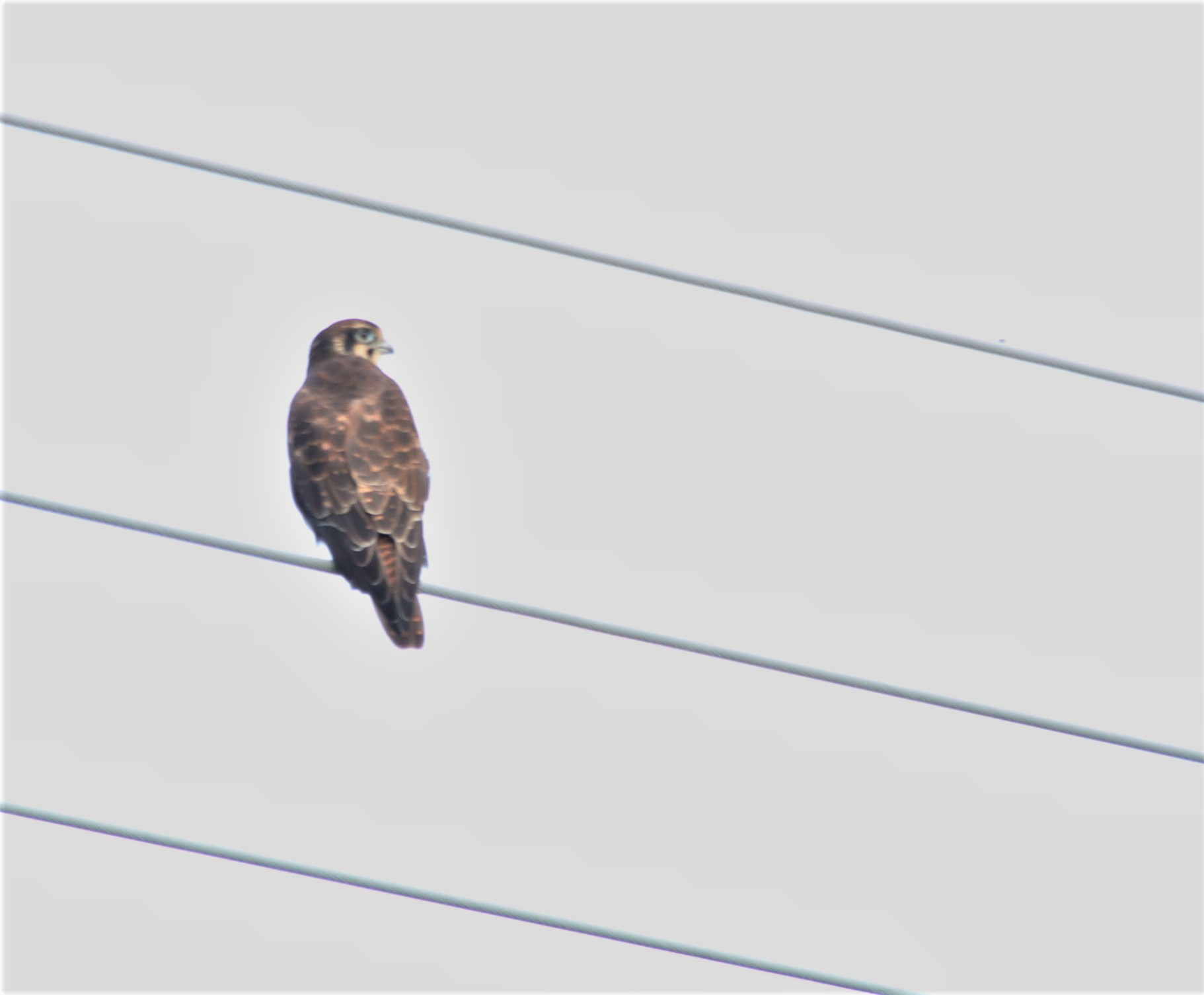
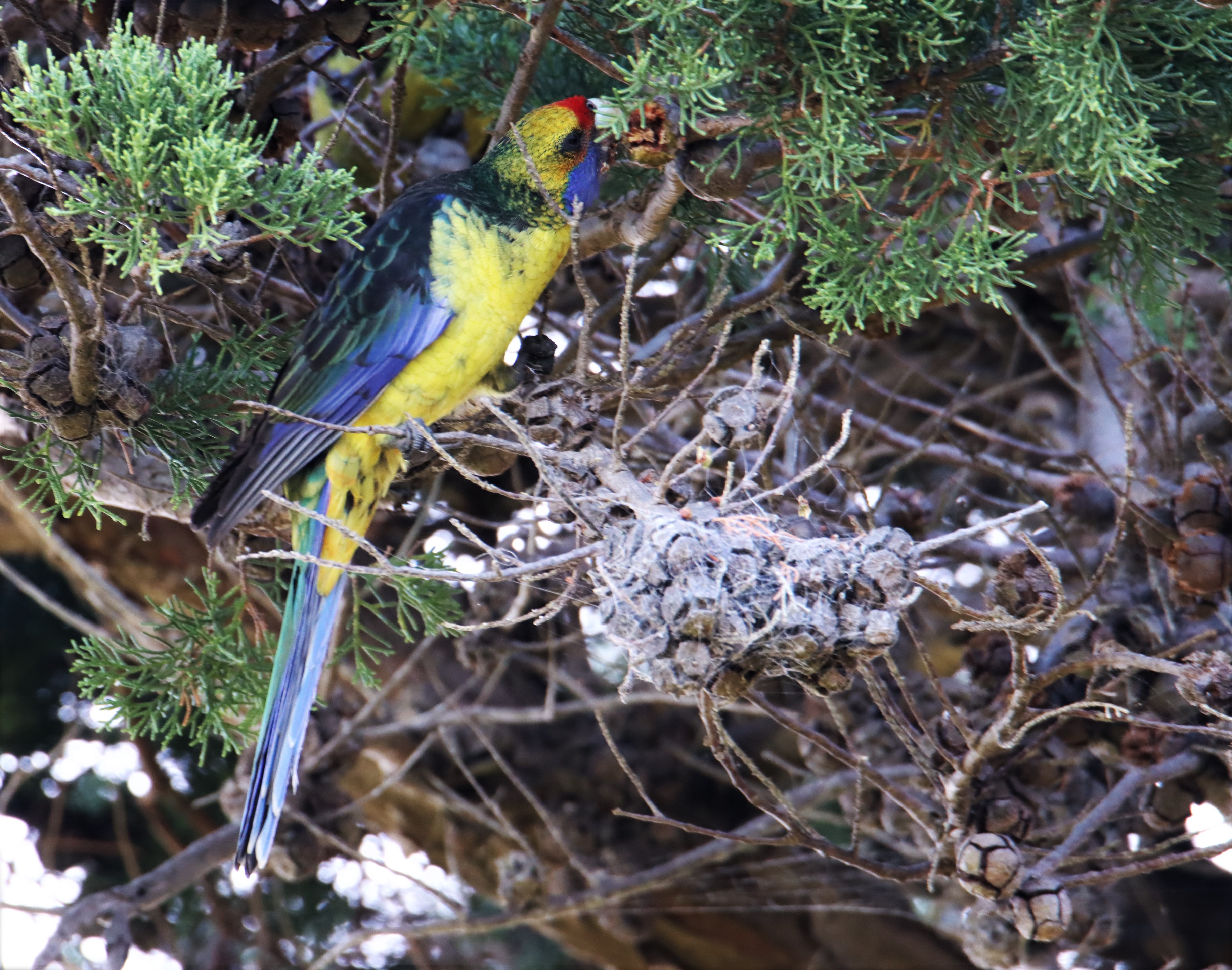
The weather was mild enough at the end of the week, but windy with frequent squalls making getting far from the car problematic. Pottered about the various bays and forests. Saw plenty of green rosellas and yellow-tailed black-cockatoos. Also spotted lots of Little Grassbirds, Black Currawong, Cape Barren Geese, some pheasants, and a couple of Brown Falcons, which were very nervous of a stopped car. In the garden where I was staying there were Grey Fantails, Welcome Swallows, Fairy-wren, Grey Shrike-Thrush, and a lone young Green Rosella.
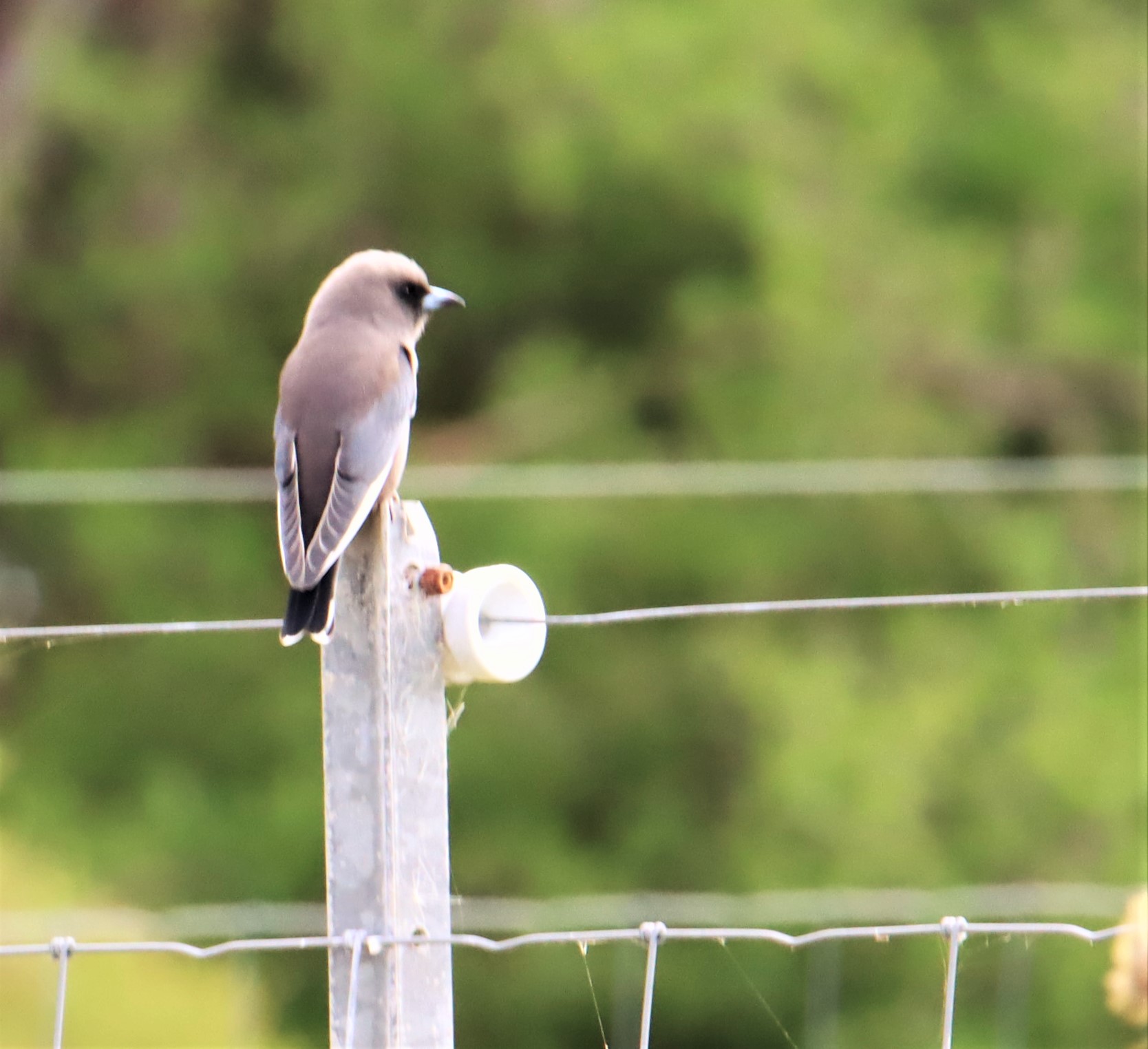
Above from left to right: Little Grass Bird, Yellow-throated honeyeater, Pacific Gull, Grey Shrike-Thrush, Pheasant, Black Currawong, Cape Barren Goose, Dusky Woodswallow, Brown Falcon and Green Rosella.
Sawyers Bay was a very photogenic spot, and I spent a few hours trying to capture it – with the camera. Below are aspects of Sawyers Bay. The Granite (volcanic) boulders were covered with limestone in the long periods underwater, then having been exposed, the limestone becomes coated with lichen.
Finally, I was impressed at what wise people run the Flinders Island International Hotel.
The Australian Chamber Music Festival is held in Townsville, late July to early August. It has been so, since an enterprising State minister lured it there over 30 years ago. This, of course, was a return, following two years abandoned for some reason.
I thought: wouldn’t it be interesting to drive; take my time and see the world. It is, you might suspect, a bloody long way from Canberra – over 24 hours actual driving time. But it doesn’t involve getting into a pandemic petri dish called an airplane. A friend from Melbourne saw the merits, and offered to accompany me. I would drive to Albury area and pick up said friend, then off we would go.
Cunning plan Baldrick, I mean what could go wrong. Well, the first thing was there is absolutely no accommodation in western Queensland, grey nomads being great dinosaur fans it seems. Then my trusty ford territory broke down in a big way a week out. Plan B, my friend would drive to Canberra and we would take that car rather than mine. The back end would be worked out in due course.
So the journey commenced.
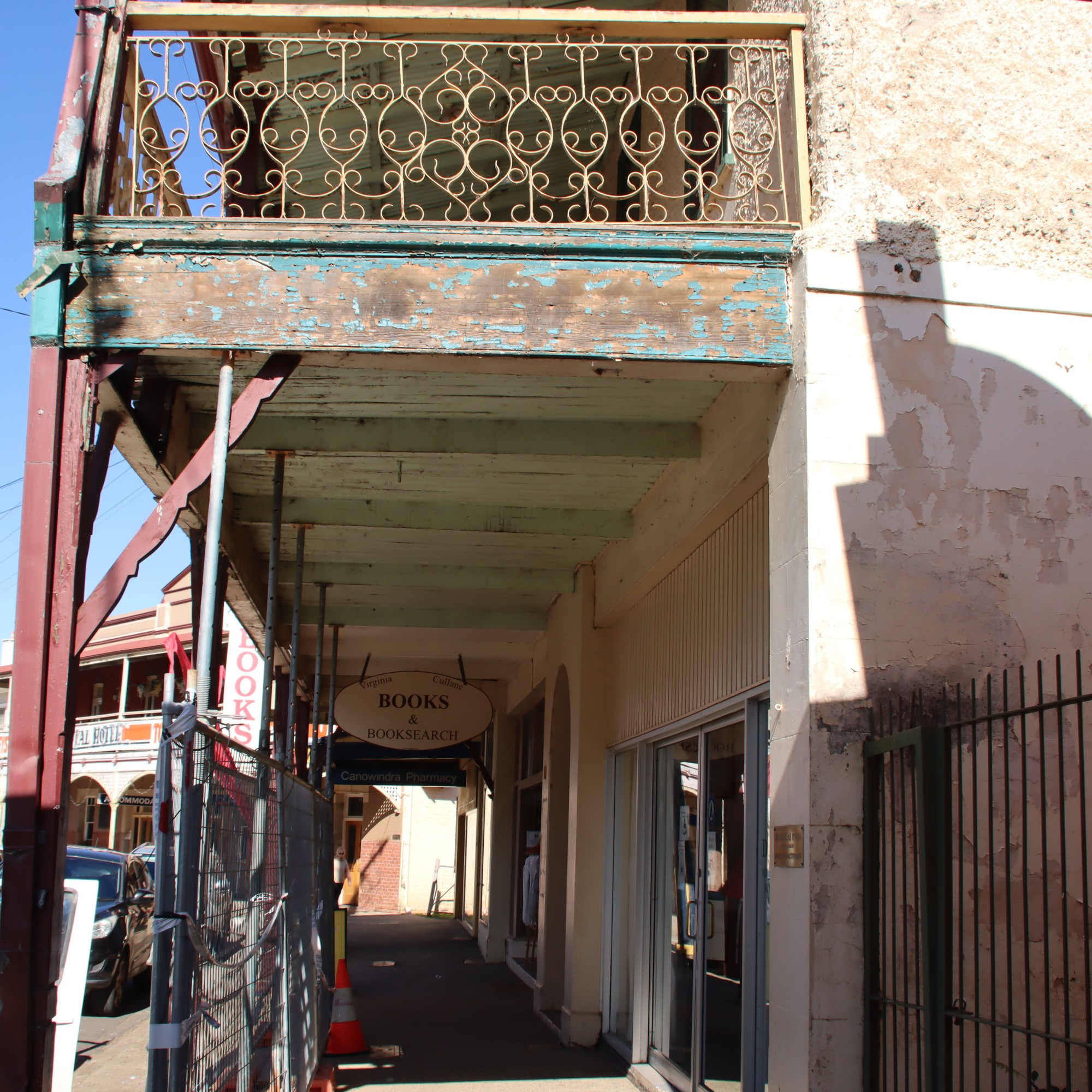
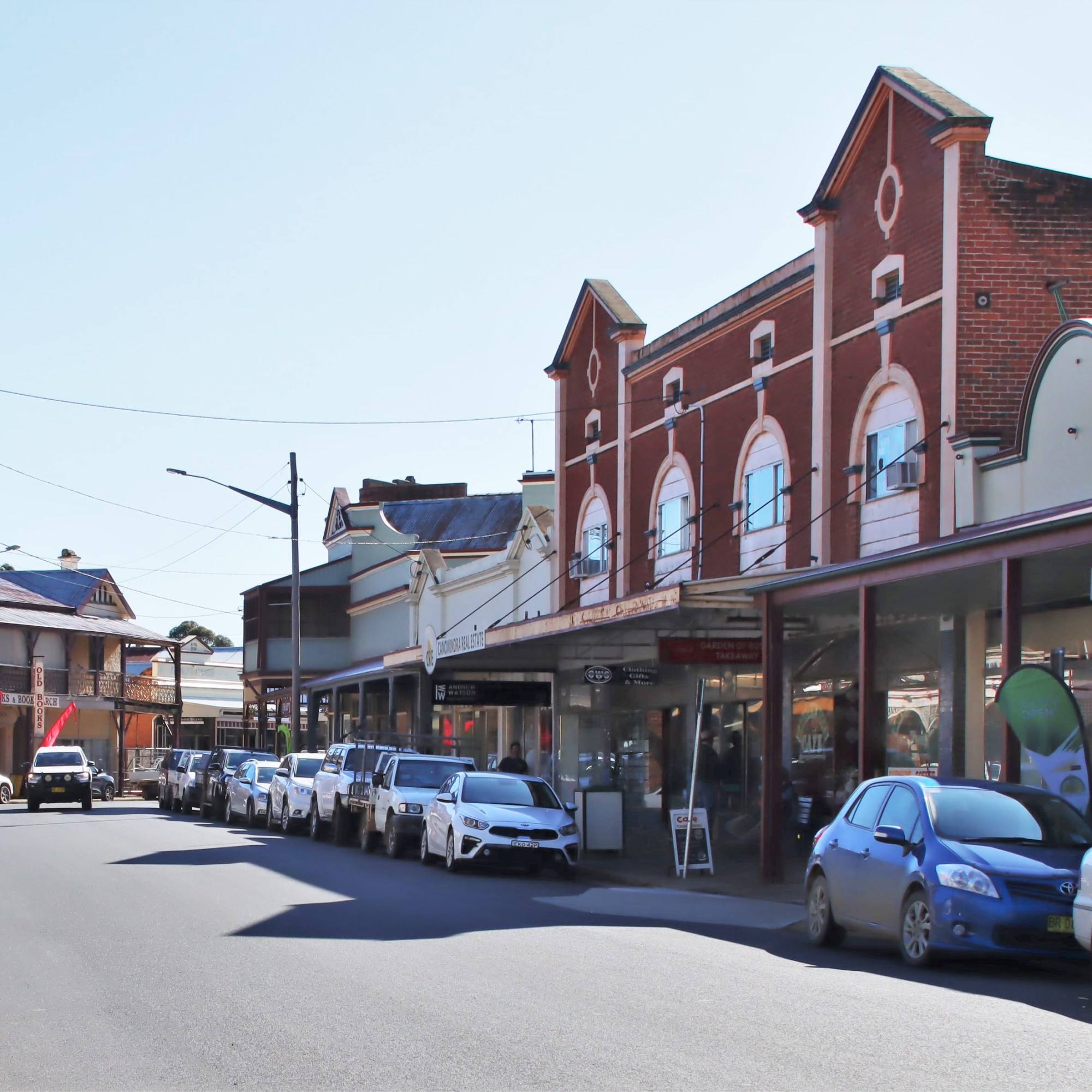
First stop was Canowindra (pronounced Canoundra), a generally well preserved town.
Then for a surprisingly tasty lunch at Molong pub.
Despite being one of the persons on the planet the least interested in horse racing, I noted the efforts the residents of the tiny Dunedoo had made to celebrate their famous contribution.
Overnight at Coonabarabran we didn’t have time to explore the observatory because plan B involved one less day travel. Just as well, as it turned out not to be open anyway. After the 2003 bushfires destroyed Mount Stromlo observatory and all the telescopes, Siding Springs is now Australia’s main data capture observatory. The data is still sent back to Stromlo for analysis. Stromlo now specialises in shooting space junk with lasers (they shoot the front of the rapidly moving object so it stands up and then is dragged into the earth’s atmosphere and burnt up), satellite construction (the size of small book) and astronaut readiness training.
Where was I, oh yes, so Siding Springs observatory sits proudly high above Coonabarabran.
The Warumbungles are impressive and on the list for a much longer examination.
Note the half moon high on the right.
Winding north we were very surprised to come across a real footy field in Narrabri.
St George, in the middle of cotton growing country, is a smart little town on the Balonne River, which has all the signs of a frequent flooder. The Riversand winery has a nice cafe, some good wines including a Golden Liqueur Muscat (now that’s a blast from the past) and knowledgeable staff.
In Roma, the stand out was this 1918 School of Arts Hotel. The original was built in 1886. I guess it is the Queensland equivalent of the Mechanics Institutes, but with the beer, well Fosters.
Next was a long 8 hour drive through Rolleston, Blackwater and Middlemount up to West Mackay. There was water lying beside the road almost the whole way, with regular modern electronic signs advising if the road was open ahead. The car GPS kept trying to get us off those flooding roads onto a two hour longer journey, but we took comfort in the local signs. But you would certainly not want to head that way when it was actually wet. In Rolleston, where, it being Sunday, all (the one) shops were shut, an enterprising lady had a well attended little coffee wagon set up in the park. Apart from the massive coal tailing dumps in Blackwater, and the occasional several kilometre long coal trains, there was nothing but the constant fear that there would be water over the road.
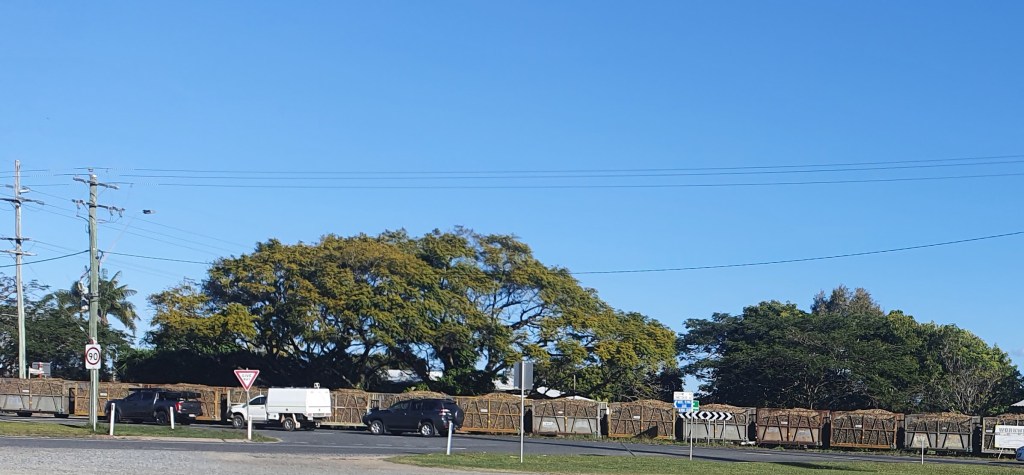
Getting closer to Mackay it was very evident it was sugar country. Trains, railways, warning signs about trains, and billowing smoke gave it all away.
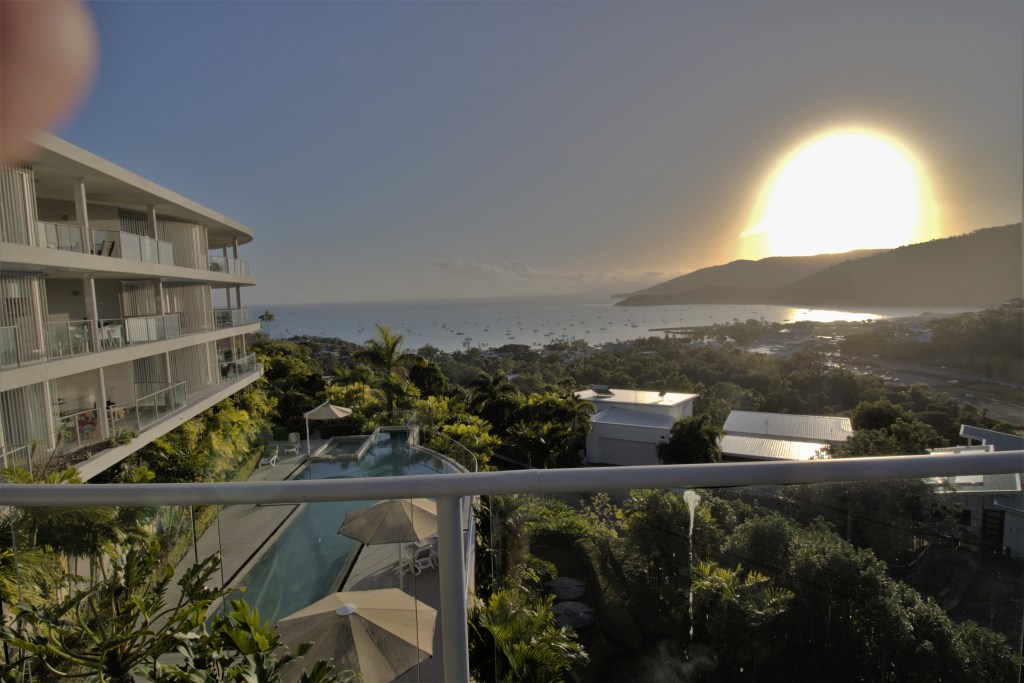
Welcoming a few days off the road, we found our Airlie Beach apartment was spacious enough for 2 or 20, and the balcony looking out over the water was massive. We looked around for electric scooters so we could get from one outside table t’another. Lovely sunrises and glistening water topped it off.
Not that one would swim:
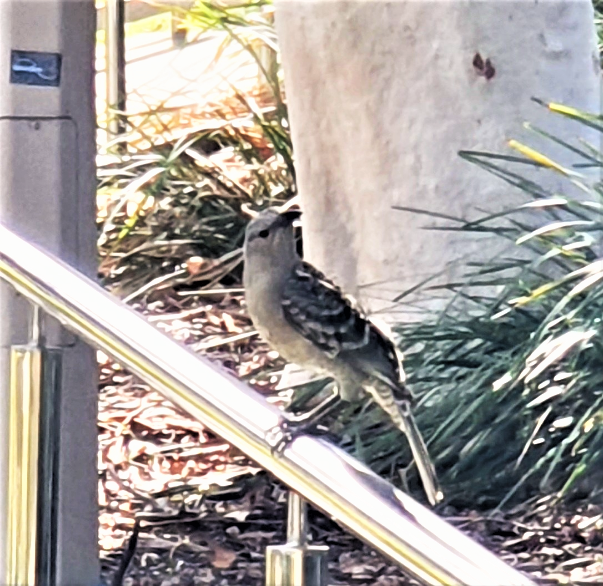
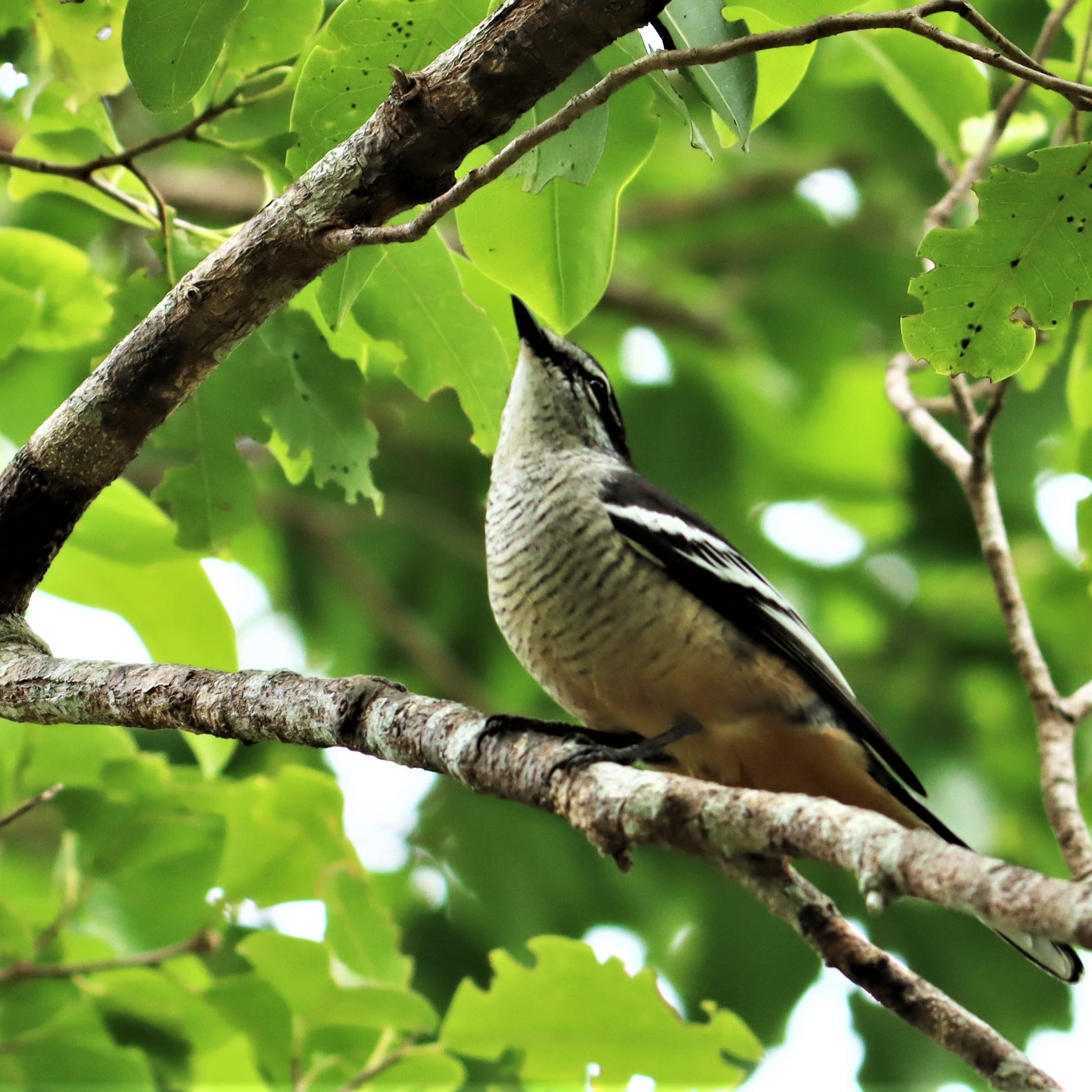
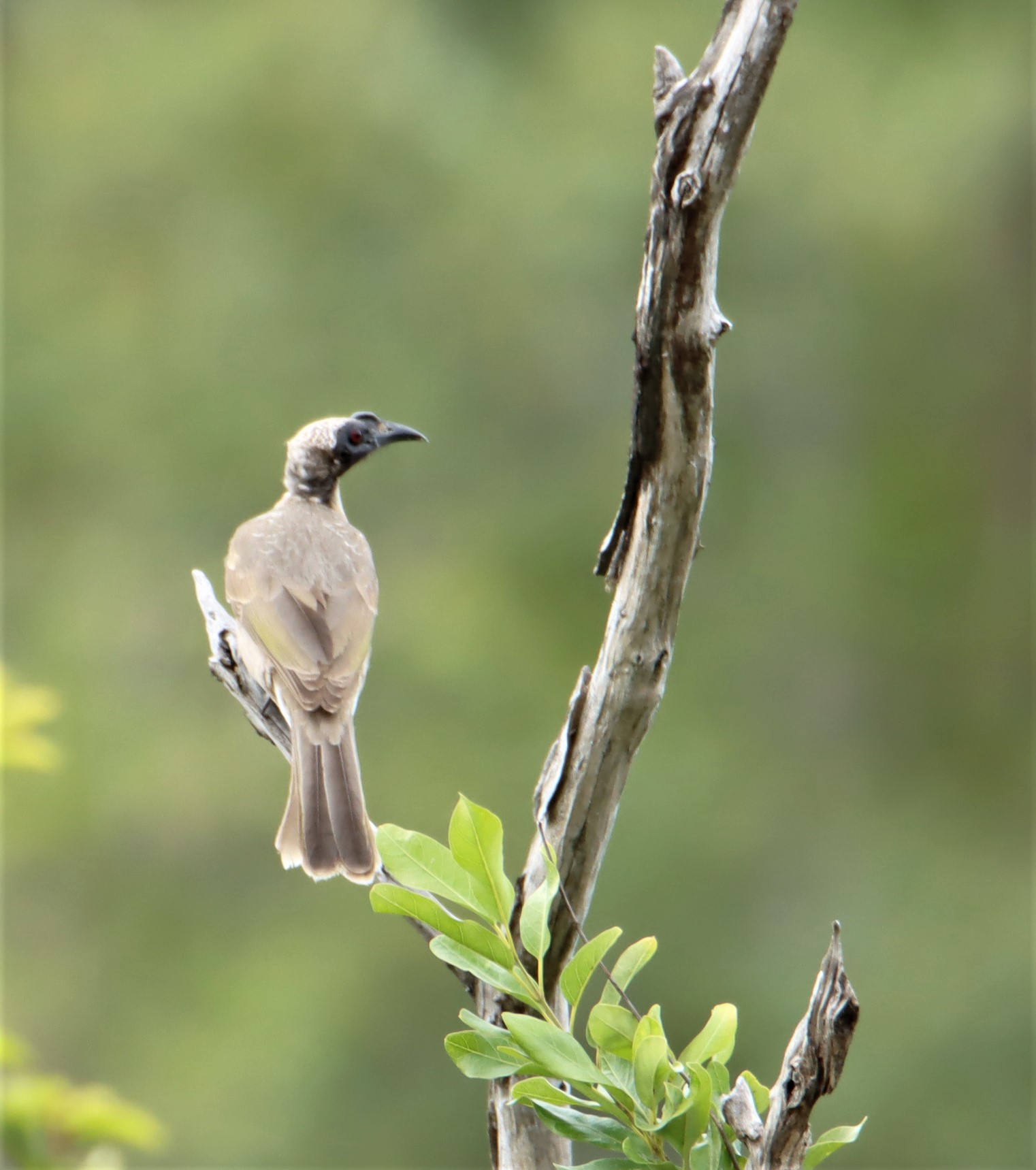
There were some lovely bush areas with plenty of water, so lots of north Queensland birds. In order we have male then female Olive-backed Sunbird, Great Bowerbird, male and female Varied Triller, Forest Kingfisher, Helmeted Friarbird and Great Egret.
There are many Green-ant nests (not to be confused with green Antnests), once you know they are there.
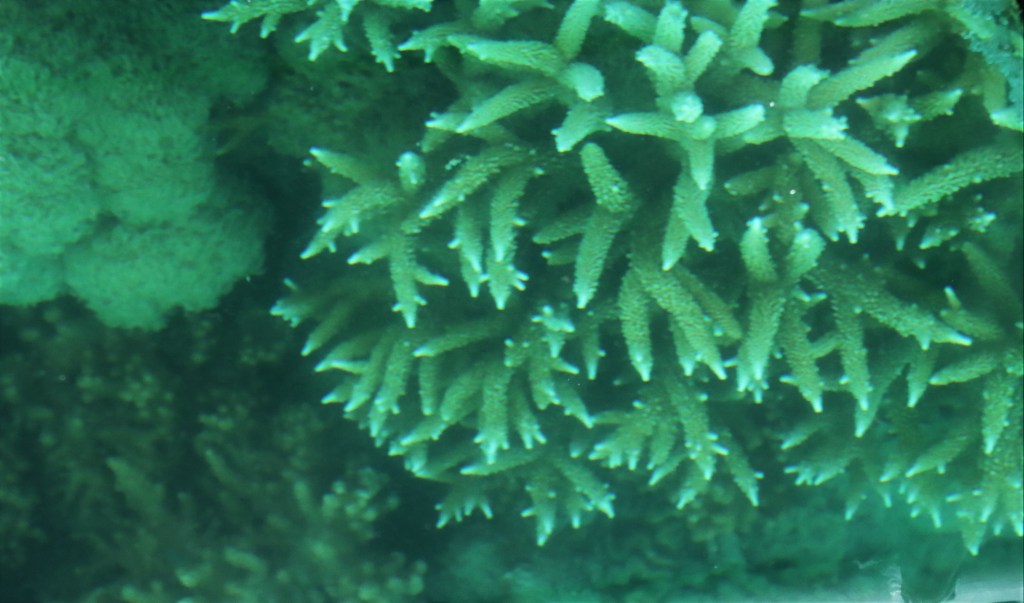
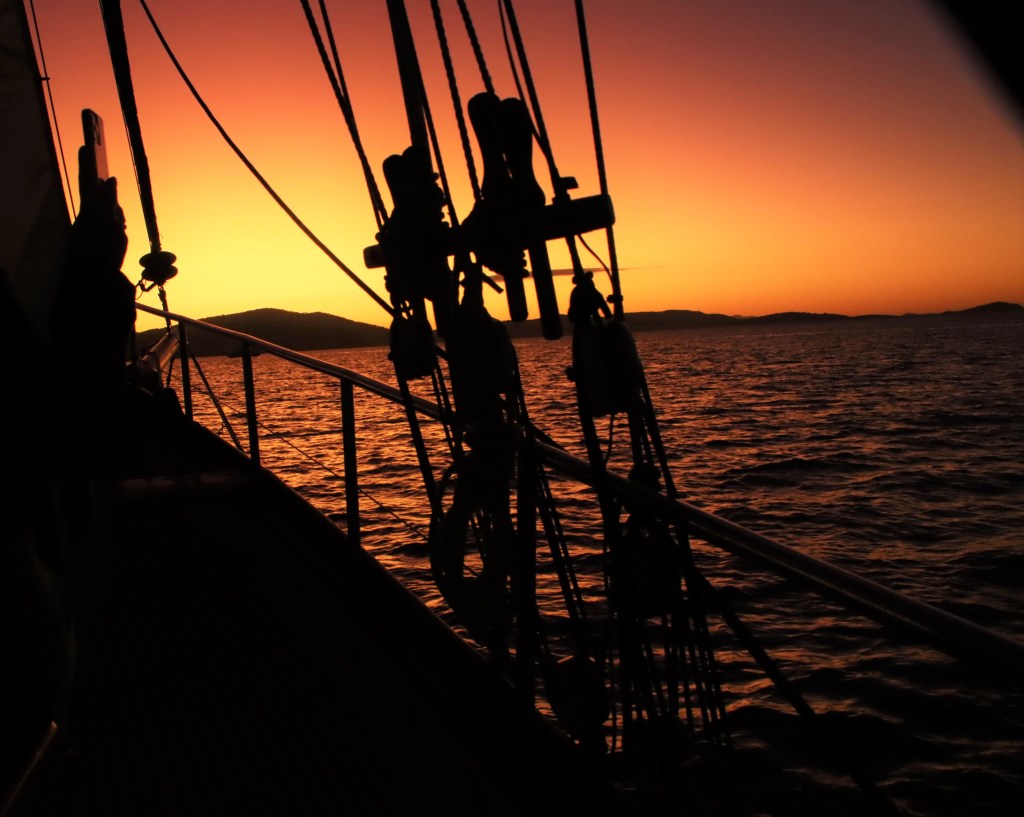
There are plenty of boat trips and we did the coral glass-bottom boat and sunset yacht ones.
Heading from Airlie Beach up to Townsville, we dropped in to Bowen. A funny set up sees the “resorts” a fair distance from the rather separated township. But the bay was picturesque and, as we discovered on the way back, the little cafe good quality.
Townsville is a funny place too. It is soooo quiet in the city, you could be forgiven for thinking it is set up as a movie set. Even at peak work times, there were only a dozen or so cars around. About 2/3 of the shops were closed and empty, with only some advertising that they were available for lease. The extensive suburbs of Townsville stretch further west, with several huge indoor shopping malls. That said, the lack of activity in the city, except for the massive queues of under-dressed youngsters on Friday and Saturday night at the Flinders St nightclubs (there is a permanent relief – from alcohol – station, with plenty of police too), must be a worry. Even out on the expansive bay, there was little activity – mind you it is winter so only 28°.
The Australian Festival of Chamber Music was, again, fantastic. The difficulty of getting overseas acts due to some global issue meant we got to see even more amazing Australian talent. About 80% of attendees wore masks, which was comforting. Before you knew it, and about 40 concerts later, we were heading back south.
Having sussed out Bowen on the way up, the Coral Beach cafe was the perfect place for brunch on the way back. Very good quality, and nice and open with lots of anti-covid breezes.
The highlights of our first overnight stop, Mackay, were the re-built safe harbour (100,000 tons of massive rocks, lots of expensive looking boats, and chique new apartments) and the botanical gardens.
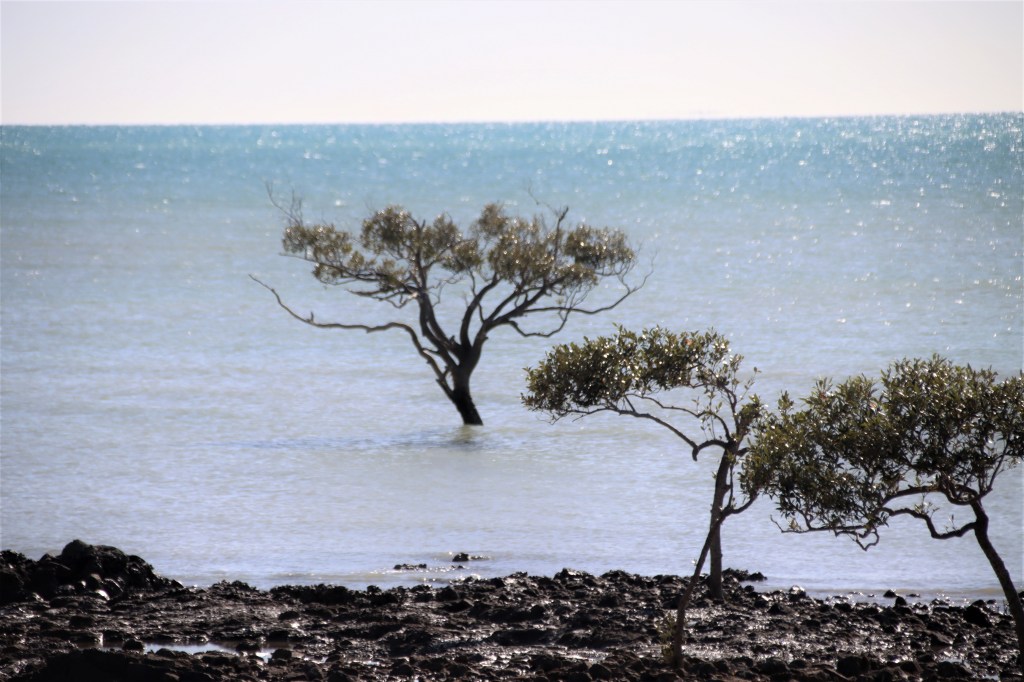
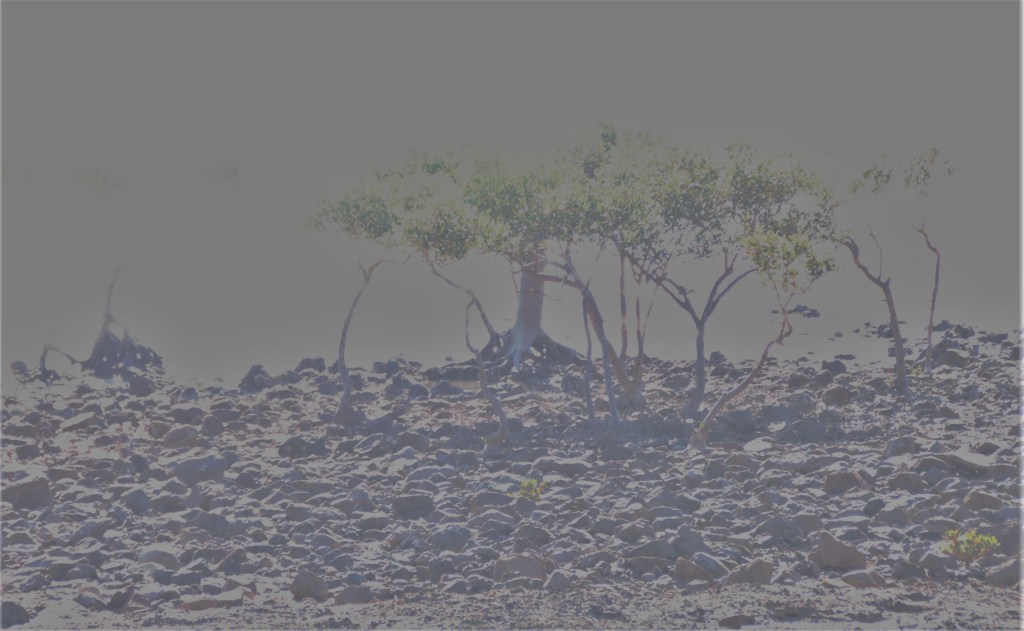
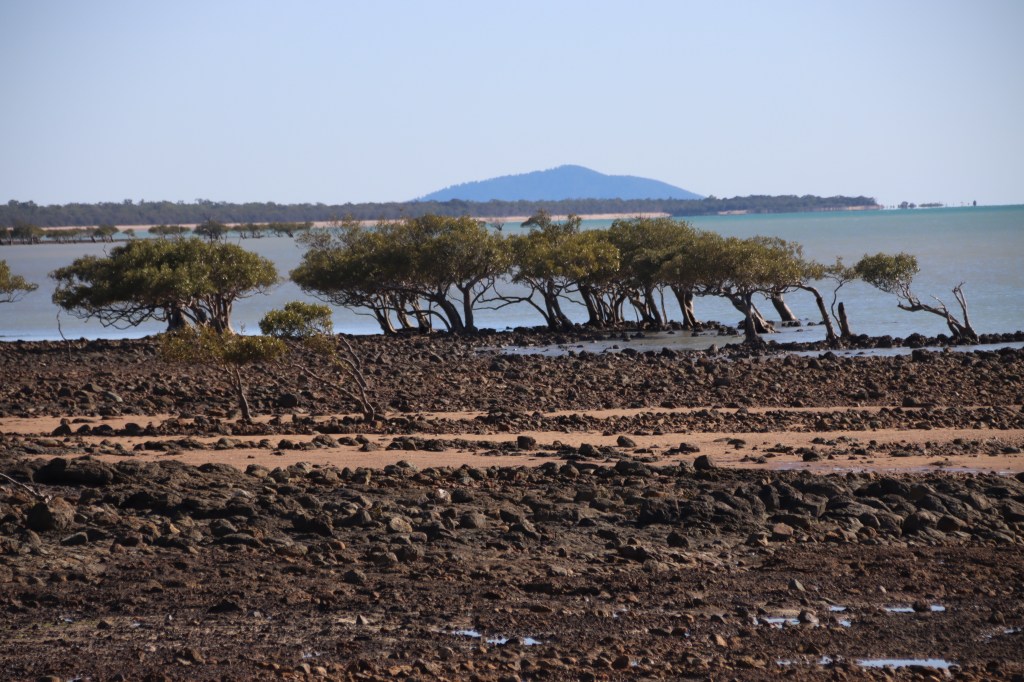
Next was a glorified fishing camp, called Clairview. Very interesting mangrove shorelines, and a homely CWA cafe with scones, jam and cream, and lots of home made chutneys etc.
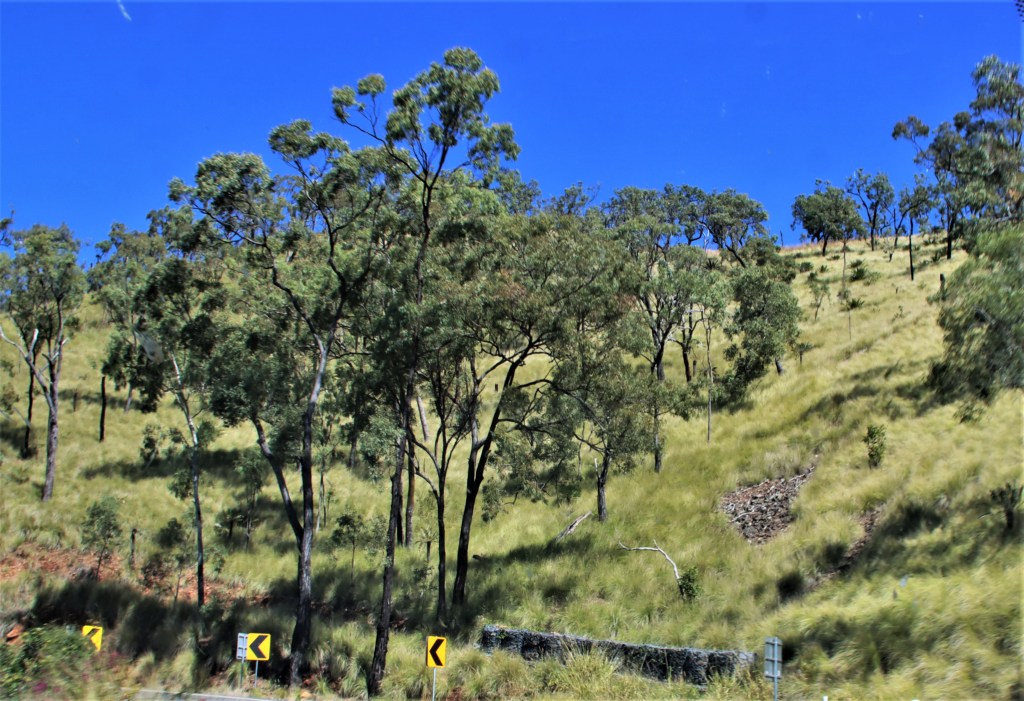
Stopford Way, near Bouldercombe, which used to have a much more evocative name as Poison Creek Road, gave a great view east to Rockhampton. Interesting were the hills of native grasses, perhaps re-planted after the gold mining finished on the other side of the hill.
Mount Morgan is a former gold mine featuring a very stylish railway station built in 1898.
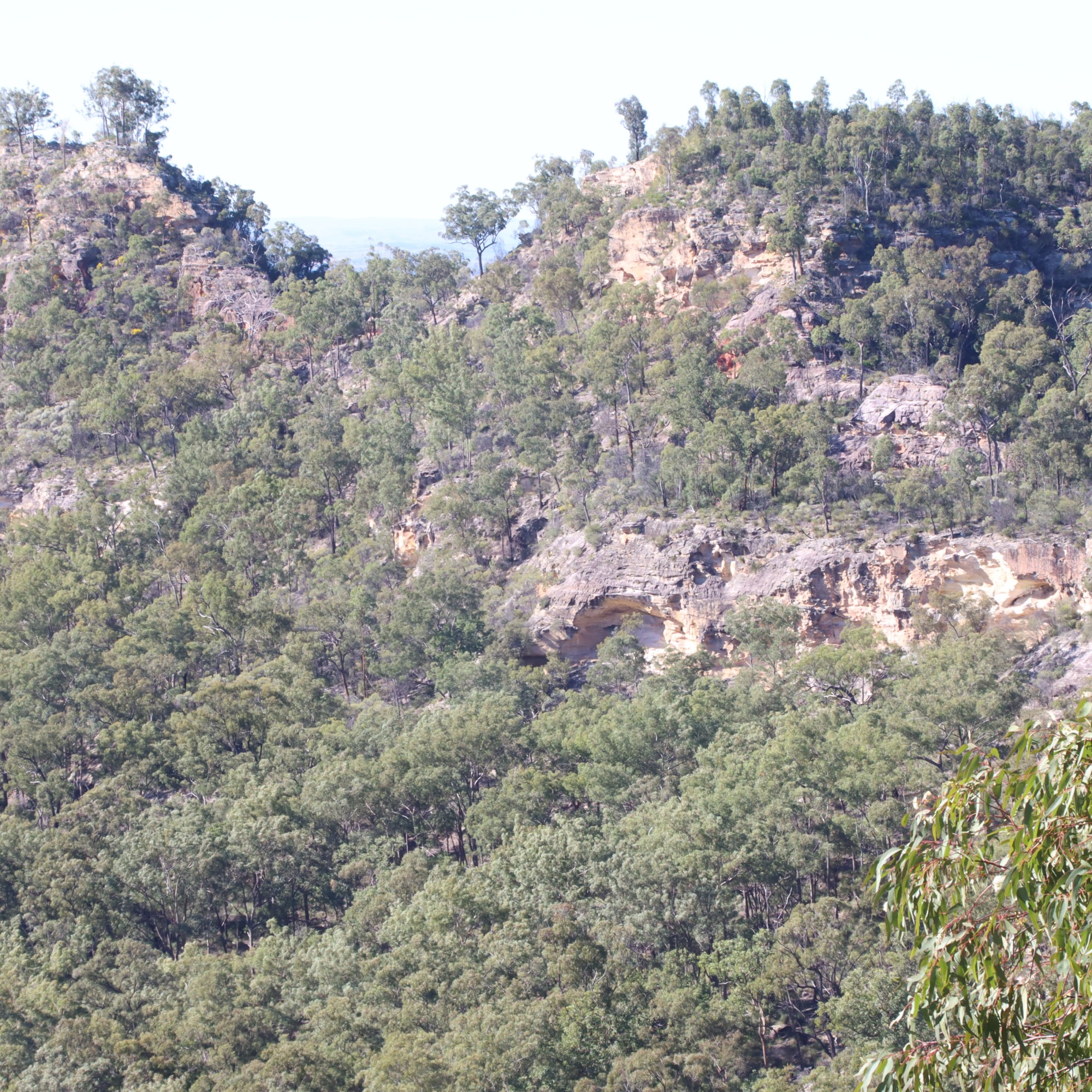
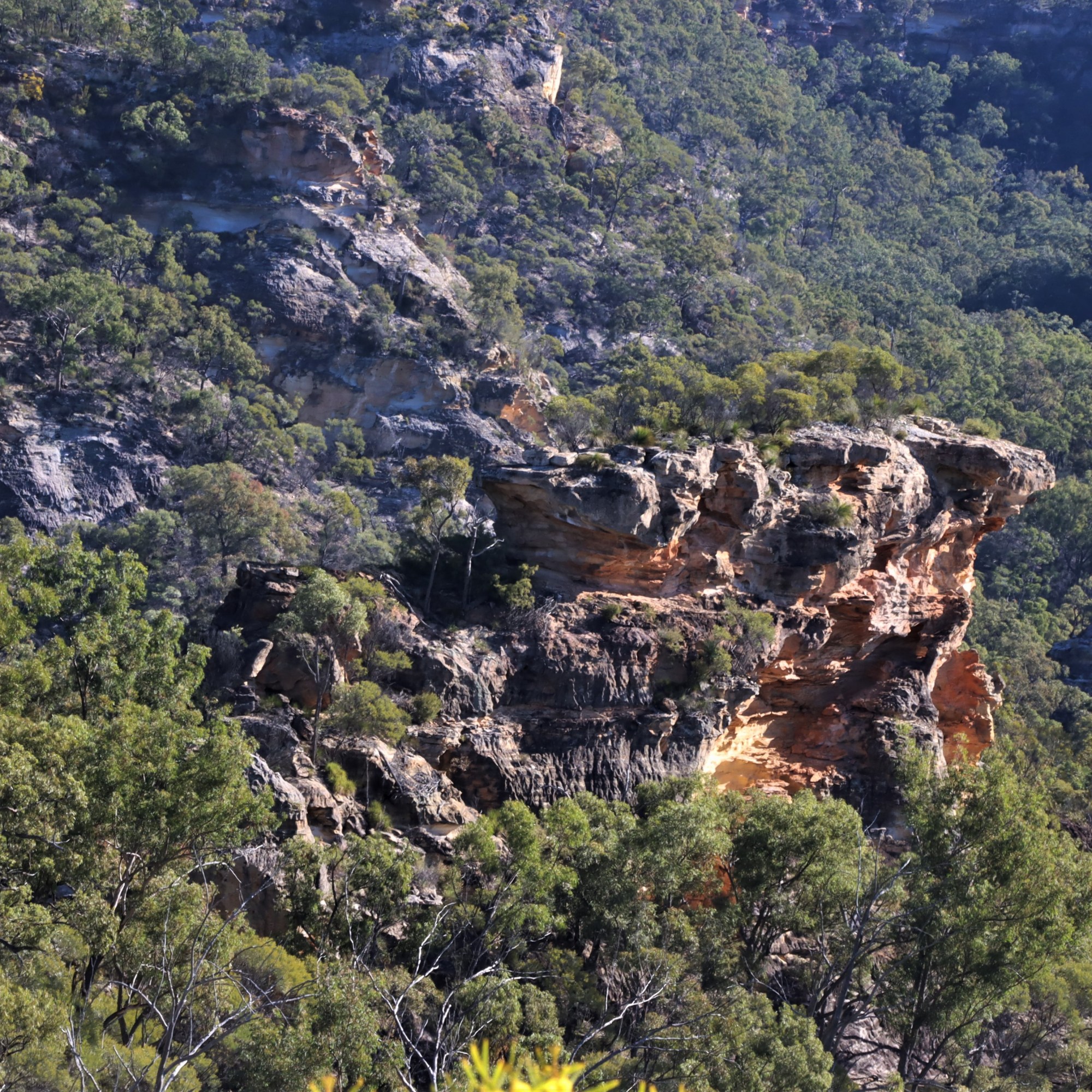
The interesting Isla Gorge was the next stop, certainly warranting more time next time.
Heading purposively to Banana to buy some of the same, we discovered it was named after a yellowish bullock who was the leader of a bullock gang many years back. Not a banana in sight.
Heading down the less than major Taroom-Roma back road, we saw lots of wild life (and water), although not to effectively photograph, so you will just have to take my word for it. About 7 wedge-tailed eagles, 5 echidnas, a daddy emu with 4-5 chicks (it is the daddy what looks after them), an Australian Bustard, and a calf standing unconcerned right in the middle of the road.
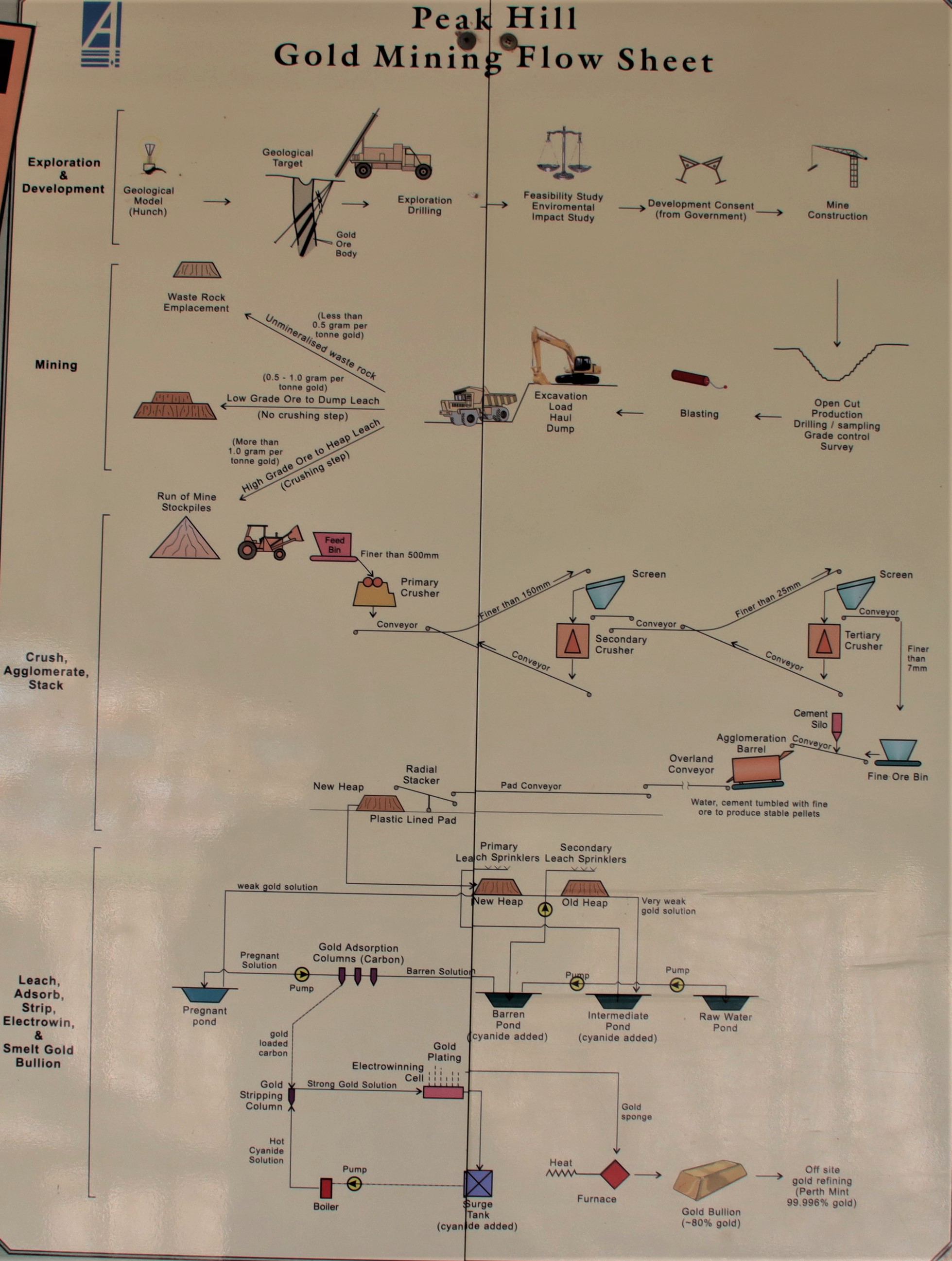
After our stop-over in Roma, we headed down through Peak Hill, a former open cut gold mine.
Again there was plenty of water around the edges of the road.
The final highlight was stopping for some time, and one of many times, at road works with The Dish just over there (I perhaps should clarify that the dish was the highlight, not the frequent long stops at roadworks). I couldn’t tell if they were playing cricket up there.
Being picked up at Barney’s Cafe, Bookham brought an end to the journey for me. We had covered over 6000km, my co-driver another 1000 or so on top of that.
Would I do it again? Yes, driving up and back next year is likely, hopefully via plan A and out further west.
Tatura, a small, but typical, central Victorian town, is an interesting mixture.
The region was home to many interred people of Italian nationality during World War II. Many of those Italians made Tatura home, and others brought their families back here in post-war migration.
Many people of German nationality died during the two World Wars in Australia, whilst held in camps. It was decided to honour them in a German cemetery, built just outside Tatura next to the main cemetery. The burials include 214 German people brought from cemeteries elsewhere in Australia, 36 from Tatura cemetery, and over a hundred missionaries.
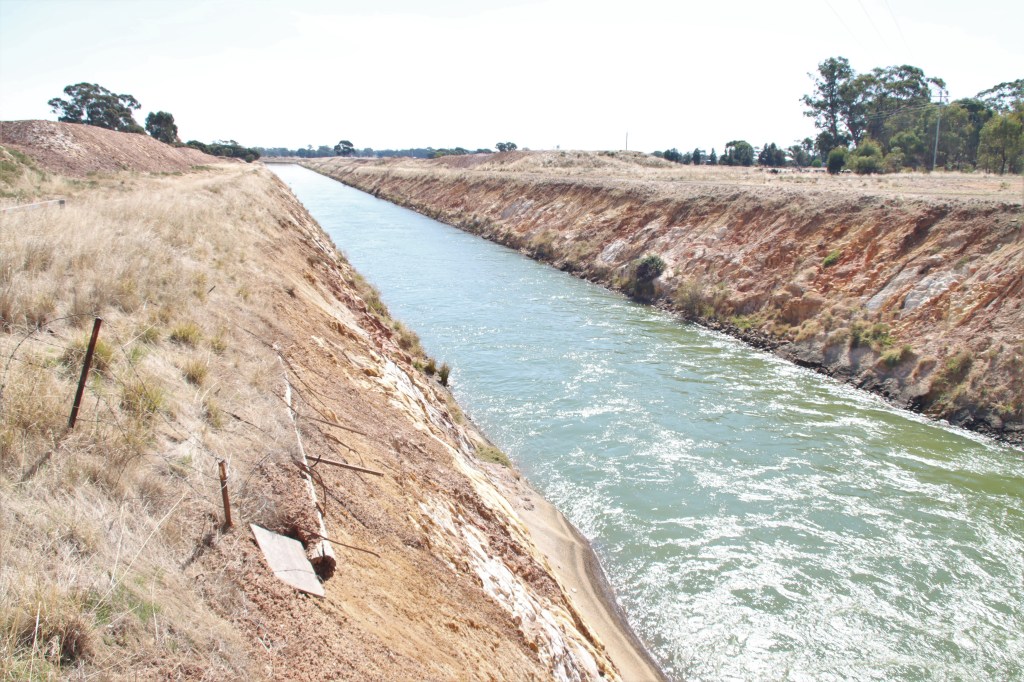
Tatura, in common with many towns in this productive fruit and vegetable growing region, is supplied by a range of diversions of the Goulburn River, including the Goulburn weir.
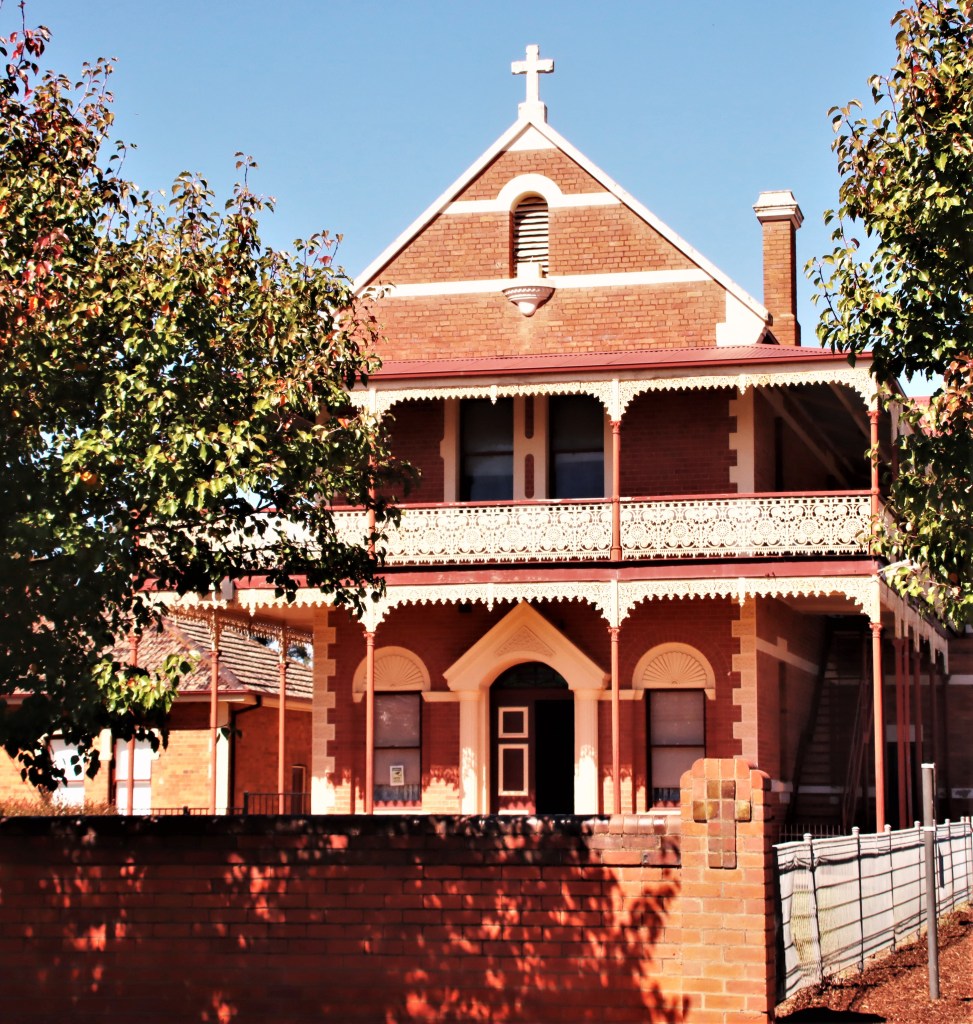
To add to the continental flavour, many buildings feature impressive Italianate architecture, such as the Sacred Heart school and church buildings.
THE FEDERAL CAPITAL PIONEER – CANBERRA’S FIRST NEWSPAPER
The first newspaper published specifically for the ACT (then the Federal Territory) was, on 3 December 1924, the self proclaimed “unpretentious” Federal Capital Pioneer.
Printed by the already established Queanbeyan Advocate printer, A. M Fallick and Sons, the Pioneer’s editor was Alexander Kenneth Murray of Sturtville, Eastlake.
Murray was no relation as far as I can tell of the famous Sir Terence Murray, former owner of what is now Government House in Canberra, as well as most of the rest of this area. Sir Terence was the son of Captain Murray, the first known European to explore Port Phillip, Victoria. Nor can I find a link to the bus company.
Murray had to advise his myriad readers to take care not to address communications to Sturtville, Canberra, albeit the correct address, because the missive would be first taken to the Acton Post Office, adding a day before he would receive their precious thoughts.
The editor promised a “bright, breezy and seasonable” Christmas number. We will check the validity of the claim in due course.
Appropriately enough, the political capital’s Pioneer kicked off with support for the assertion of the new Prime Minister, Captain Stanley Bruce, that he would govern for all Australians.
Similarly appropriate are featuring the apparent visionary brilliance of the then no-longer Prime Minister, W.M.Hughes, MHR; and a clarion call to “somnolent politicians” not to overlook the spreading of the subtle propaganda of the Communist Party (respectfully featuring capitals, before less respectfully identifying their views as “claptrap”).
The unpretentiousness goal was shaken a bit by “Billy” Hughes’ prediction that “Australians will speak of the ‘Pioneer’ as do the Americans of the first paper printed in Washington.” Further undermining unpretention was Billy’s assertion that the Pioneer was “ the leader of the vanguard, the banner-bearer of the new order of things.” The Pioneer repaid the favour with what any reader would term ingratiating fervour, but which we were assured was “not fulsome flattery, nor a eulogium”, just facts.
Like all good parochial journals, the Pioneer sought to educate the readership as to the state of their federal territory.
The Territory was then, and has been until the contemporary Strathnairn foray into State territory, 940 sqm in size and already had about 3000, probably largely unwilling, inhabitants.
Striking was the information that the five miles of the Main Sewer was almost completed – it not being clear if it was in use, albeit not completed. The soon to be ‘bush capital’ already featured 1.5 million trees planted. The soon-to-be famous Cotter Weir was already containing 380,000,000 gallons, and allowing an average flow of 70m gallons. Those impressed by the stated fact that there was 6 miles of 3ft 6in gauge railway, will be further pleased to know, mirroring the incompetence found nationwide, there was also 6 1/2 miles of 4ft 8 1/2 inch gauge.
John Gale, then a 94 year old Queanbeyan journalist of great repute, was acknowledged as the “Father of Canberra, the Federal Capital”, in recognition of his pivotal publication supporting the eventual site of Canberra over the then favourite, Dalgety. Those who have been to Dalgety, especially on windy winter’s day, and with all due respect to the many lovely people who do choose to live there, will be forever thankful. The brilliant description of Canberra’s wind in the wonderful Federal Capital Commission’s April 1926 publication “Canberra. General Notes for the Information of Public Servants”, which was aimed at enticing people to move here, was “the prevailing wind, which in winter is westerly – being snow-laden – is shrewdly searching.” In my experience, the wind in Dalgety doesn’t bother with the shrewd bit.
The first call for government action by the Pioneer, apart from waking up to deal with the insidious spread of communism, is to replace the bland names of the uninformed American designers, which “absurdities…disfigure” the map of the future national capital, with the names of the (European) men who explored and opened up the country.
Notable, because I have just bought a painting of it by a local Canberra artist, is the reference to the Australian Christmas Bells, the Blandfordia, which was the name given by Marion Mahony Griffin to what is now Forrest and, ironically, Manuka – the Pioneer would have blanched no doubt at replacing an Australian plant with a New Zealand tree.
Billy’s hope that the Pioneer would live a long life didn’t eventuate, it being wound up just a few years later, not saved by a change in name to the Federal Capital Pioneer Magazine.
The likely disappointment for those desiring a long life for the Pioneer was perhaps foreshadowed by those awaiting the “bright, breezy and seasonable” Christmas number – not only were those epithets inappropriate, so was the term “Christmas number”. It was 1 January before the next edition appeared, adding a call for a cemetery to those ongoing pleas to destroy communism before it ate all our children. More on 1925 publications in another article.
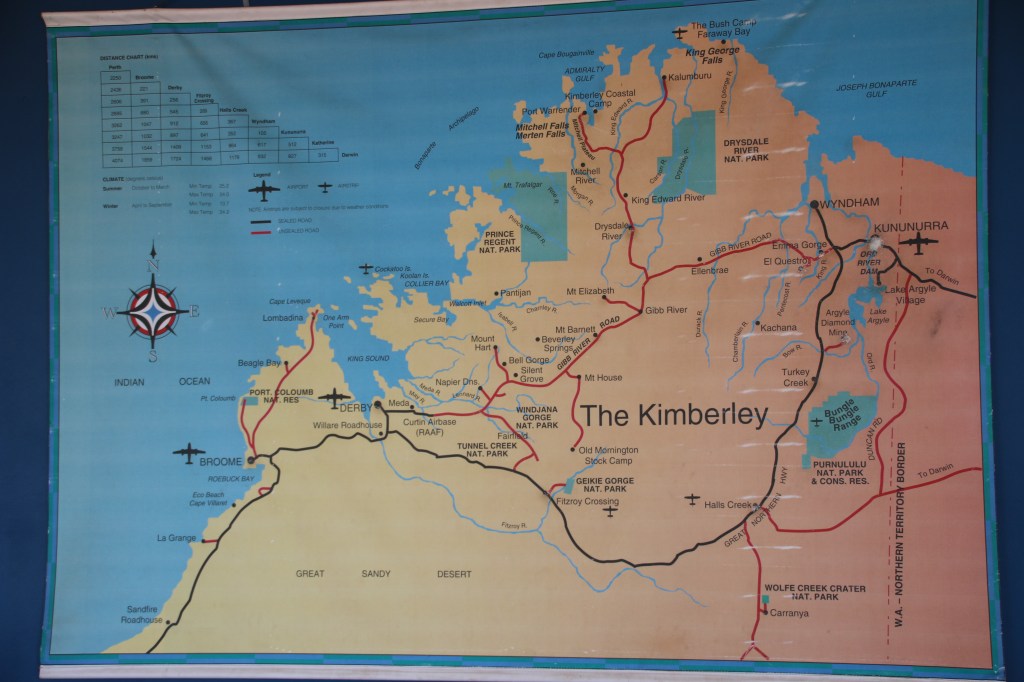
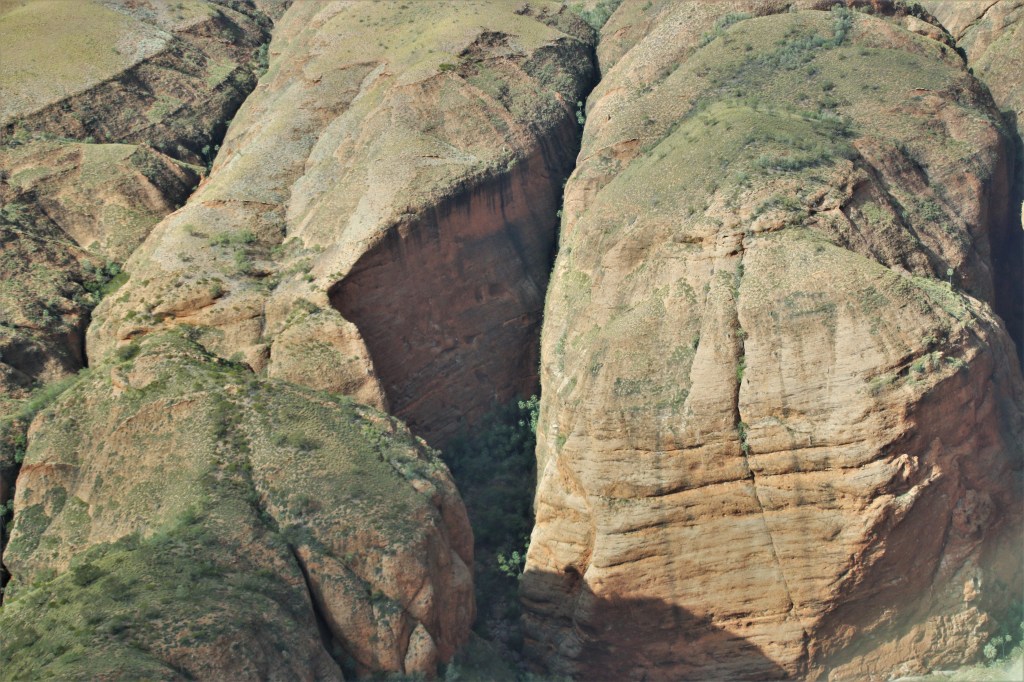
In the Purnululu National Park, one of the many stunning highlights of the Kimberleys, the Bungle Bungle Range.
They clearly wanted me to fly the thing.
First over the Ord River and Lake Argyle. Much more successful apparently once they moved to Sandlewood. The freshies are in the Lake, but the salties are below the dam and not in the Lake – usually!
The Bungle Bungles are a testament to the power of wind and rain over millenia.
A couple of years ago, I took one of my greatest trips so far – a Par Avion flight from Cambridge (Hobart Tas) to Melaleuca, in the remote Tasmanian south-west.
The first leg was over the D’Entrecasteaux Channel, famous for being named after the second European who “discovered” it. Tasman was the first, most likely, but he was already going to have the whole Island named after him, so he couldn’t be greedy. Anyway, at the time French names were, to coin a phrase, de rigeur.
It is now most famous for famous Tasmanian scallops, and more lately, highly profitable and highly controversial, salmon farms.
Kettering
Salmon Farms, with the seal’s own processing unit in the background.
Amongst the winners of the salmon farming business are the seals. The little rascals seem to think that free salmon is, well free salmon. So they do their best to free them. The farmers, being human and hence smarter than seals, catch the blighters and transport them blindfolded and obfuscated by super loud ACDC tracks, to the far corners of north-western Tasmania – being in a different State, they don’t have a licence to return. The seals, usually males, take the opportunity to frolic with the local females, and then hot tail it home in time to greet the farmers on their return back at the free salmon shop.
Next phase was right around the southern tip of Tasmania. Fantastic rugged rocks, around which the ragged rascals ran, and signs of the vain attempts of early settlers, like Charles Denison “Deny” (as in Den-ee, not den-i) King (more on him later) to tame the rivers with rail, to bring out mined stuff. Bits and pieces of the great southern track were also seen.
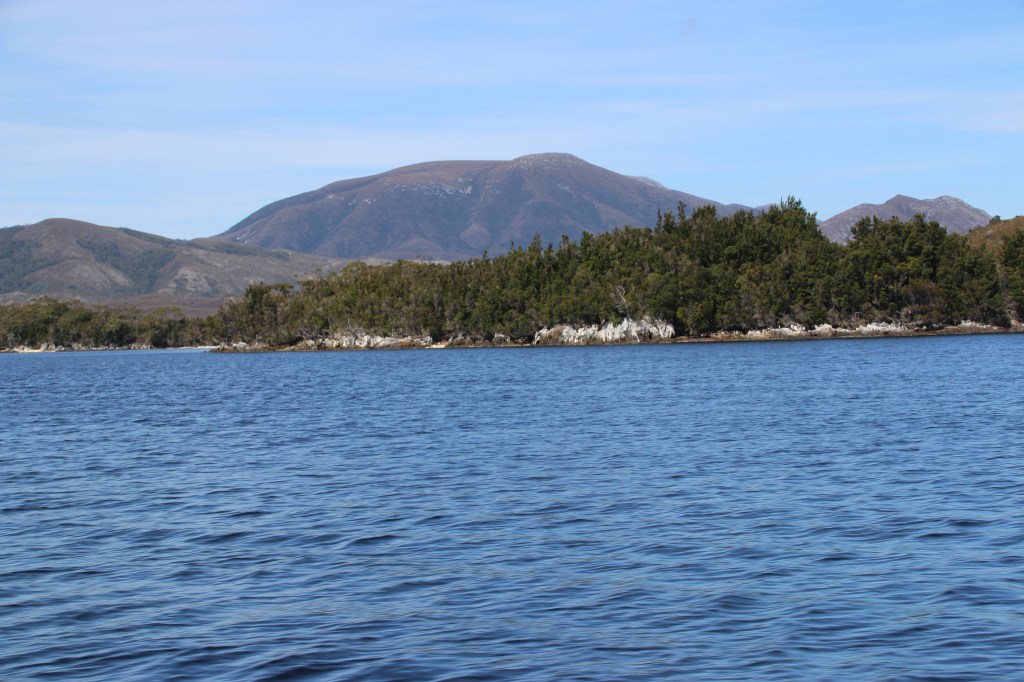
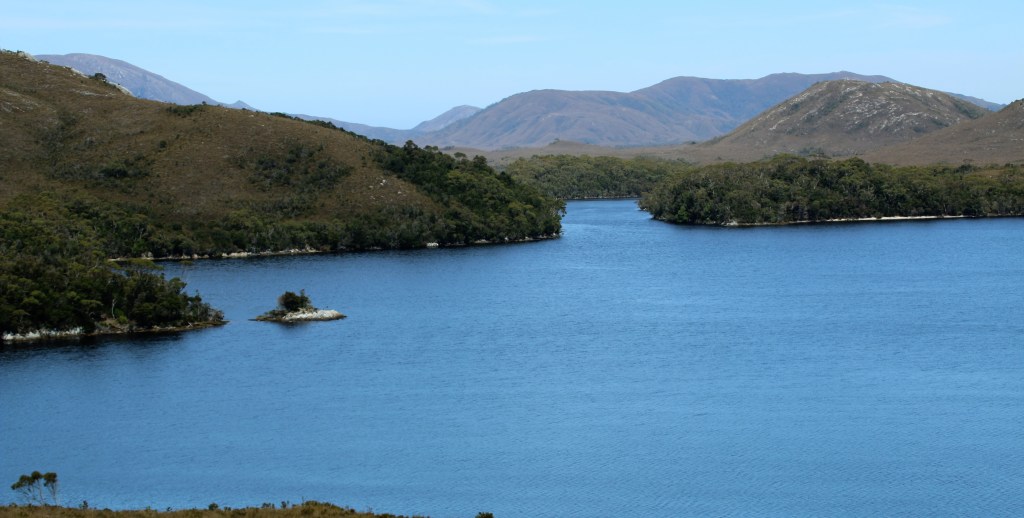
After landing at Melaleuca, still seriously remote, albeit a bit less so due to the marvels of flying machines, there was plenty of interest, including vainly searching for the seriously endangered Orange-bellied Parrots, checking out the late Deny King’s amazing home (including snake proof raised sleeping huts for his daughters) and steam driven saws, walks, and a boat trip right out into Port Davey. More on Deny below. Appropriately, no photos of his house, which is still used by his family.
We were most fortunate to have a crystal clear, wind-free day, and all day – the guides kept commenting in awe on the rarity of that.
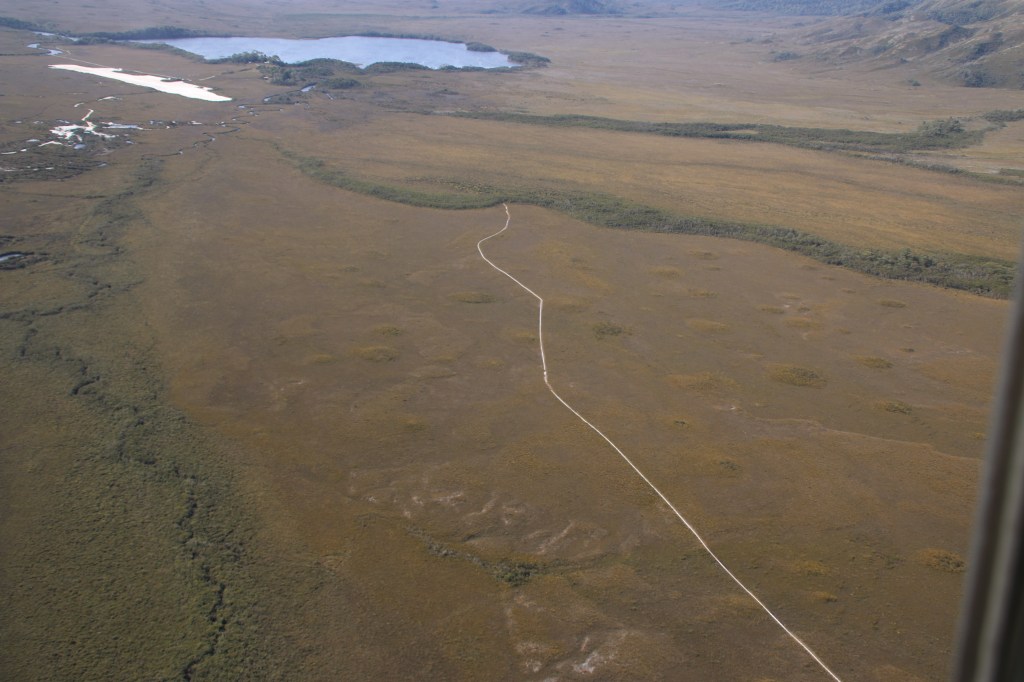
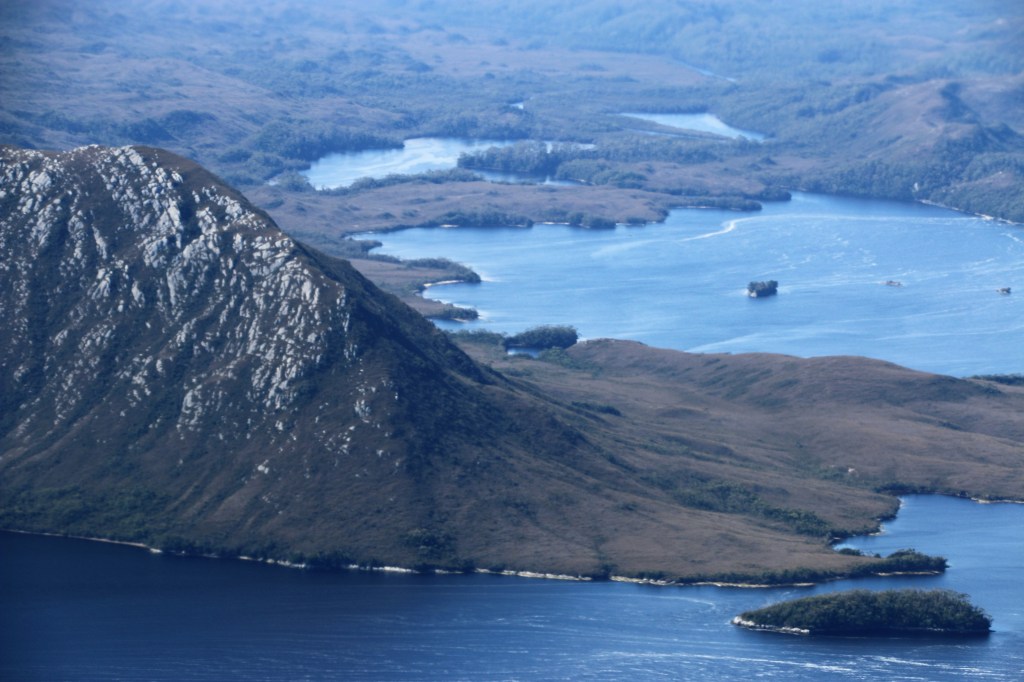
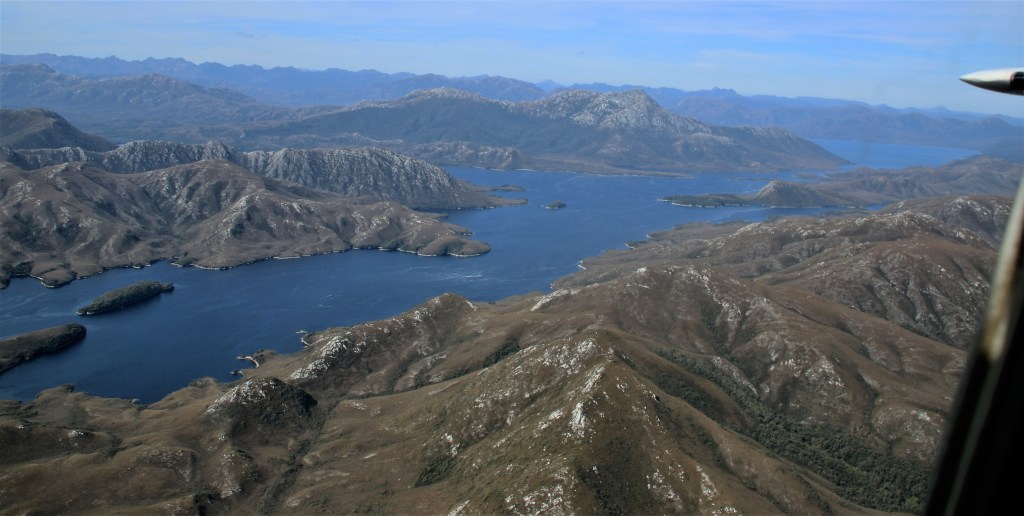
Time to leave, and due to the fantastic weather, we were able to head west right out over the west coast.
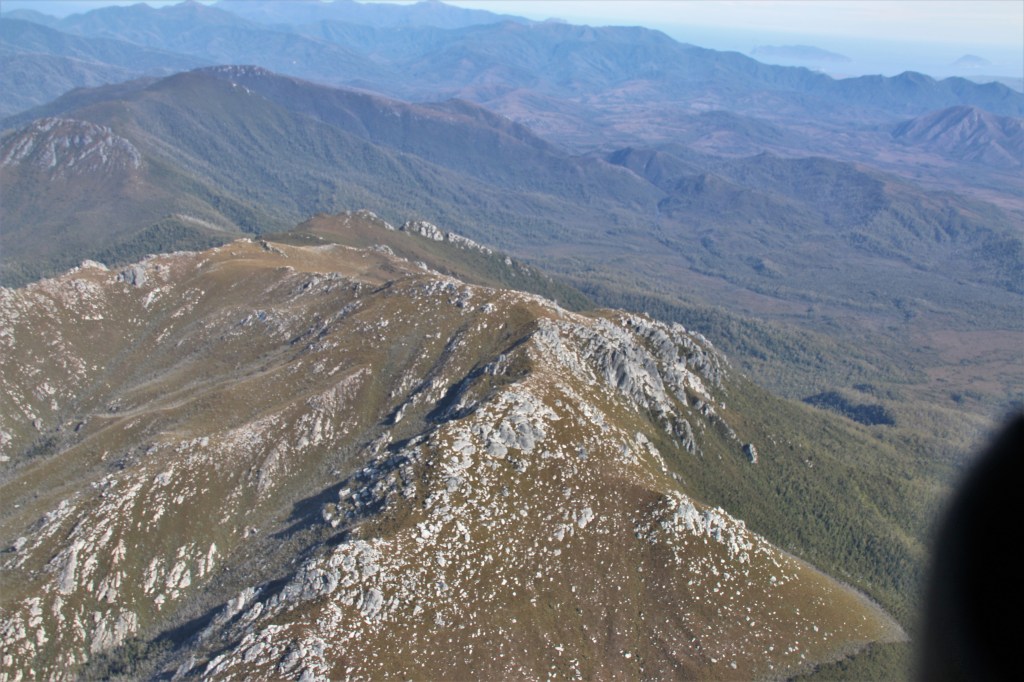
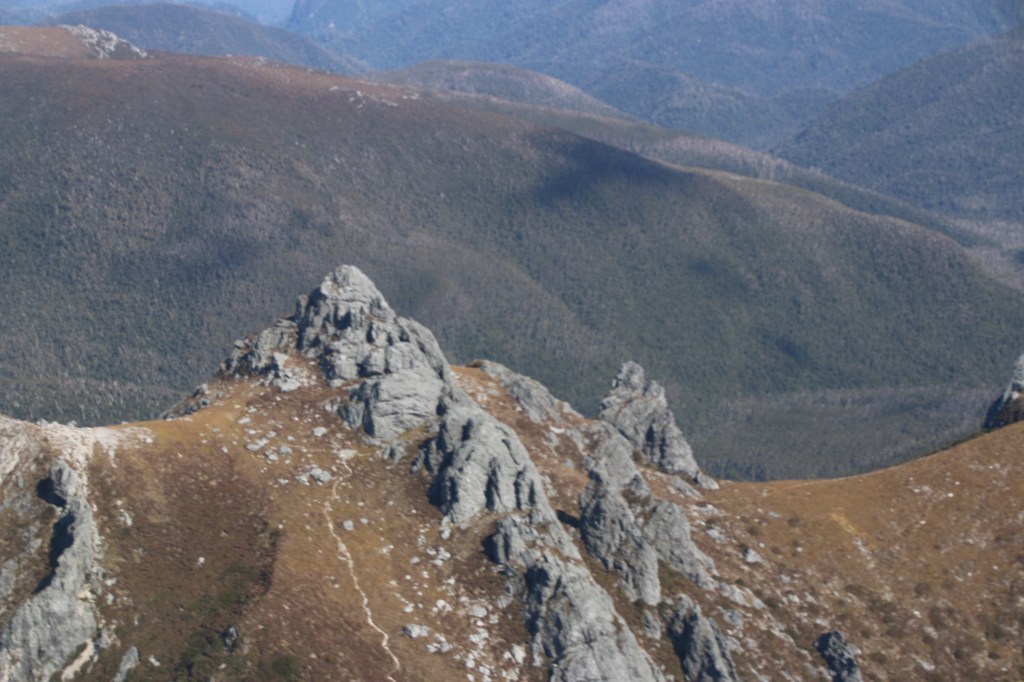
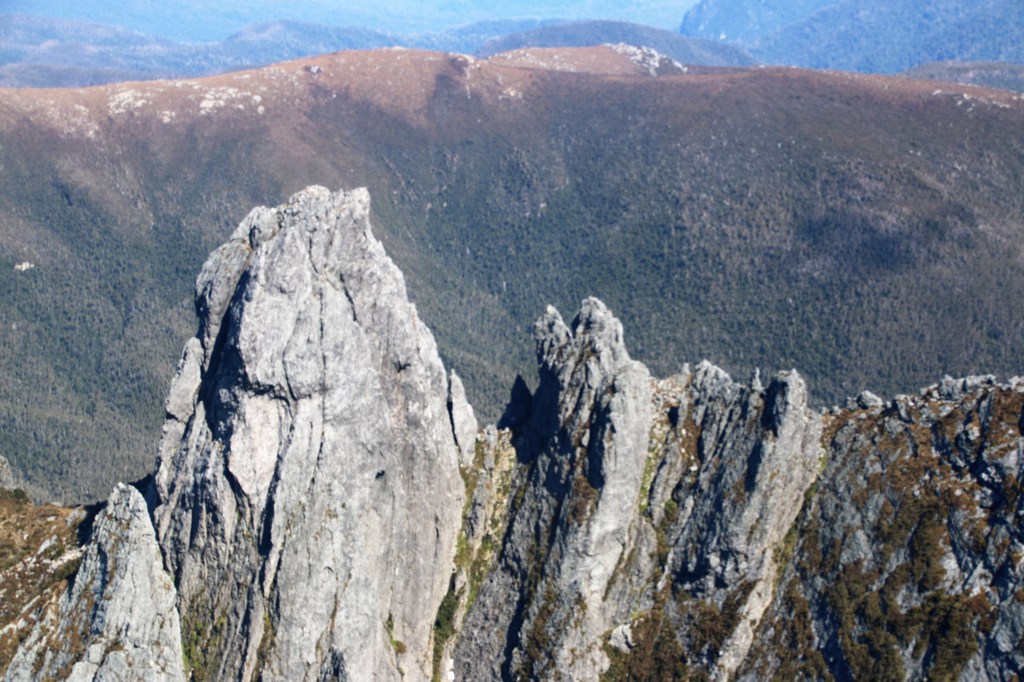
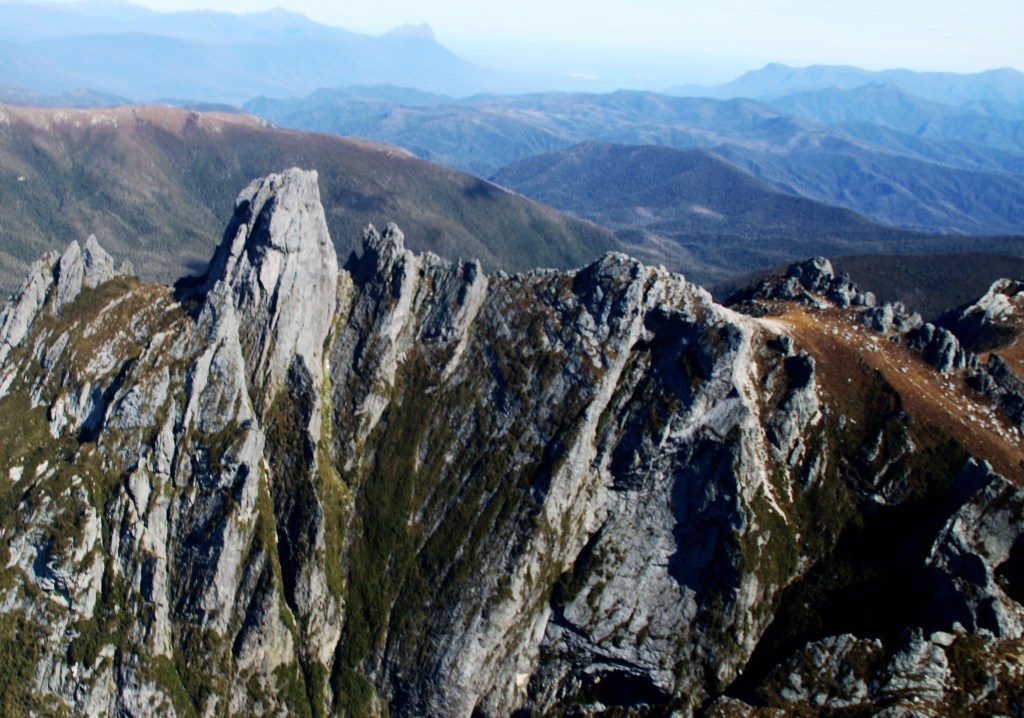
Then back east right over the majestic peaks like Frenchmans Cap et al.
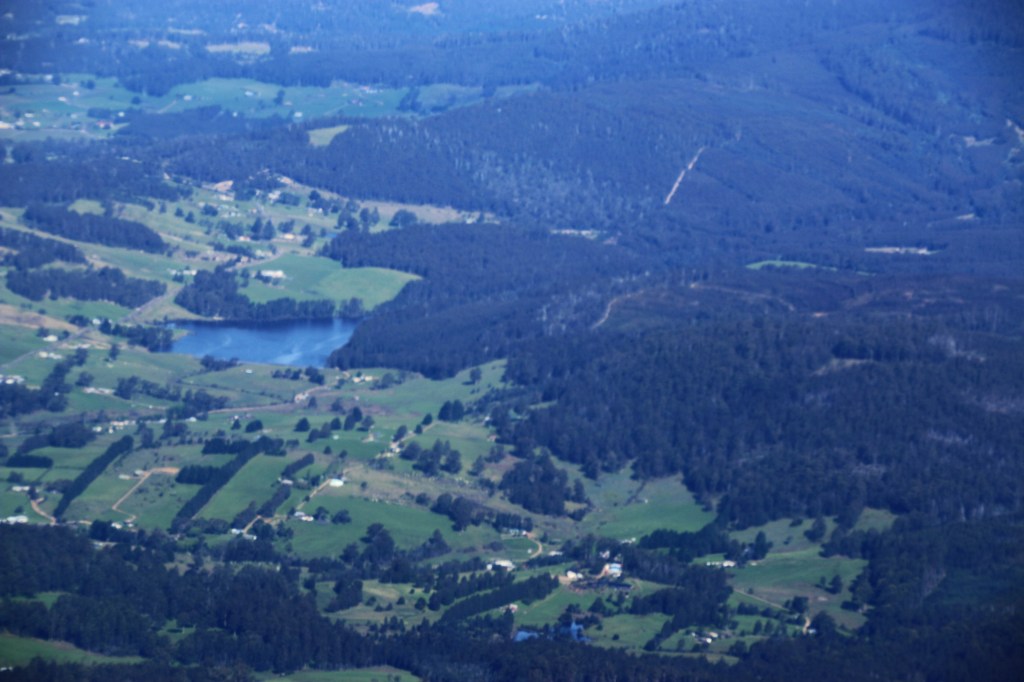
And, for the piece de resistance, back over the remote backblocks of the upper Huon. Close to my heart, because this is the land farmed by people like my great-great-great grandfather, William Fletcher, a convict, and his son born in England, my great-great grandfather, Charles Fletcher. Once married in Van Diemen’s Land, he and his also convict wife, Mary-Ann McBrine, lobbied her famous father, John Corrigan of the 6th Enskillen Dragoons and of Waterloo fame, to lobby the powers to bring various of their children out to be with them. Charles apparently got to know Mary-Ann’s daughter to her first husband, one McBrine, quite well on the way out, and they married in Huonville.
Here we come back to the really famous and amazing king of the wilderness, Deny King. Deny’s father, Charles, bought a remote property in the wilds above the Huon. The excellent biography of Deny King, “King of the Wilderness” by Christobel Mattingley, observes that the remoteness of this property was so great that “the only human habitation beyond was the cabin of the lone prospector, Charlie Fletcher, eight kilometres further out. (Everyone out there was called Charles, presumably to save confusion).
Mattingley further observes, having met Deny late in his amazing life, that the family was taught bushcraft, and the mysteries of the Weld, Arv and Denison rivers, by Charlie Fletcher. Up in the backblocks above Judbury and Ranelagh, are relics of the Fletchers’ fleeting fame – Fletchers Hill, Fletchers Road and Fletchers Swamp.
Deny lived out at Melaleuca with his wife and their daughters (safe in their snake proof quarters), mining and prospecting. Back then we are talking quite remote.
Coming down to land, and no doubt appropriately, we came in over the top of Bellerive Oval.
Those following would, no doubt, be eagerly awaiting developments with the new 50 sq m native garden. Your nervous anticipation is, hopefully, hereby sated.
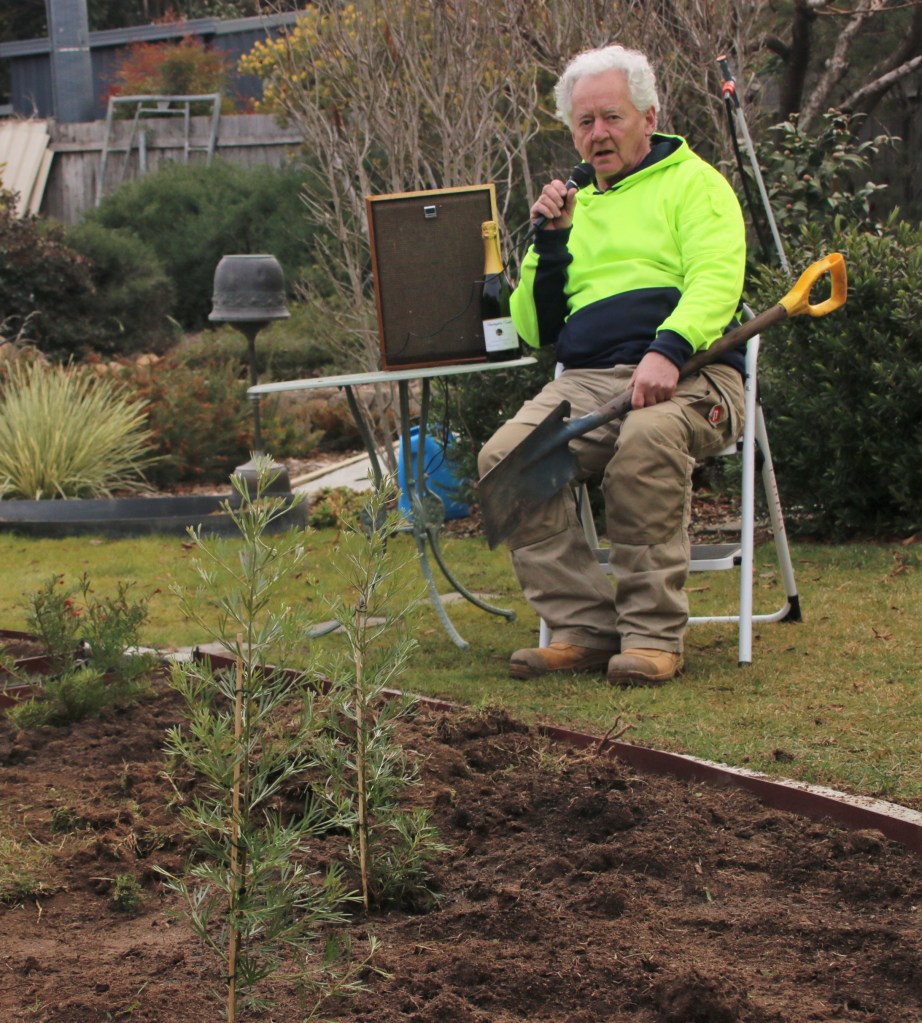
We left ourselves at the official three language opening of the new native garden, inspired by the opening of the new Post Office Box, in the famous Monty Python skit.
A quicker recap can be provided. This was where we started:
Progess, requiring the digging up of some 80sqm of turf, was slow but determined.
By July, we had sufficiently progressed to meet a milestone, the official, albeit by force of event, a pat malone, opening, of the new garden:
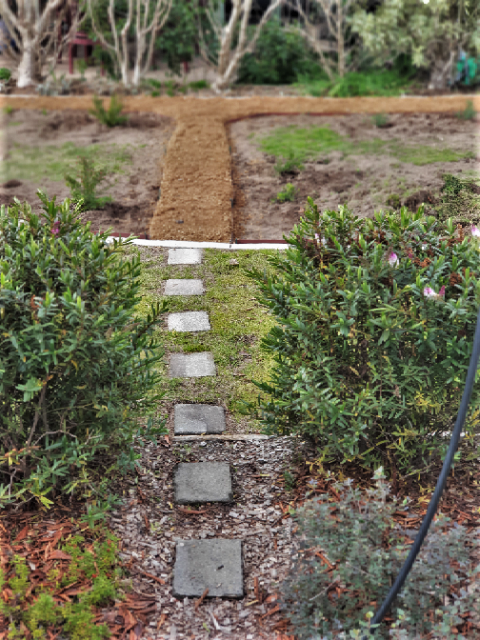
Planting continued till in September capacity was reached. The plants at the end nearest the back door will be about 50cm round, with the two on the back corner, designed to hide the next view, will be about 2 metres. The plants gradually increase in size to be about 1m round at the middle path then 1.5 to 2 m high at the far end. The eye-line from the house end should take the eyes over the fence and the next house to Cooleman Ridge.
All plants have small-ish flowers to attract smaller birds, there being plenty for the extant Sulphur-Crested Cockatoos, the Red Wattlebirds, the Gang Gangs, Crimson and Eastern Rosellas, Galahs, Lorikeets, and the Currawongs. Also plenty for the Magpie family and the nesting Crested Pigeons.
Today, the first layer of mulch (10 shovels per barrow load, 10 barrow loads per trailer load):
Now all is ready for the official opening of phase two, and this time, all being well, the polyglot event can be attended by a massive BOB crowd. BOB, you say? Yes, it is a cul-de-sac, which is “bottom-of-bag” in la langue francaise – Hence BOB.
Phase three is to dig up and re-sow the last 15 sqm of turf along the back of the garden.
Watch this space…
michaelmonaghanphotography.com Proud sponsor of ArtSound FM.
I have been fortunate to get to the south-western tip of Western Australia a couple of times. A magnificent area for trees, rocks, sea and birds.
Lots of photos in this re-visit with less commentary, or you will need another glass.
The isolated Little Penguin was unsuccessfully trying to scale this rock for the whole 20 minutes we were there. No idea why, and success looked increasingly unlikely. The slideshow shows the unlikely journey.
This slideshow requires JavaScript.
Both Carnaby’s and Baudin’s Black-Cockatoos are found only down in this small area in far south-west WA. First the Baudin’s with the elongated beak:
Then the Carnaby’s:
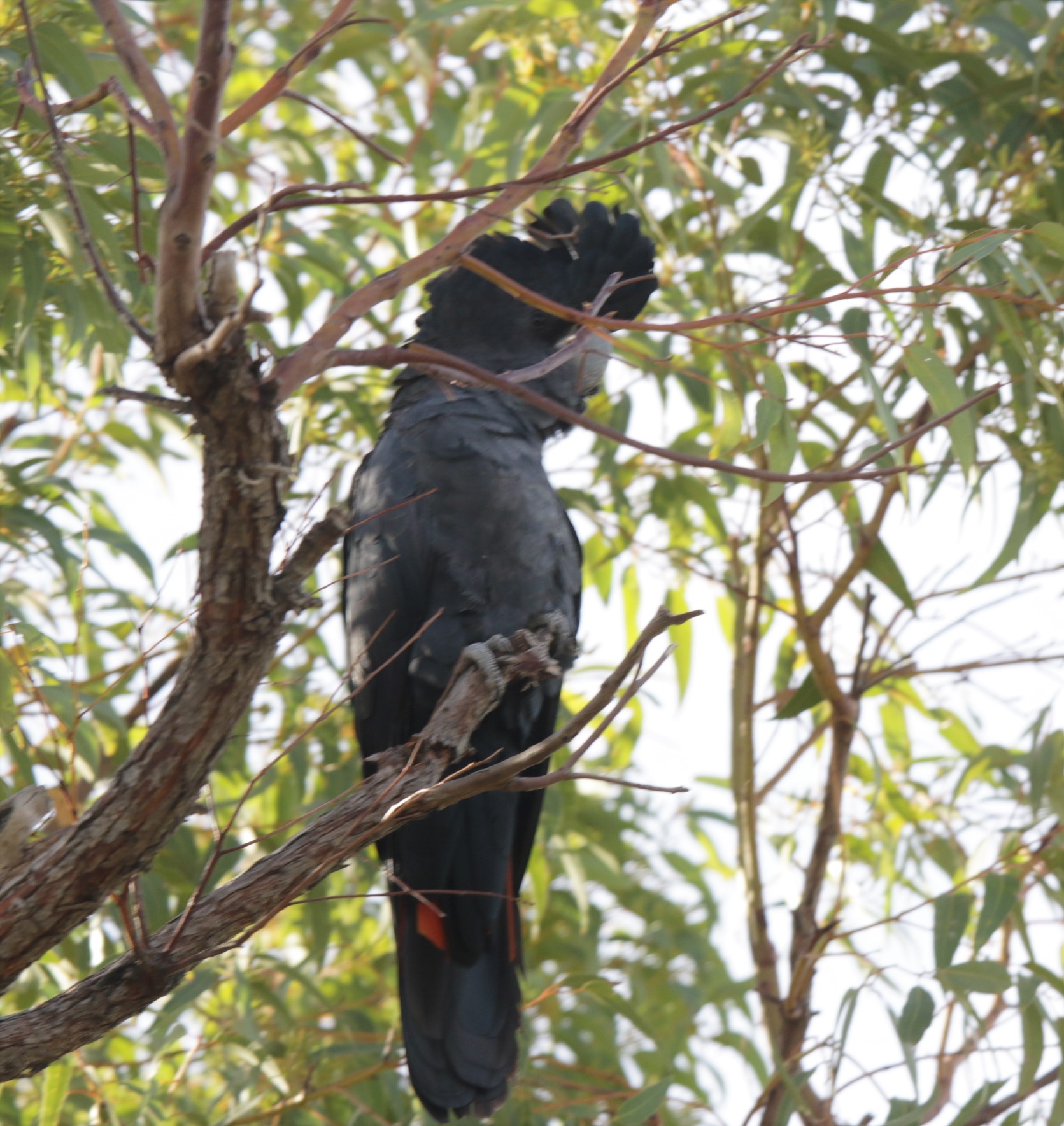
There are also Red-Tailed Black-Cockatoos:
This was the first sighting for me of the Bridled Tern.
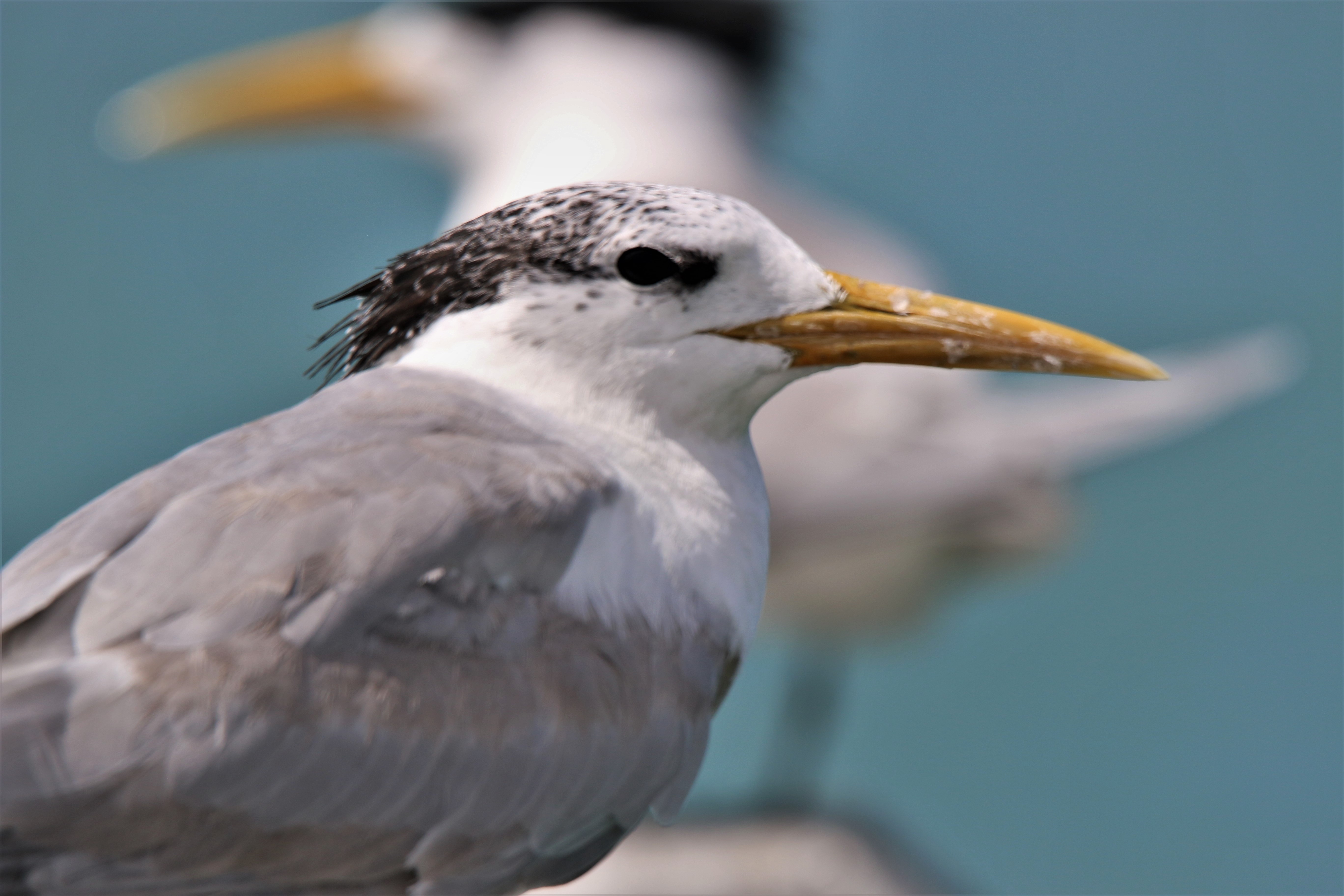
Terns often mingle across sub-species so it can be hard often to distinguish them. This is a young Crested Tern.
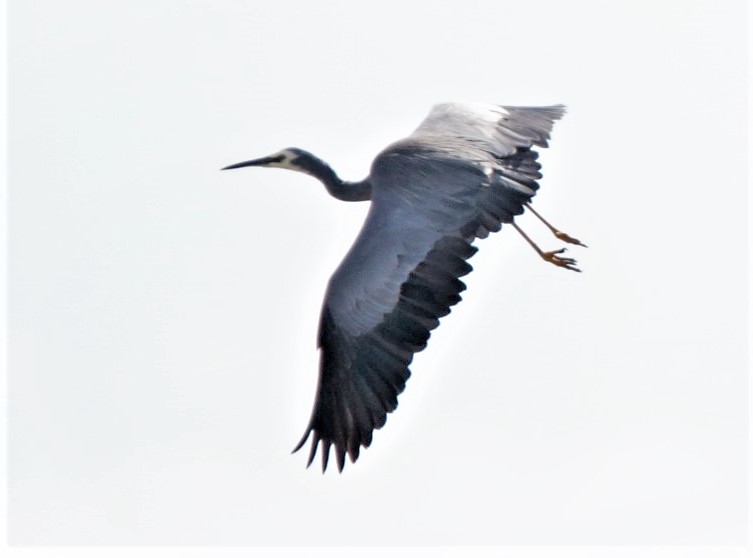
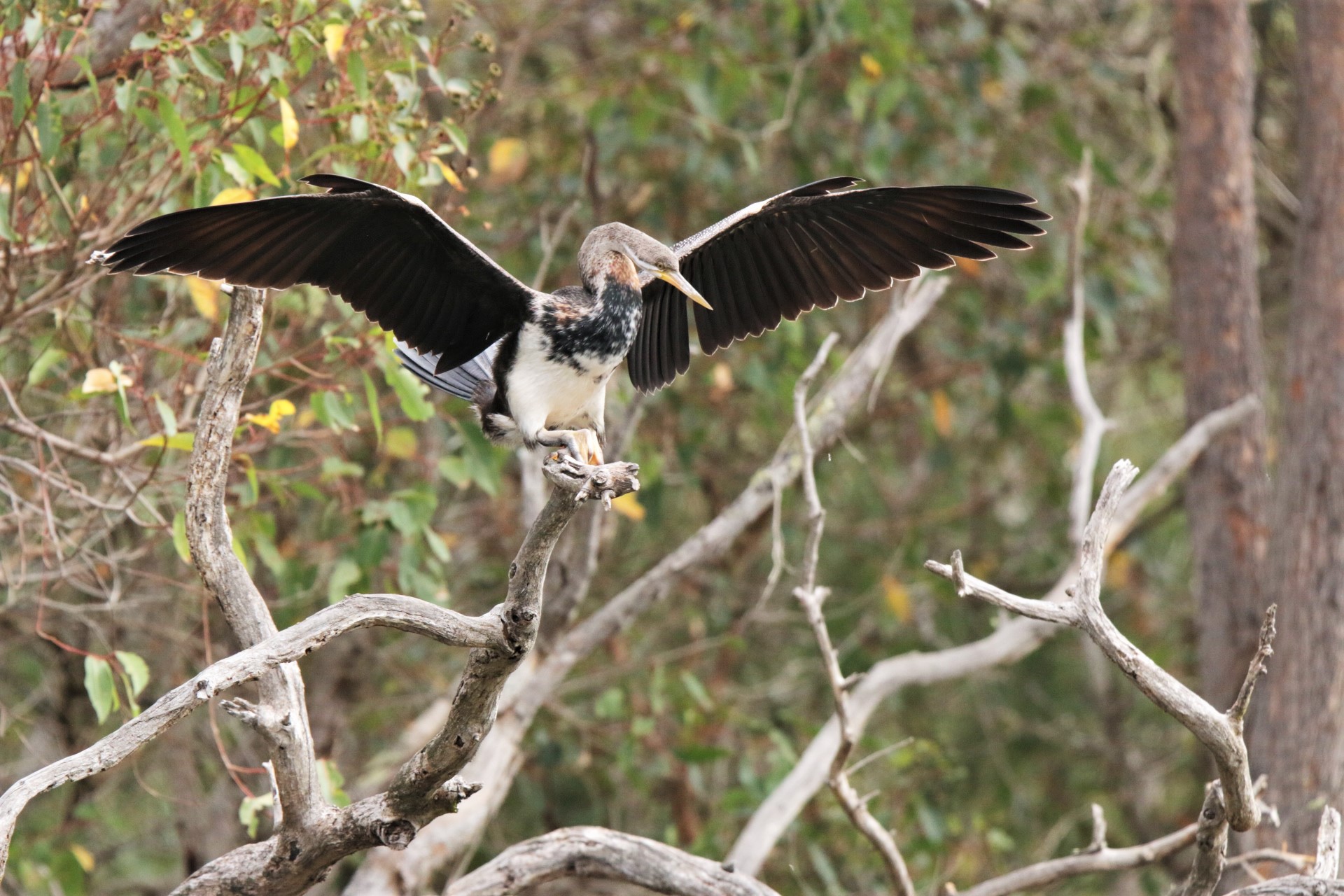
Of course, there were millions of sea- and shore-birds. In order right to left, then down, we have a juvenile and adult Pacific Gull; ubiquitous White-Faced Heron; Australasian Darter (3 photos); Little-Black Cormorant; Pied Oystercatcher; and Great Cormorants.
High on a rock, rarely moving, and looking somewhat forlorn, was a Southern Fulmar, which would not normally be here at this time of the year, so perhaps lost and forlorn.
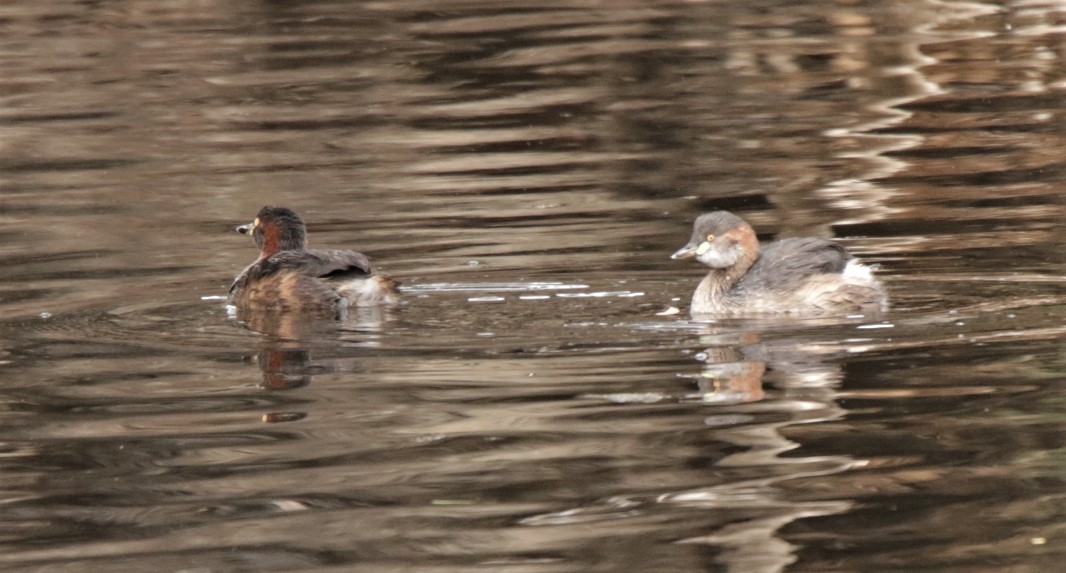
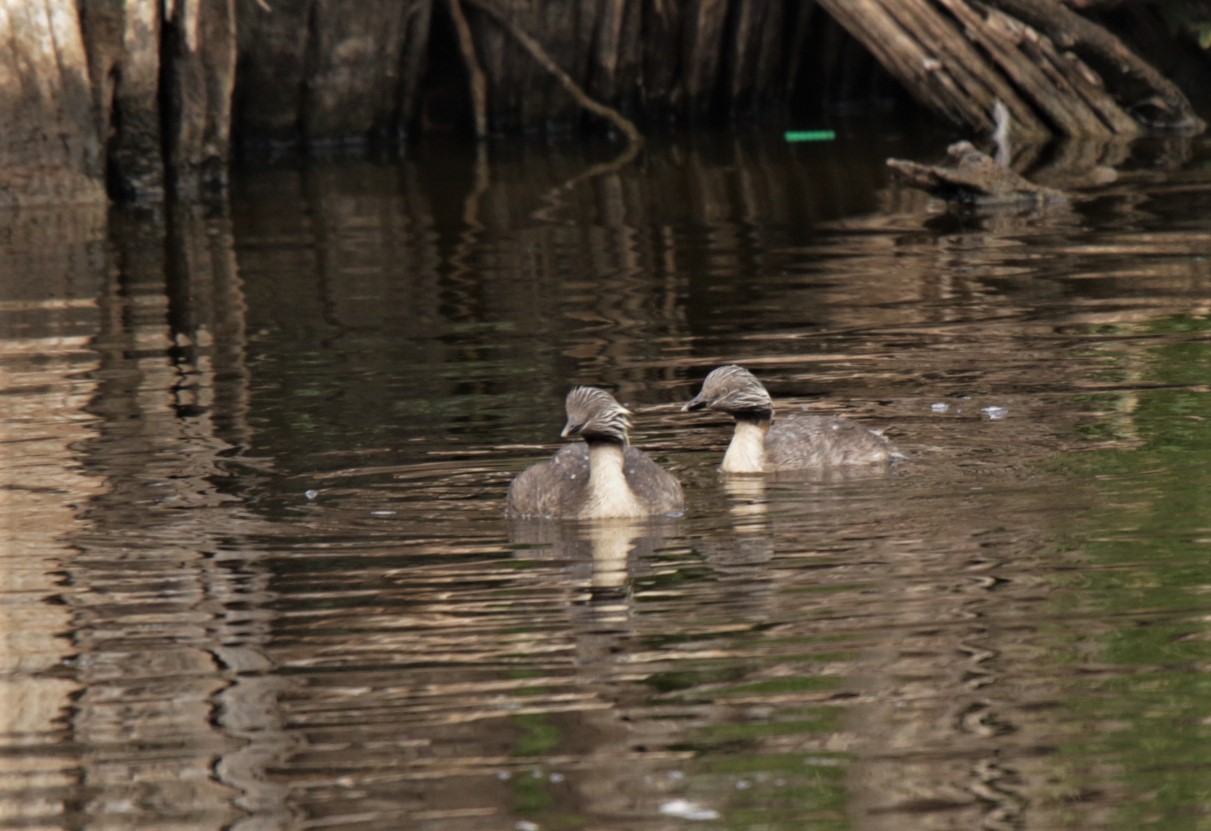
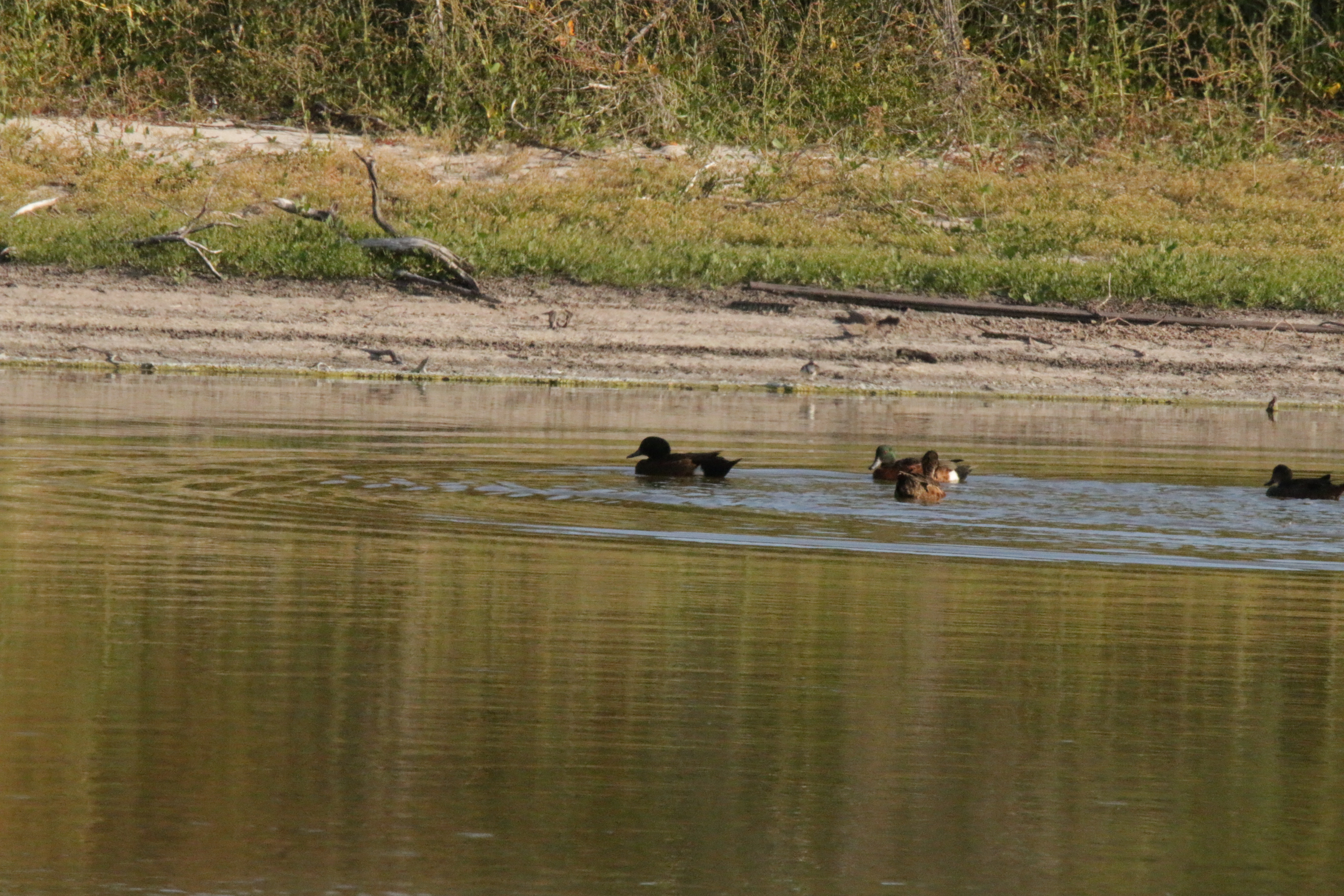
Below, from the top,we have a Hardhead (a bit out of its normal range); Australasian Grebes (breeding – male is left, fem right); Hoary-headed Grebe; Chestnut Teal; and Grey Teal.
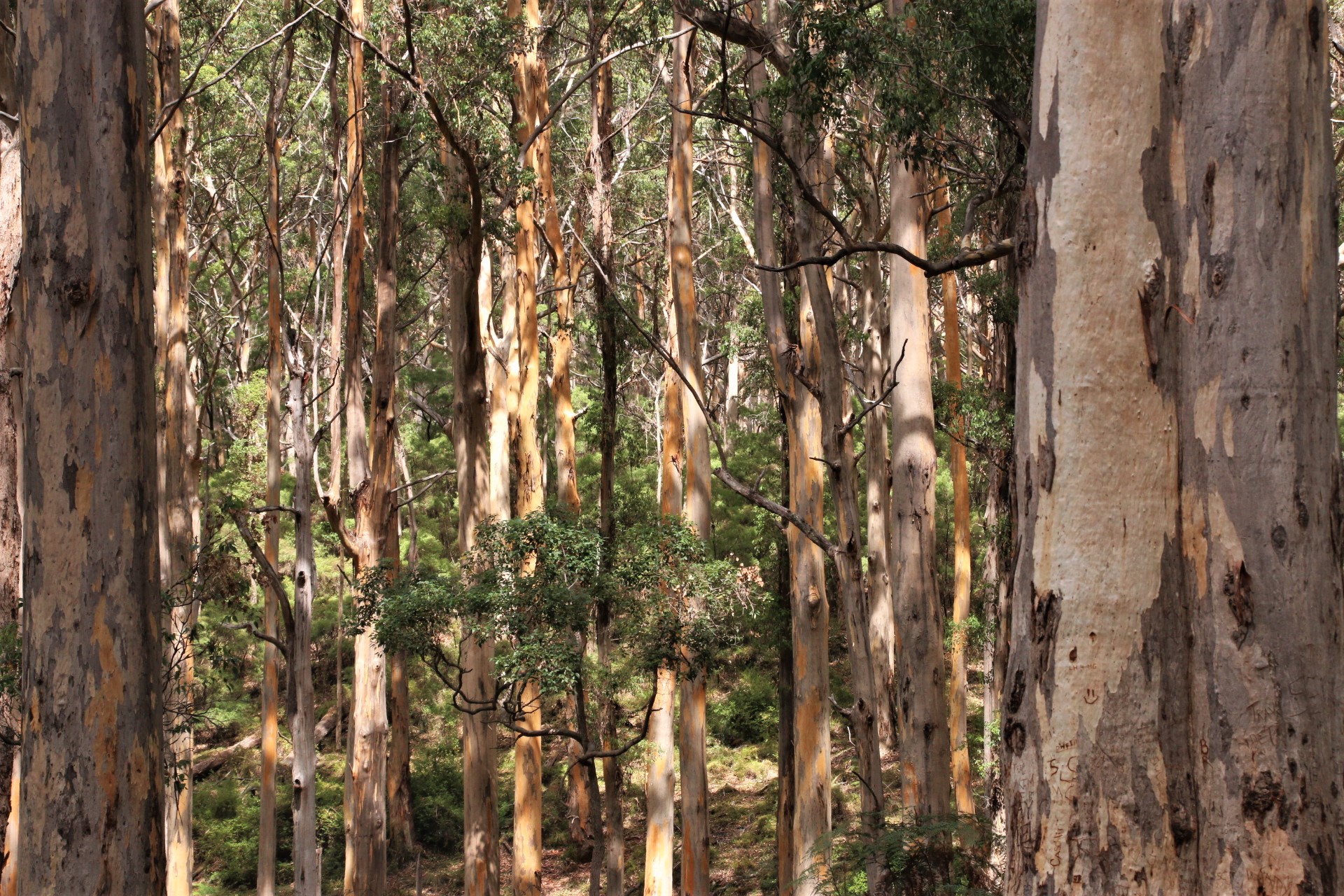
This area is famous for its giant forests, and they certainly were impressive.
The rocks were impressive, whether in the water or out of it. First, in the water, with various exposures to feature the water too:
With the forests and proliferation of wildflowers, there is a wide variety of forest birds, a number of which were first sightings for me.
First, lots of Honeyeaters, with Brown, then White-cheeked, and lastly the New-Holland.
Although the Australian Ringneck Parrot is fairly wide-spread, this sub-species, namely semitorquatus, is only found in this small area. It is colloquially known as the Twenty-Eight after its call, although I noticed that the Twenty-Eight tag was applied to the species more indiscriminately.
Wherever you go in Australia, you can count on being welcomed by the Welcome Swallows, although again the sub-species Carteri is only found in south-western Western Australia. Looks like there are more on the way.
One of my favourite birds (although the group is large) is the Spinebill. Reasonably common in my garden is the Eastern Spinebill. This was the first sighting of the slightly different plumage of the Western Spinebill.
Another common bird in Eastern and Southern Australia, close to the coast, is the Silvereye. This sub-species Chloronotus is again only found in the south-west of WA.
Similarly, the Bilbali sub-species of the Australian Pipit, a bird found almost everywhere in Australia, is only found in this nook.
The wildflowers are also spectacular:
And almost finally, the pure quartz, rather than coral/shell sand with which we are more familiar, is remarkable. And treacherous.
And, finally, I love a good sign. We all know how hard it is to get it right. Tough luck though if it is through this closed at all times door that you need to make the emergency egress.
Michael Monaghan
Re-visited July 2020
michaelmonaghanphotography.com Proud Sponsor of Artsound FM 92.7




































































 Michael Monaghan Photography