
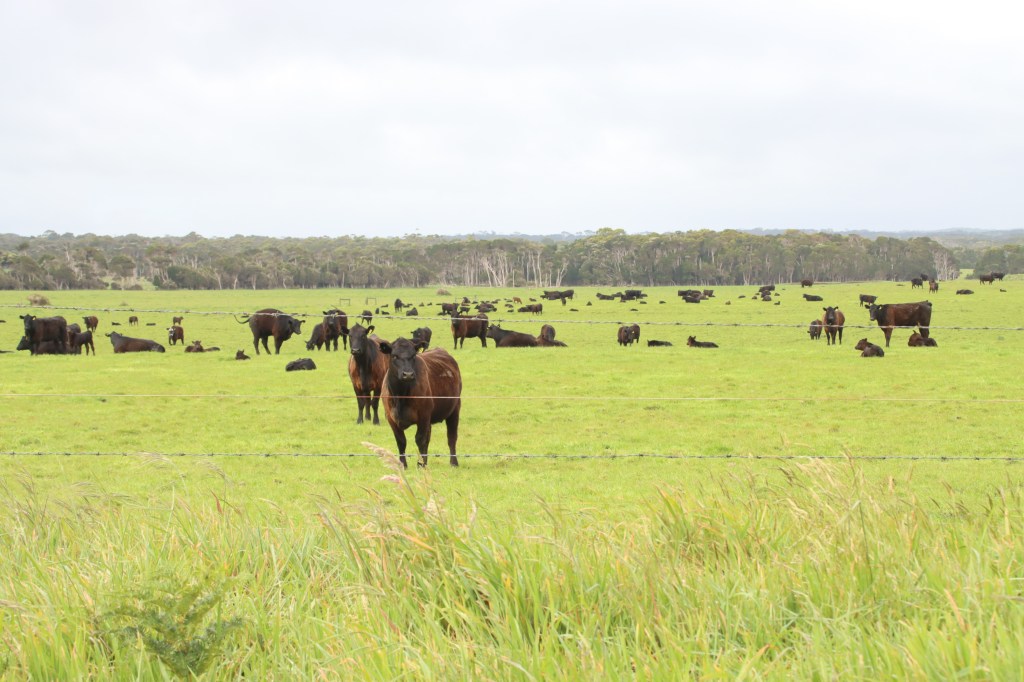
This is my first trip to King Island and, being a weather forecast studier, I maximised activity on the first three days. Just as well. Being close to the west coast and oblivion, the wind and rain on day 4 prevented getting outside, and into the night you did hope they knew what they were doing when they built this building.
I would say, for me, this Island is very similar to Flinders Island. Flinders on his great trip with Bass and John Franklin, named King Island after Phillip Gidley King. This trip proved there was a Strait, later named after Bass by King. On an earlier trip without Flinders, Bass, whilst discovering enough about tide flows to be sure there was a Strait, named Flinders after, well, Flinders. It turns out Flinders named none of the hundreds of landmarks he named after himself, but did name one after his fellow sailor brother. King Island and the Furneaux group were all part of one land mass with what is now Tasmania. If you go to Eddlestone Point on the east coast, you can see where the then landbridge ran over Cape Barren and Flinders Islands. It is a little known fact that there is a land border between Tasmania and Victoria, being on Border Islet. Border Islet is part of the miniscule Hogan Islands, and, at 39/12 degrees Sth, is about 56 km south of Yarram, just east of Wilson’s Promontory. The border was set apparently in the belief that the Islands were slightly north of 39 degrees.
I can, from first hand experience, confirm that we are, at about 64km, not far from the Otways in southern Victoria, as I was awoken at 230am by things rattling and the bed wobbling, effects of the earthquake centred there – turns out it was the strongest earthquake ever recorded in that region.
In just a half hour calm flight from the Burnie Airport, which to save confusion they built in Wynyard, we arrived at an efficient airport on the Island. It is about 5 minutes north of the main (only) town, Currie.

Currie is more or less mid Island west coast. The only two supermarkets/shops on the Island are next to each other. A bakery is flanked (LOL) by the King Island Butchery, selling fantastic looking meat for which the Island is famous.
The Cheese Factory is about 10 minutes north of Curry. They are only open a few hours a few days, but do sell a number of cheeses you can’t buy anywhere else, as well as many you can. The other two main enterprises are the gin distillery and a relatively new brewhouse, using very old wild hops found on a farm in the Island’s far south.

My motel’s highlight feature was the view of the west coastline, just a few hundred metres away. Was very nice sitting outside on the first three evenings, impossible on the fourth. Most of the land between me and the sea is a golf course, one of three or four. All, like this one, have coast positions. Given the winds we experienced yesterday, I reckon a good wood into the wind would see the ball returning over your head.

Pennys (sic) Lagoon is an example of a Perched Lake. Dismal Swamp in the north of the Tasmanian mainland is another, and there are several on Fraser Island in Queensland. It is rain filled, but the lake bed has been effectively sealed over the millenia by vegetation, bones, shells etc so the water doesn’t drain out. It is said to be a favourite swimming spot.


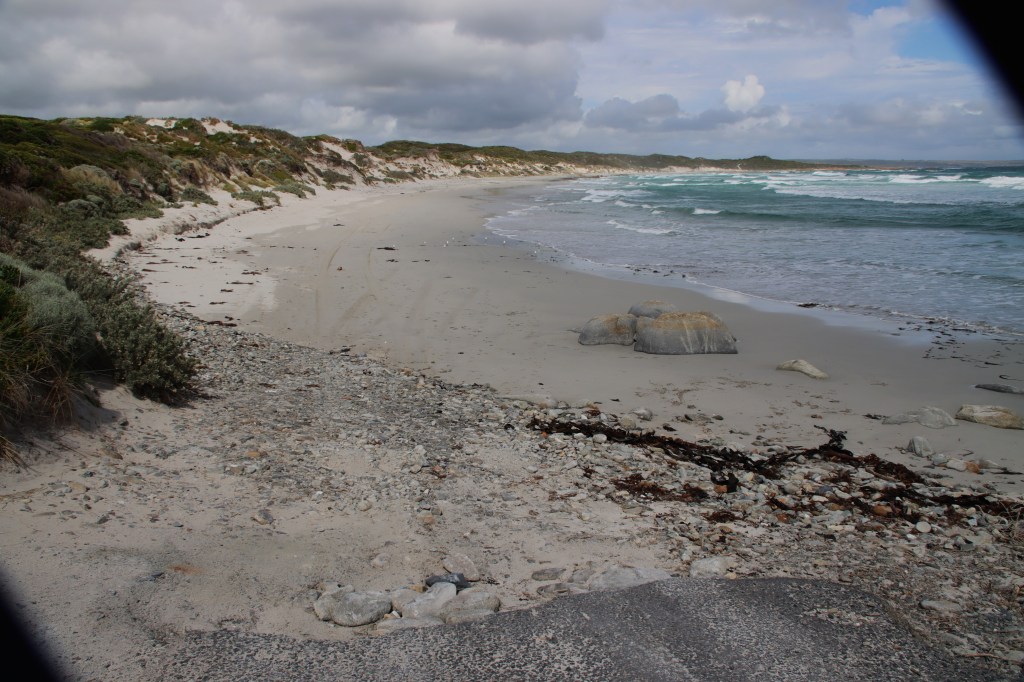
One of the nicest beaches I visited was paradoxically called Disappointment Bay. It is so named I believe because of the wreck there in 1835 of the convict ship, Neva, from Cork, with a loss of over one hundred lives.
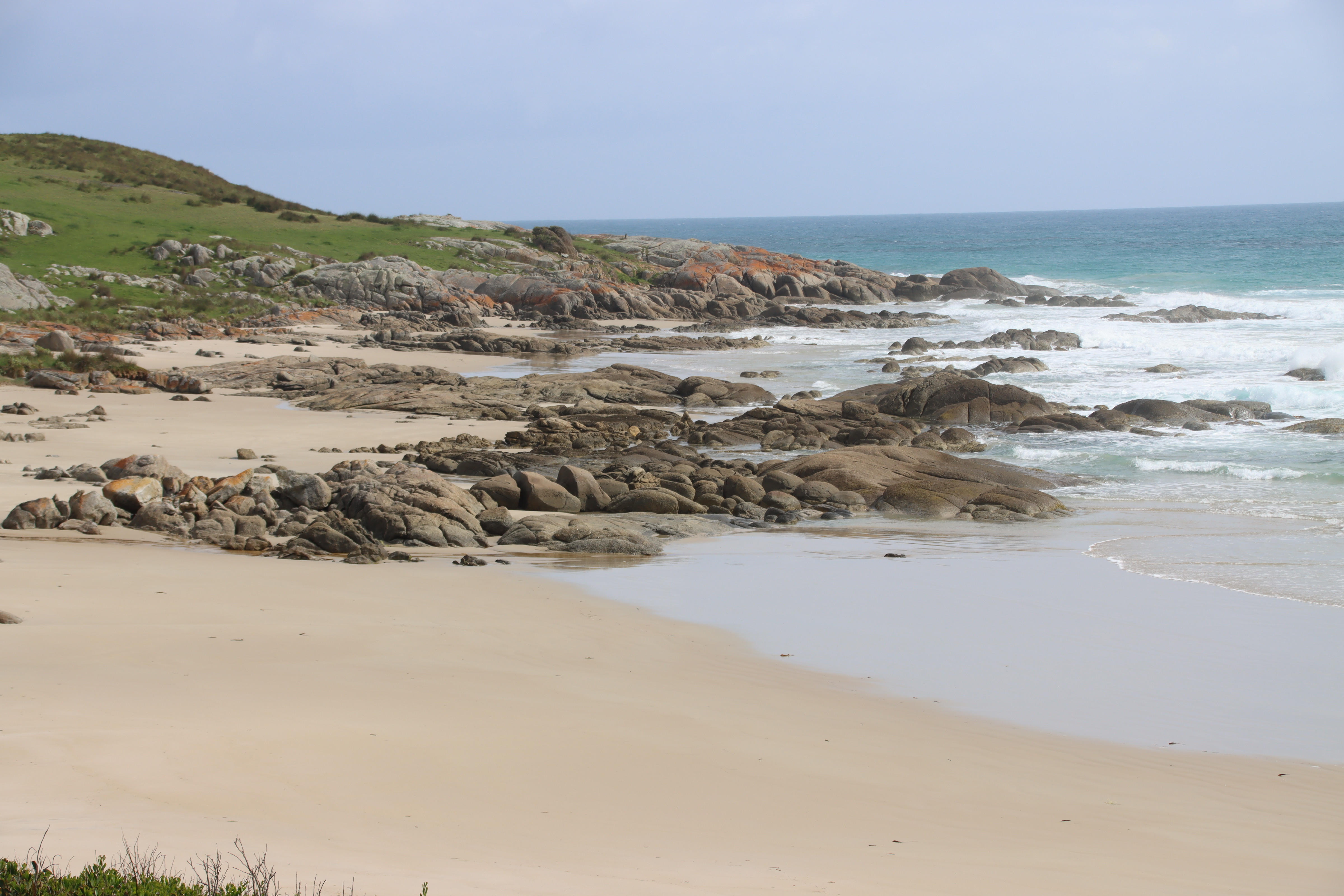

Given its location, it is not surprising that there are many ships wrecked on the west coast in particular. For example, off this picturesque beach is the British Admiral.
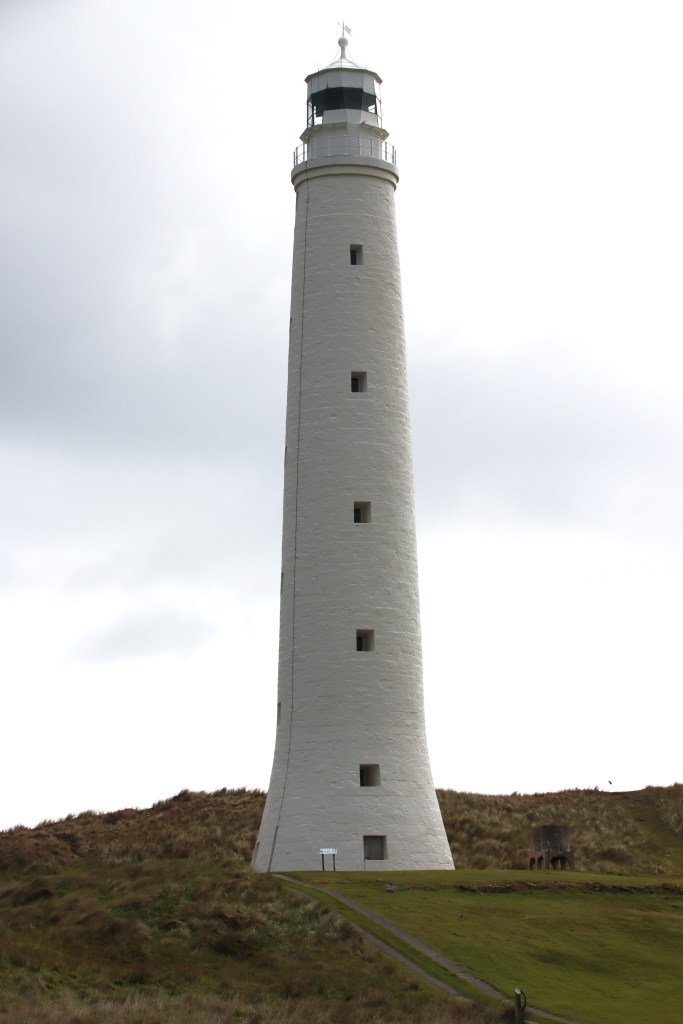
The danger to shipping gave rise to two lighthouses, although many people had to perish to sufficiently stimulate the authorities to oblige. In 1845, the Cataraqui hit the Island with a loss of 402 lives. Eventually, in 1861, the tallest lighthouse in Australia was constructed, at Cape Wickham, named after the cheese one assumes. It is 48 metres high built on a 3.4 metre platform. Each stone was hand-carved and it is a very impressive masterpiece. According to the information board, today’s residents are limited to the yearly nesting of two peregrine falcons.
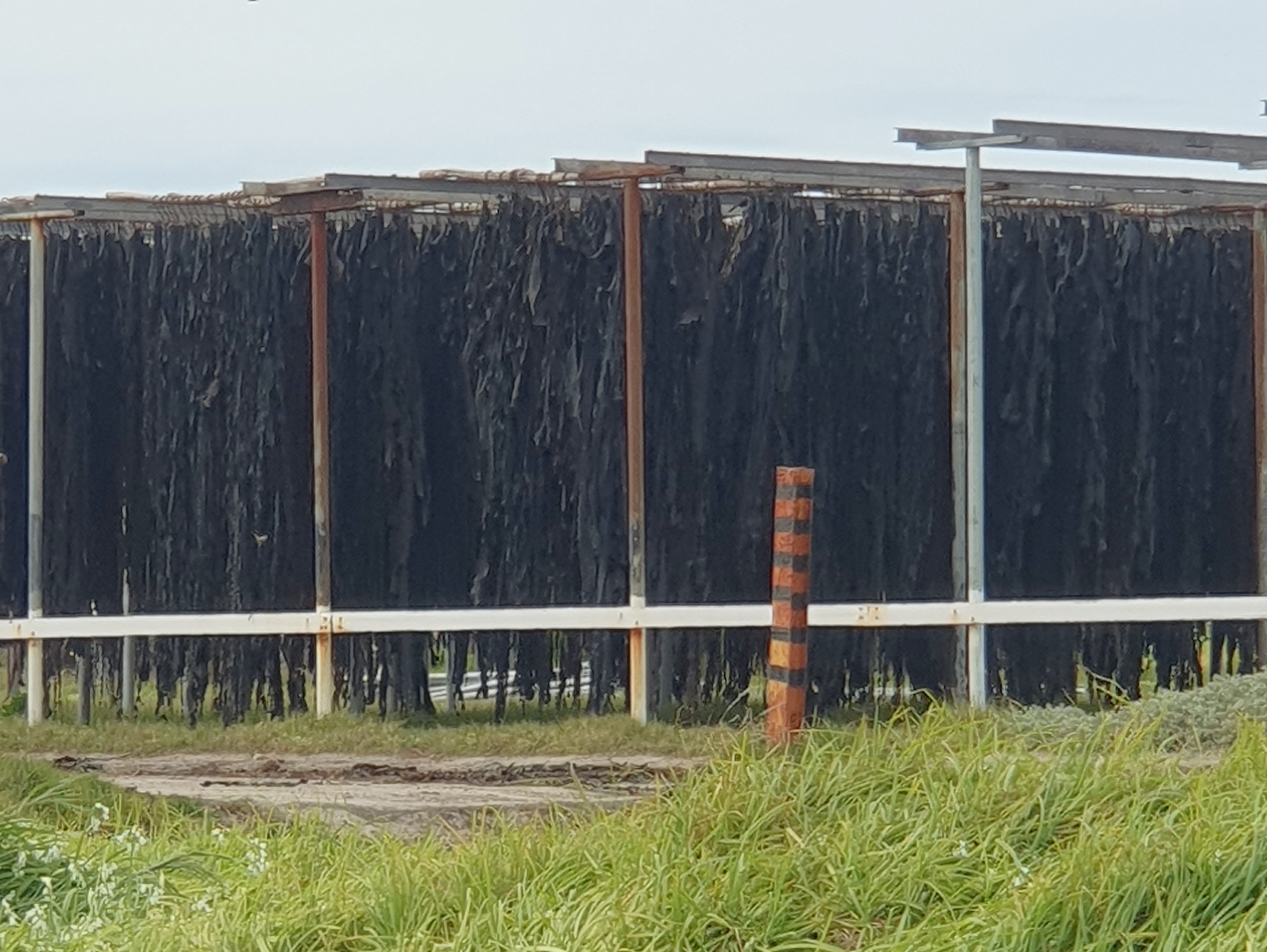
As seen on Backroads, the kelp industry is of major significance. Kelp is hauled with huge effort off some remote southern beaches, and trucked up to the factory in Currie. It is hung on large and extensive metal frames, before being treated, granulated and then shipped to Scotland and Norway. There it is turned into all sorts of consumables, including pharmaceuticals, gels, toothpaste and even salad dressings. Kelp is by all accounts very heavy stuff and hydraulic power plus brute force is required to get it on and off the trucks.

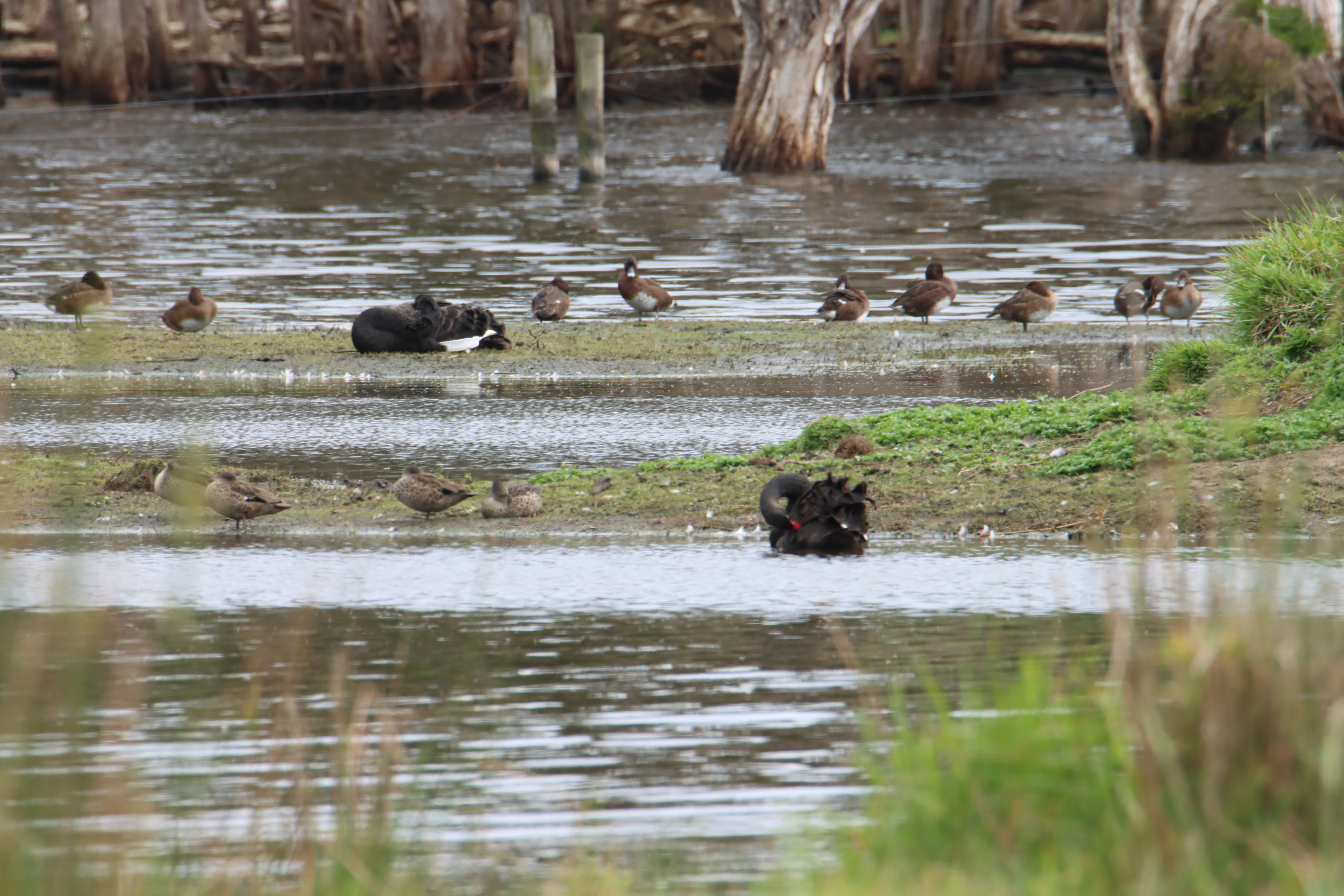
Black swans are incredibly plentiful. Shag Lagoon (no, not that, but because in the earliest days of european settlement it was heavily populated by Shags – probably on the rock). Now there are none, but it is clearly a major breeding ground for the swans, with multiple generations being visible. There were also lots of Cape Barren Geese, Blue-billed Ducks, Grebes (I think Australasian), Pacific Black Ducks, Eurasian Coots, Welcome Swallows and Shelducks. As is common across the Island, Melaleuca dominates here, being sometimes quite tall.



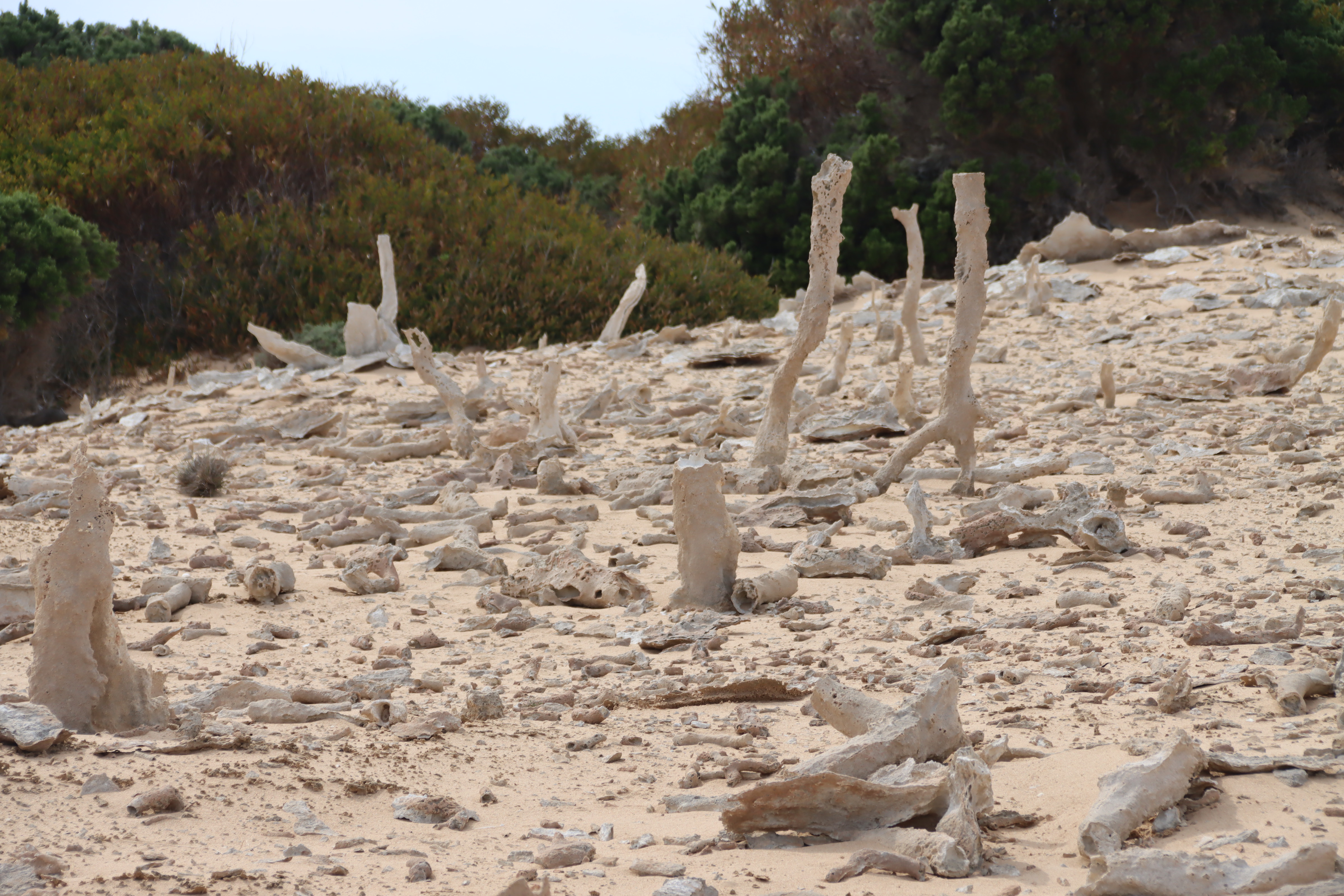
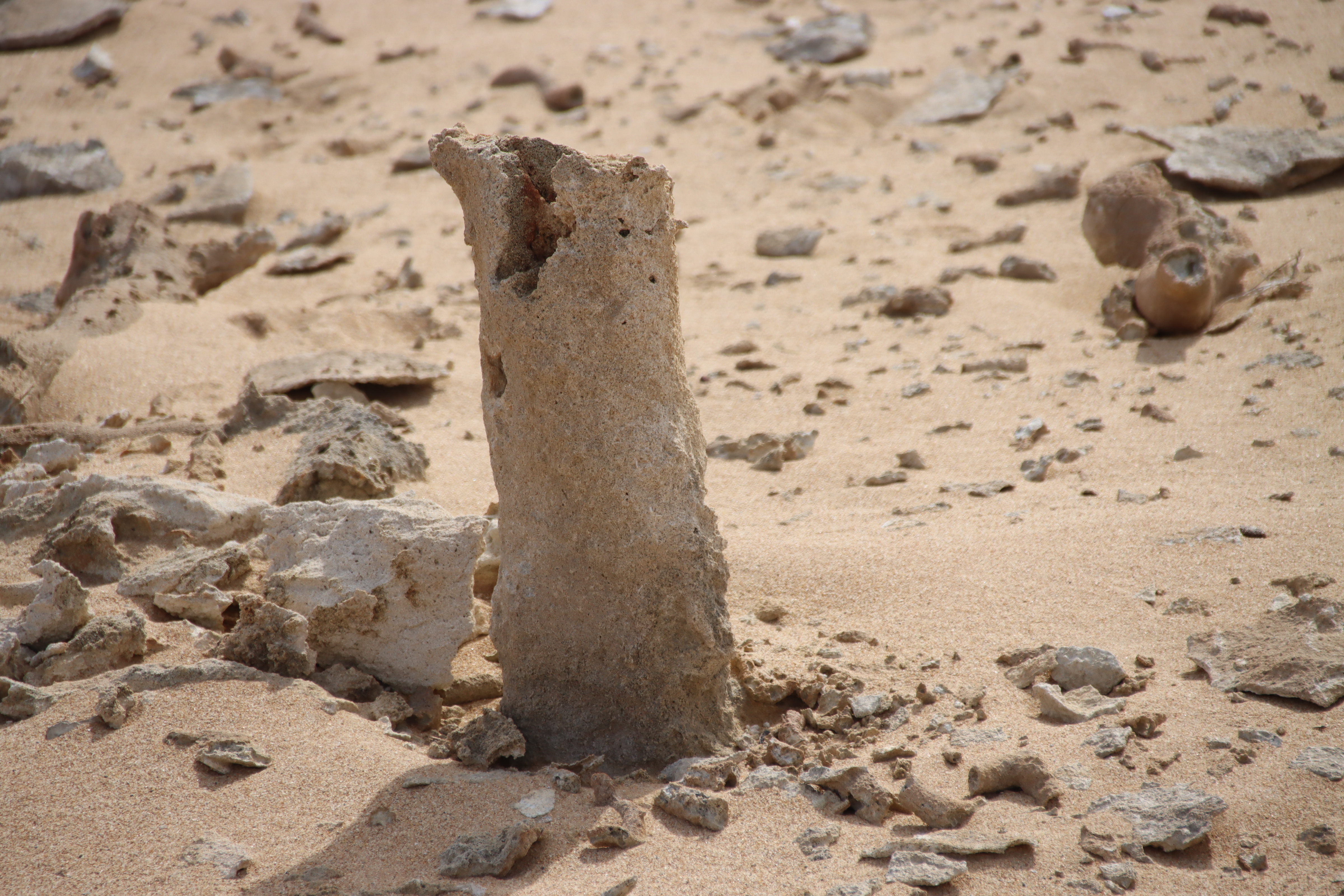
The highlight is a very interesting phenomenon is the calcified forest. Looking indeed like the remnants of a forest, it is in fact the remnants of the silica which coated the trees about 7000 years ago. The trees rotted over time, leaving the sand casing. Being windswept, you wonder how long it will last as it is.




Overall, I found the Island very neat and tidy, with the many bluestone gravel roads very well maintained and safe enough for a little corolla. The shrubbery is cut well clear of the roads even in the less travelled roads, presumably in an attempt to minimise roadkill. There is plenty of that, mostly Bennett’s Wallabies, but nowhere near the appalling volume on mainland Tasmania.
Michael Monaghan
October 2023
 Michael Monaghan Photography
Thanks Michael.
Absolutely fascinating. A very interesting account of the history and nature of King Island.
Cheers, Caroline
LikeLike