
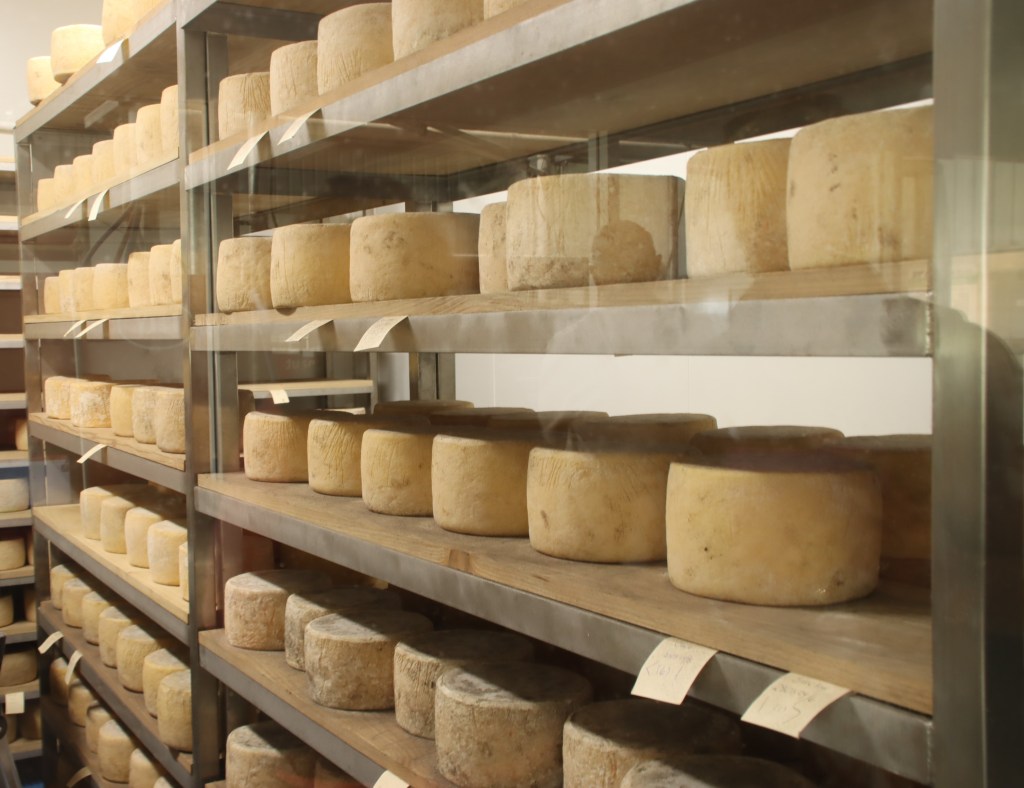
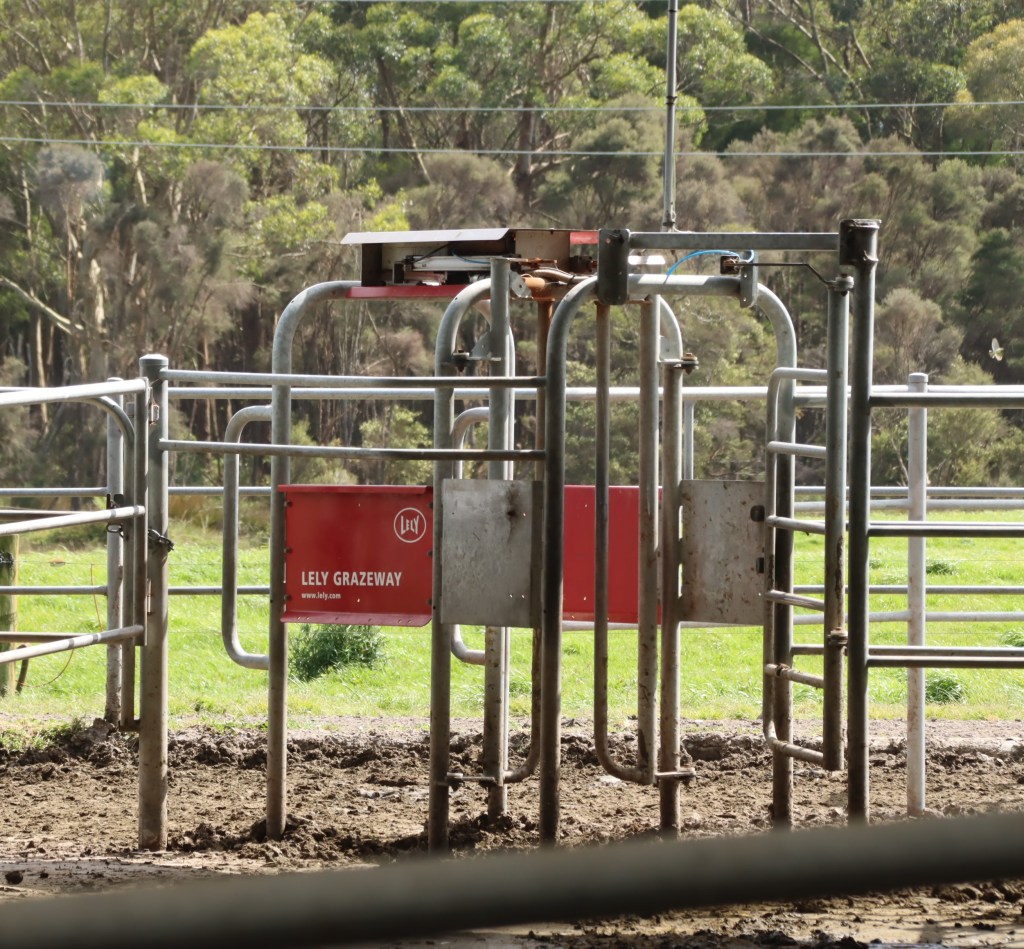
At Smithton, did a tour of the Duck River Dairy. A few years ago I toured, with my Uncle Tony, what was then one of the most technologically advanced dairies in the world. The cows were all micro-chipped (I assume with the same technology that saw all humans in the world chipped with the covid vaccine that every nation on earth collaborated on). They came in to feed when they wanted to, and were milked by robotic machines whilst they ate. Very calm process. “Happy cows make great cheese”.
Now it seems this has become a mainstream process. The Duck River Dairy in Smithton, NW Tas, only has two robotic milkers. Each one though, costing $300,000, milks about 60 cows a day. Each cow gets milked, on average, 2.8 times a day. The machines pay for themselves in saved labour costs (and not having to get up at 4am) in a few months. Each cow gives about 14 kg of milk per day.
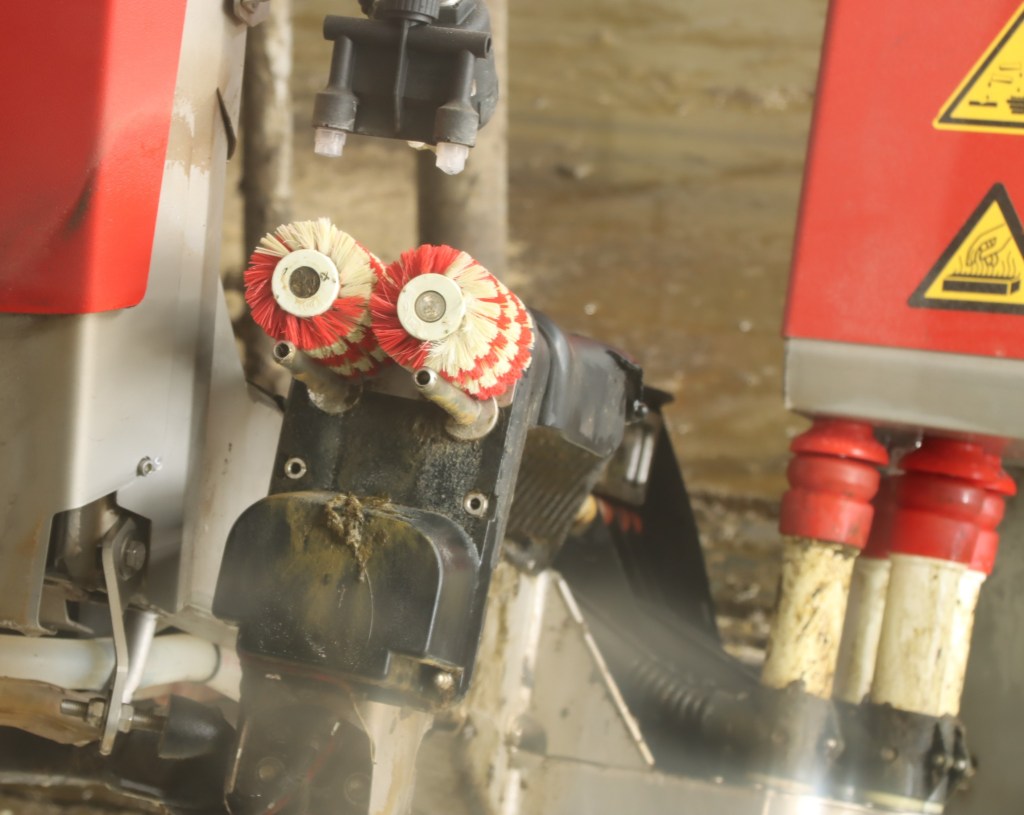
The robot cleans the teats, measures out the correct feed, applies the teats tailored to each cow, provides a back scrub if wanted, and sends the cow out to the appropriate field – for example, to the medi-pen if it thinks they are crook.
Milk that the robot thinks is diseased or iffy gets dumped.
The robot identifies illnesses in the cow, problems with the milk, issues with feeding etc etc. Warnings go to the farmer via his mobile, so he doesn’t even have to leave the pub.


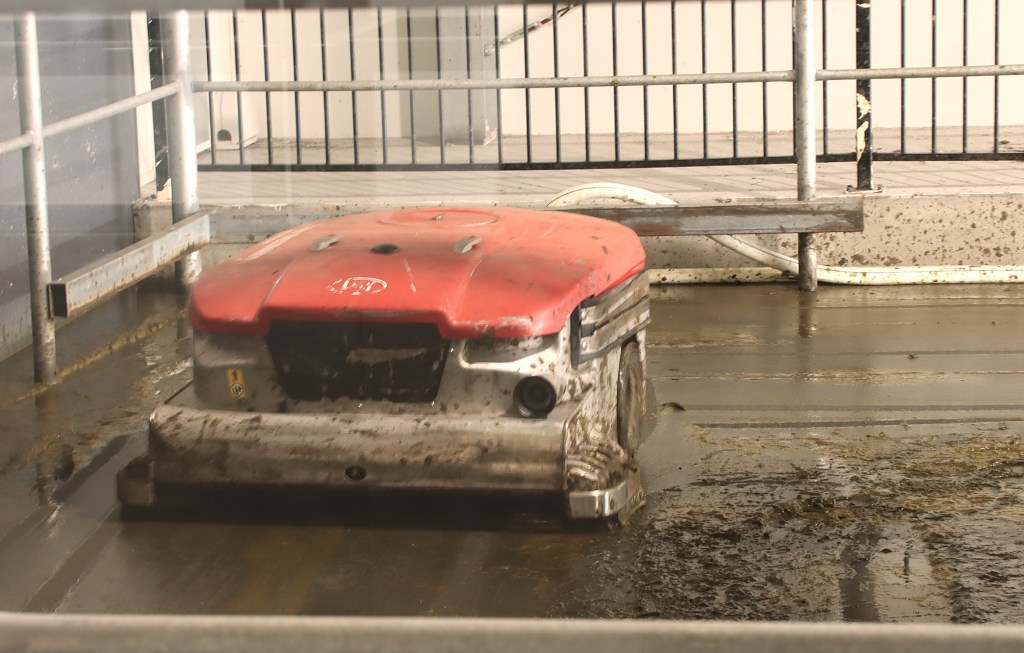
A robotic vacuum, costing $40,000, works 24/7 sucking up cow shit. This is remotely pumped out to holding stations, and then used to fertilize the paddocks. The cows hate it; similar I guess to elephants, they don’t like little critters roaming about their feet.
North west tasmania is the richest dairy country in the State, and indeed amongst the richest in the world. Apparently 95% of Tasmanian milk is exported.
The main game for the Duck River Dairy is cheese. La Cantara is the cheese company run by a Venezuelan who has introduced Venezuelan techniques into his cheeses.
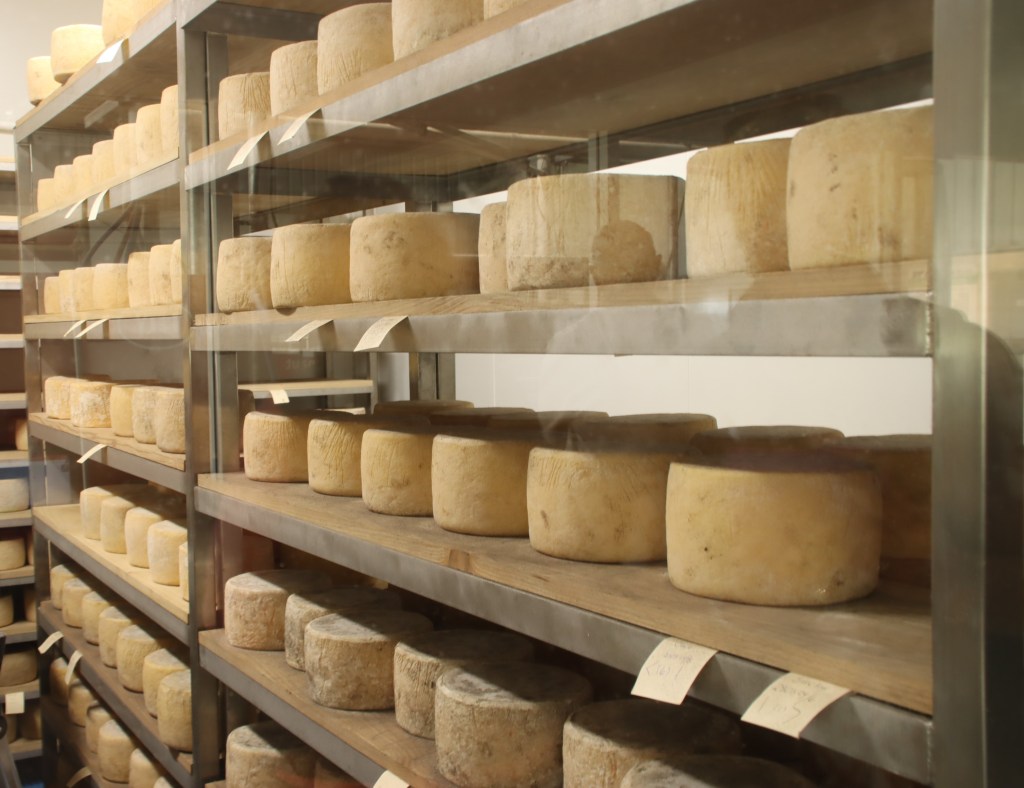
For example, the smoked cheddar is smoked by rubbing smoked paprika into the cheese. There is a Venezuelan equivalent of haloumi. The blue vein cheese is very delicate and smooth, with the bite of the blue very subtle.
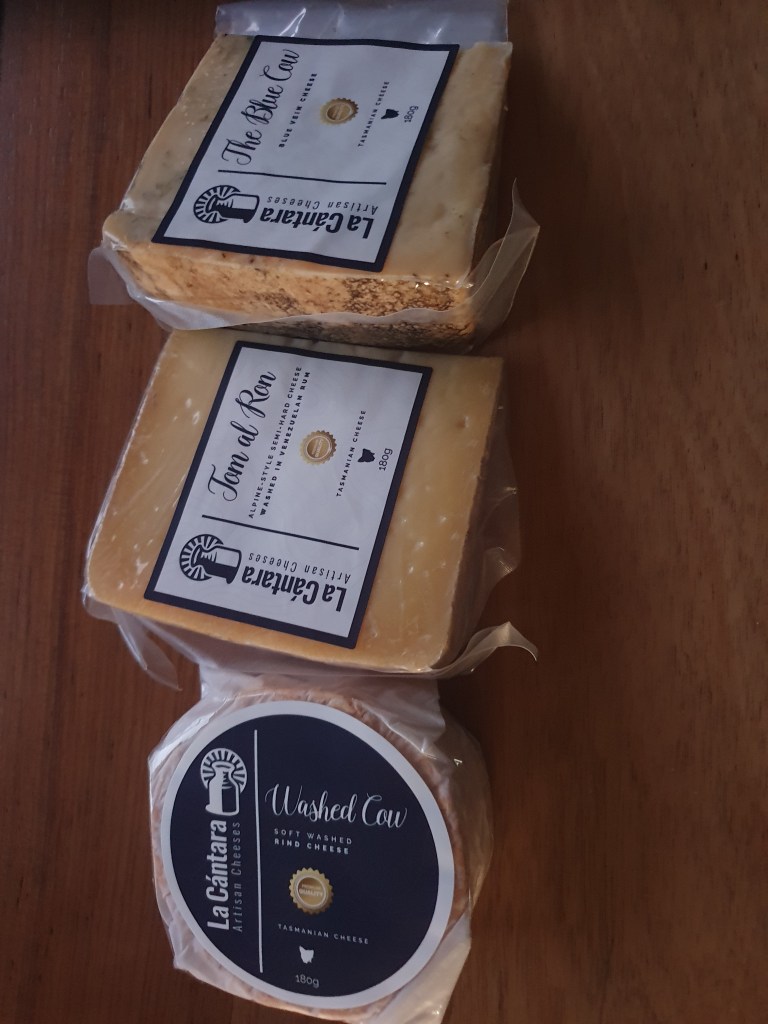
There is a cheese link to the Carroll family, part of my first fleet family through marriage of Thomas Carroll to my first fleeters’ granddaughter, Mary Anne Goodwin/Briscoe. Carrolls also feature in the Joe Lyon cottage.
My first fleet ancestors, married in 1790 in Port Jackson, are Andrew Goodwin and Lydia Munro. Mary Anne is the first daughter of Andrew and Lydia’s second daughter, Sarah. Benjamin Briscoe, her first husband, drowned when Allender’s ferry went down off today’s Bellerive. Sarah is of note in that she successfully fought for the re-grant of the land she owned with Briscoe, on the basis that Macquarie had granted it not to Benjamin, which would be the most common process, but to both Benjamin and her.
Mary Anne’s “married” lives would fill a book, with marriages, de factoes, bigamy, false name marriages – she finally died “..one of the most respected and noblest of women”.

Next visit was, in Stanley, the childhood home of Joseph Lyons. Lyons was the 10th Prime Minister of Australia. He is a bit distantly related to me via the marriage of Mary Anne Briscoe to Thomas Carroll. Although he lived his married life in Home Hill in Devonport, this cottage is where he grew up.

A very interesting fact about the Nut at Stanley is that what is there is what is left, not what was there. There used to be a volcano there. Millions of years saw the inner base of the volcano solidify with rain, mud, animals of misfortune etc. Over time, the volcanic cone has eroded away to nothing. So the Nut that is there is the inner base of the volcano.

Thursday saw us on an all day tour of the magnificent Tarkine, with tour guide Robert Saltmarsh. Not only was he the star guide of the Back Roads episode on the Tarkine, hosted by the actress Marta Dusseldorp (star of Bay of Fires and Jack Irish), but his paternal ancestor, William Saltmarsh, was first fleet, Port Jackson, and Norfolk Island, with my first fleet ancestors.
I had been to some of the places we went before, but this tour certainly added massively to my knowledge and understanding. Trowutta Arch via some backroads was the first stop. The morning sun gave a different look to the last time I saw it.

The rainforest is certainly spectacular.


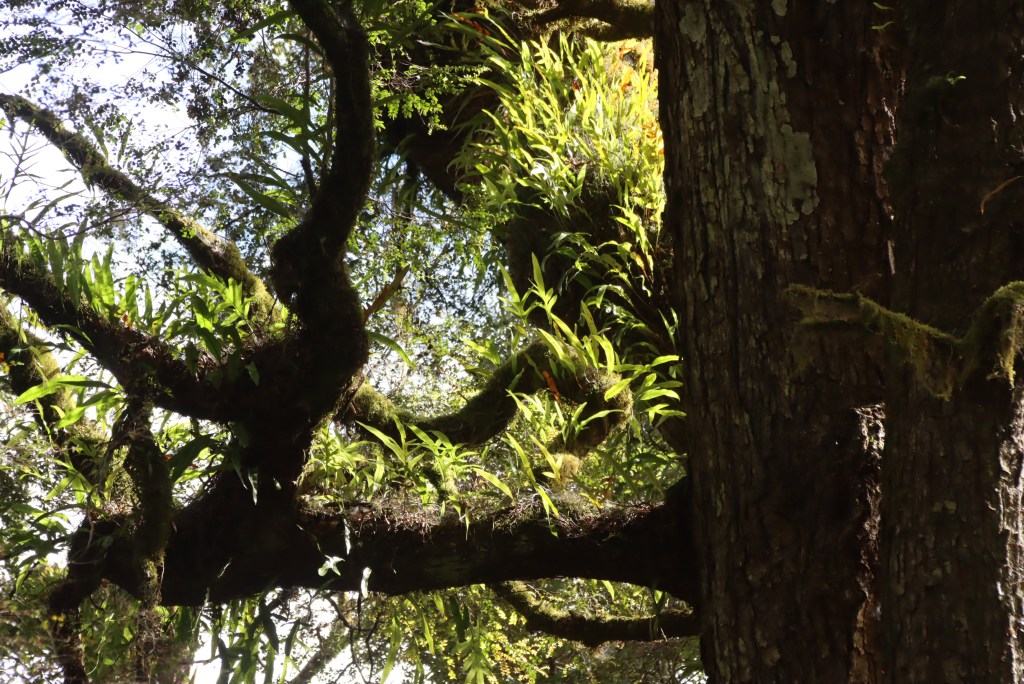

Rob pointed out the quite stark line between one of the great cold climate rainforests of the world and the neighbouring old growth forest, which itself was largely devoid of eucalypts, featuring rather sassafrass, celery top, myrtle, blackwood and leatherwood.
Blue Gums are now mass grown in plantations for the pulp mills. They are allowed to grow for 25 years, several hundred years short of a natural lifetime, then harvested, and another bluegum crop planted. Many hundreds of trees looked dead in this area.
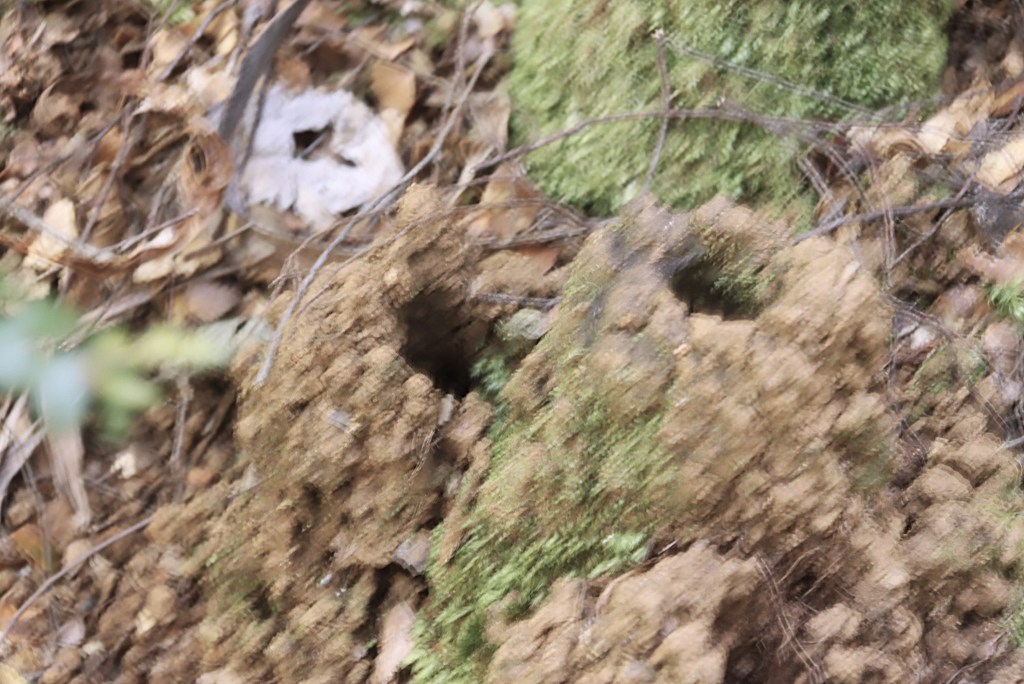
We moved on to an area where the Bob Brown organisation fought to stop the extension of the road to allow more destruction of 300 plus old growth forest. Not publicly known, it was sensational forest. I wondered how any human could bring themselves to destroy it. Even the yabbies liked it:
There were some great opportunities to quickly focus, from bridges, on the Arthur River

and the Frankland

hoping against the contemporaneous presence of a log truck.
The Sumac lookout features the rainforest and the old growth forest,

Next we headed out through the button grass and heath plains to the Edge of the World, just south of the mouth of the Arthur River. Given the logging which goes on up the river, the coastline is perpetually littered with millions of logs.

The Edge of the World is possibly the western most point of Tasmania. Or this might be West Point, or not. Or it might be Cape Grim or not. But the Edge of the World steals the march, like the better resourced of the many “unique” equator crossings you find within a few kilometres of each other. Maybe just because it has the best lookout structure and lunch pavilion.


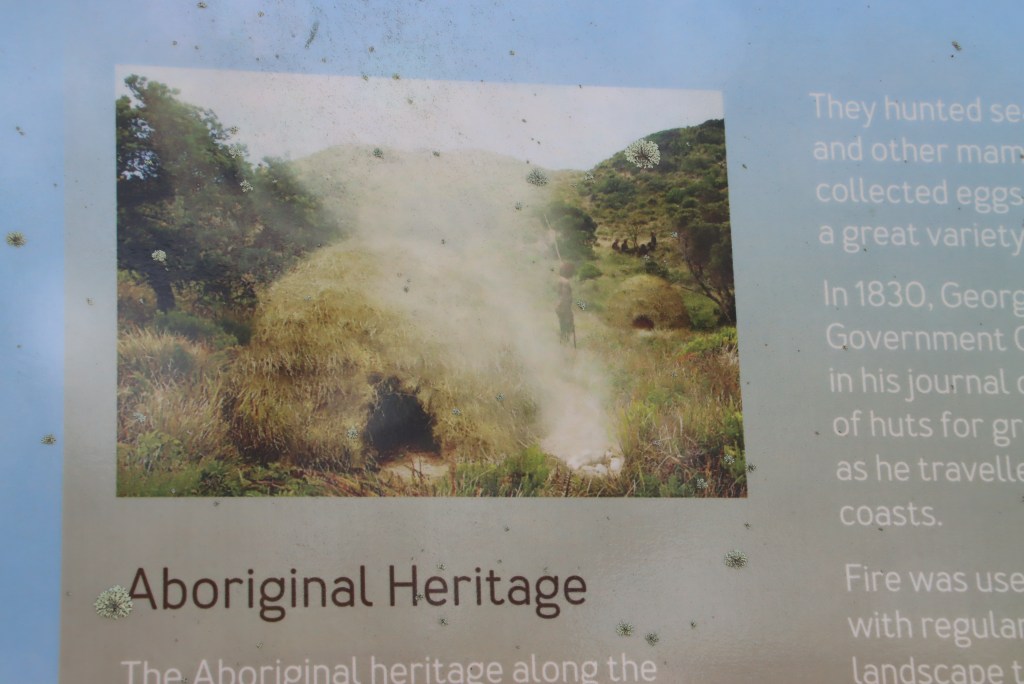
West Point has extensive sand hills around the bay’s edge, littered with billions of shells – the remnants of millions of meals over millenia. Also there are the cup shaped foundations of huts of varying sizes. Archaelogical expertise says the huts were built, maintained and occupied over at least five thousand years.

With a final view of Cape Grim in the distance (named by Flinders because he thought it looked like a man with an angry face), we headed back.
Michael Monaghan
November 2024
 Michael Monaghan Photography